Every field operation knows the shape of the ramp. A new tech comes through
onboarding, collects the certifications, and then rides along for weeks or months
before anyone trusts them on a solo call. The ramp is expensive, it leans on your
senior people, and it is longer than it should be. If you have already tried adding
to the onboarding program and the ramp has not shortened, the problem is probably
not the program. It is that the procedures do not last to the first dispatch.
Ramp time is a retention problem
A new tech being productive means one thing: they can run the call without the
binder and without phoning the senior guy. That is a capability question, and
capability lives in memory. The procedures taught in onboarding decay on a
predictable curve, so the question is never whether the new hire learned them. It is
whether they are still there weeks later, on the first real call, with a customer
watching. This is the same gap that governs
all field service training
: completion is not
capability, and a certificate is not a ready tech.
The long ramp has a knock-on cost. A new tech who is not yet solid
escalates the routine fault
and
leans on the senior engineer, so a slow ramp shows up twice: once as time-to-
productivity, and again as load on the people you can least spare.
Why a bigger onboarding does not fix it
The instinct, when the ramp is too long, is to add to onboarding: another week,
another module, a thicker binder. More delivery up front feels like rigor and barely
moves the ramp, because the forgetting curve does its work in the weeks after
onboarding ends, when nothing is reinforcing what was taught. The procedure covered
in week one is fading by the first solo call in week six. (The science, in plain
terms.
)
A new tech is not the same as a tenured one who let a skill lapse. The onboarding
tech is building the procedures for the first time, which is exactly when spaced
reinforcement matters most. The slice onboarding owns, getting the core procedures
to stick from day one, is the slice a longer classroom keeps failing to deliver.
That slice responds to being made to recall and apply the steps, spaced across the
ramp, so they are still there when the new tech goes out alone.
How HeyLoopy shortens the ramp
HeyLoopy does not replace your onboarding. It keeps the procedures a new tech learns
from fading before the first solo call.
Drills from your own procedures. Short drills built from the onboarding SOPs,
service bulletins, and OEM procedures you already run on, so the new tech practices
the actual faults of your fleet, not a generic library. (How the drill loop
works.
)
Retrieval on a spaced schedule. About sixty to ninety seconds, one question at a
time, returned to across the weeks of the ramp, because that is what fights the curve
and turns a one-time class into a procedure that holds to the truck.
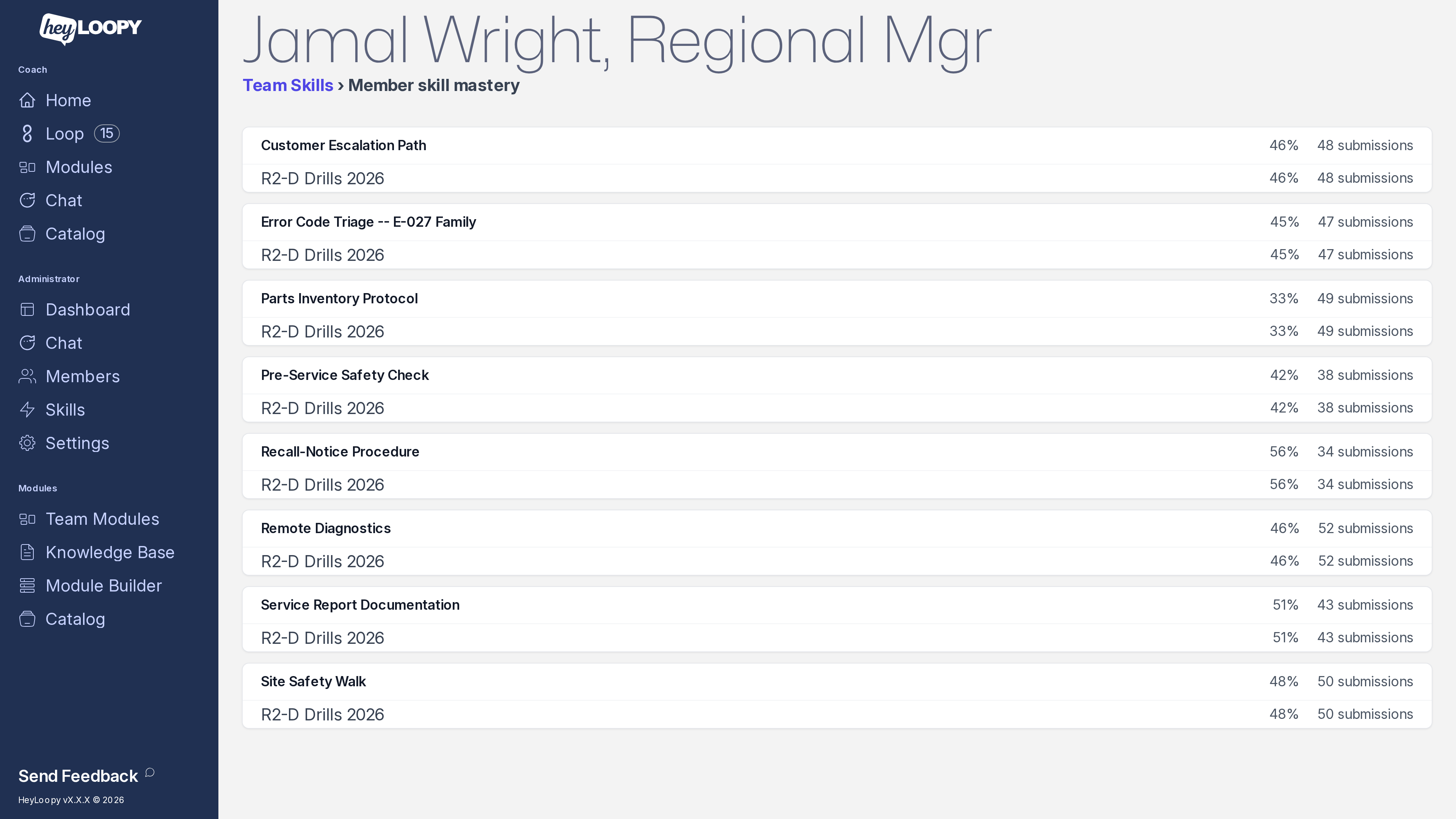
Readiness you can see. A per-role, per-product-line mastery view, so a new hire
who looks certified but is missing a core procedure is a gap you close before the
solo call, not a surprise you discover on a customer site. It is the same readiness
that keeps first-time fix
holding once the
new tech is finally on their own.
You will keep running onboarding. The question is whether the procedures survive to
the first dispatch or fade on the curve while the ramp drags on. When they hold, the
ride-along stops being spent re-teaching decayed steps and goes to the judgment a new
tech can only build in the field. Start free on the procedures a new tech has to hold
first, and put the ramp time where it actually counts.