3 seats free

Lean is not less training. It is no waste.

Lean Learning and Development: Cut the Waste, Keep the Skill

The biggest waste in learning and development is not the budget line. It is paying full price for training your team forgets within days. Lean L&D fixes the return on the training you already run. Here is what it takes.

Start free, forever. 3 seats, no credit card. Bring your own docs.

No content team required

Point HeyLoopy at a document you already use and it builds the drills. Lean L&D means no new authoring project, no instructional designer, no slide deck.

Lean learning and development gets misread as a smaller budget. It is not. Lean means cutting waste, and the biggest waste in L&D is not a line on the budget. It is the training you already pay for that your team forgets within days, so the spend buys almost no retained skill and you run it again next cycle. Fix that return and everything else gets leaner with it. Here is what lean L&D actually looks like.

What lean L&D actually looks like

  1. Build from what you already have. Lean L&D does not commission new content. The procedures, policies, and manuals you already run on are the material. Turn those into practice instead of authoring a course from scratch.

  2. Spend on retention, not just delivery. Delivering a lesson is cheap and already solved. The waste is that delivery alone does not last. The lean move is to put the spend on the part that makes it stick: retrieval practice, not another way to push the same content. (The science on why active practice beats passive viewing. )

  3. Reinforce before it decays. A skill practiced once and never revisited is gone within days, and you pay to teach it again. That loss has a name, skill decay , and a little practice spaced over time is the least wasteful way to stop it, far cheaper than the re-train.

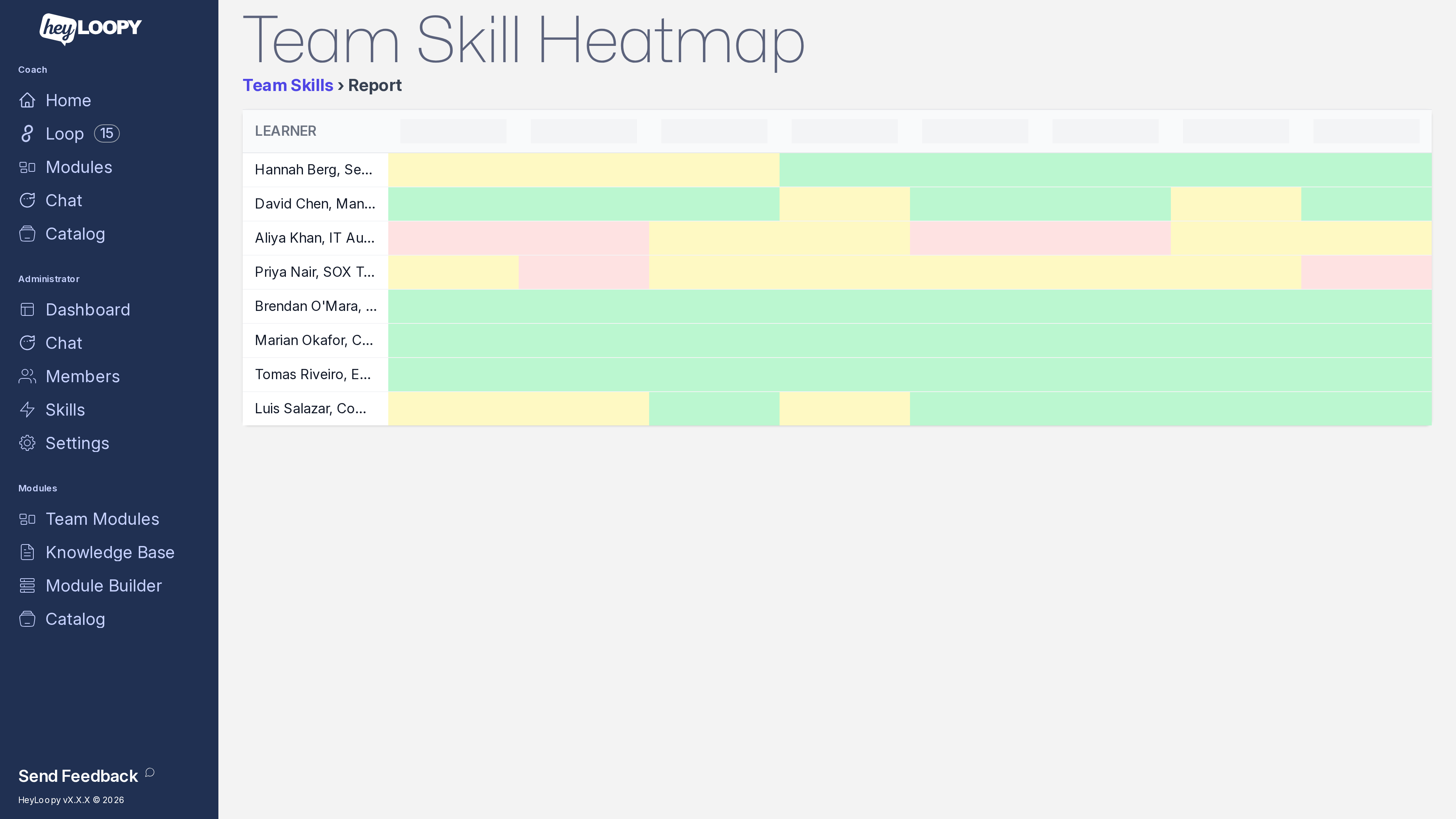
  4. Measure mastery, not activity. Seat time and completion rates are busywork metrics that hide the waste. The lean number is whether the team can actually do it, role by role, weeks later. Report that and nothing else.

  5. Run it without a department. Lean L&D does not require an instructional designer or a content pipeline. The tooling should draft the practice, deliver it in the flow of work, and surface where the team is soft, on its own.

Where HeyLoopy fits

HeyLoopy is the lean layer that does steps one through five. It turns a document you already use into 60 to 90 second daily drills, reinforces them on a schedule, and shows you a per-role mastery view of where the team is soft. No course to build, no LMS to replace, no training that evaporates by next quarter . (See how the drill loop works. )

Lean L&D is not about training your team less. It is about never paying twice for the same skill. Start free on the training you already run, and watch it finally stick.

Measure mastery, not activity

Report the number that proves it worked.

Not seat time, not completion. HeyLoopy shows mastery per role over time, so the one report you take to leadership is the one that actually means something.

Report the number that proves it worked.
Before you ask
Does lean L&D just mean spending less? +

No. It means cutting waste, and the largest waste in L&D is training that is delivered, completed, and then forgotten, so you pay for it again. Lean L&D spends on the part that lasts: practice and reinforcement that make the first training stick, so you are not re-running it every cycle.

We are a small team. Do we need a whole platform for this? +

Lean is the point. You do not build courses or hire an instructional designer. You drop in a document you already use, HeyLoopy drafts the drills, and your team practices in 60 to 90 second sessions. It is built to run without a dedicated L&D department.

We already have an LMS. Isn't that our L&D system? +

Keep it. An LMS delivers and records training, which is a real job. It does not make the training stick, which is where the waste lives. HeyLoopy is the lean layer that closes that gap, alongside the LMS, not in place of it.

How do we know it is leaner, not just another tool? +

You watch one number: mastery over time, per role. If the skill holds between sessions, you stopped paying to re-teach it, and that is the waste lean L&D exists to cut.

Get the return on training you already pay for.

Start free on the training you run today, or get a walkthrough. See it stick this time instead of evaporating by next quarter.