If you have ever watched a team pass the training and then make the exact mistake
the training was supposed to prevent, you have seen skill decay. The skill was
real on the day they learned it. By the time it mattered, most of it was gone.
That is not carelessness, and it is not a bad hire. It is the way memory works,
and it is happening to every team that trains once and moves on.
Why skills decay: the evidence
This is one of the most settled findings in the science of learning. More than a
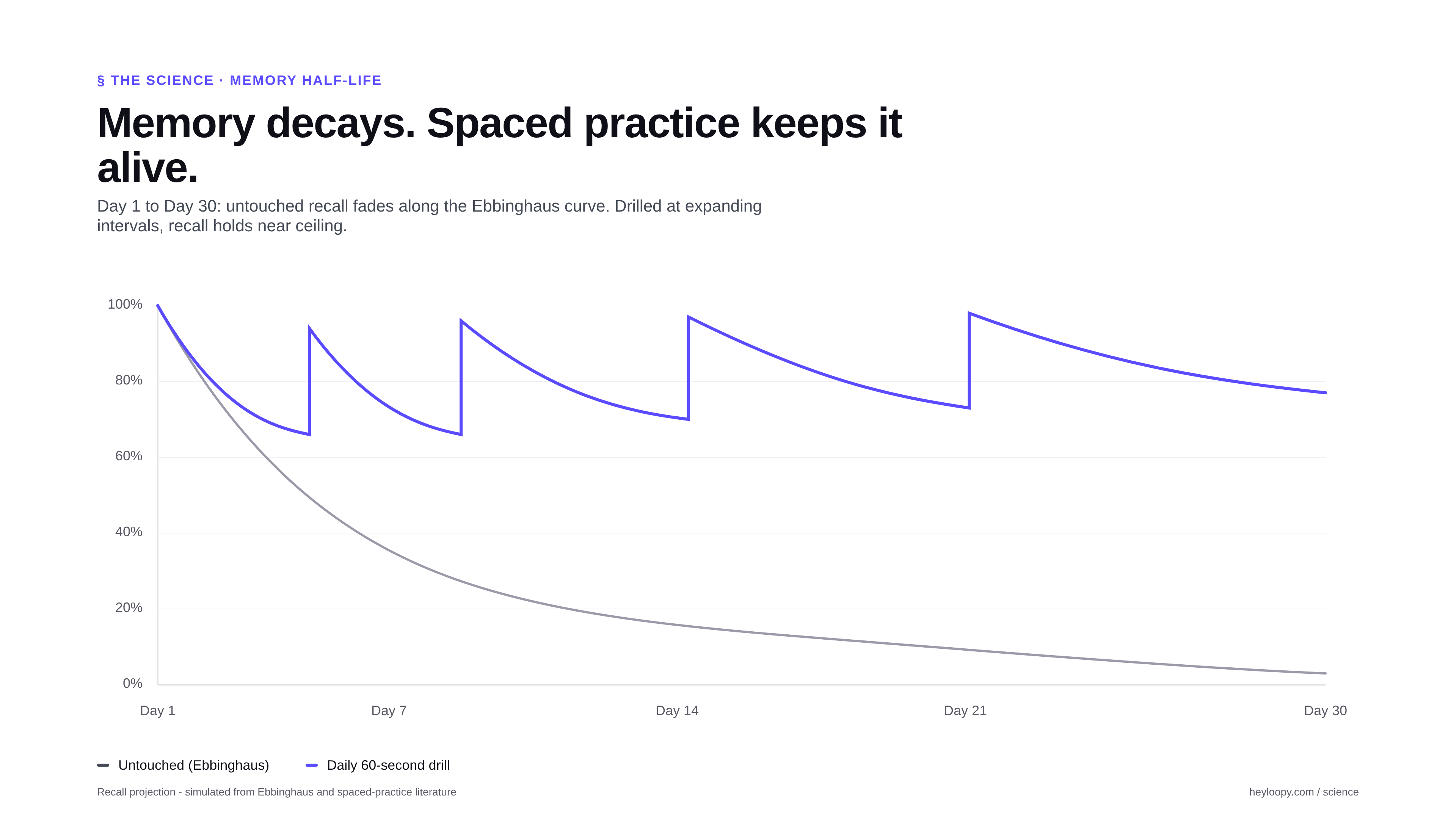
century ago, Hermann Ebbinghaus mapped the forgetting curve: without deliberate
reinforcement, the memory of what we learn drops sharply within days and keeps
falling. Modern training did not repeal that curve. A team trained on a procedure
in the spring has lost most of it by summer unless something was built to hold
it. The curve is the whole reason training fails to
stick
, and decay is that curve running on your team.
The research is just as clear about what slows it. Decades of work on retrieval
practice show that being made to recall a skill cements it far better than being
shown it again. Sitting through the lesson a second time feels productive.
Recalling and applying it is what lasts. Most training does the first and skips
the second, which is exactly why the skill quietly drains away.
(The science, in plain terms.
)
Why it costs more than it looks
Skill decay is expensive precisely because it is invisible. The completion report
stays green while the capability behind it erodes. You find out it decayed at the
worst possible moment: the failed audit, the safety incident, the customer who
got the wrong answer. By then the cost is not a training slot. It is the mistake
the lost skill was supposed to prevent, plus the cost of retraining everyone
from zero
to recover it.
How HeyLoopy stops it
HeyLoopy does not replace your training. It keeps the training you already run
from decaying.
It reinforces with retrieval, not replay. It makes people recall and apply
what they were taught, the mechanism the evidence says creates durable skill,
instead of re-showing them the content. (How the drill loop works.
)
It works against the curve on a schedule. Short daily drills, built from your
own material, reinforce the skill over the days and weeks when it would otherwise
fade.
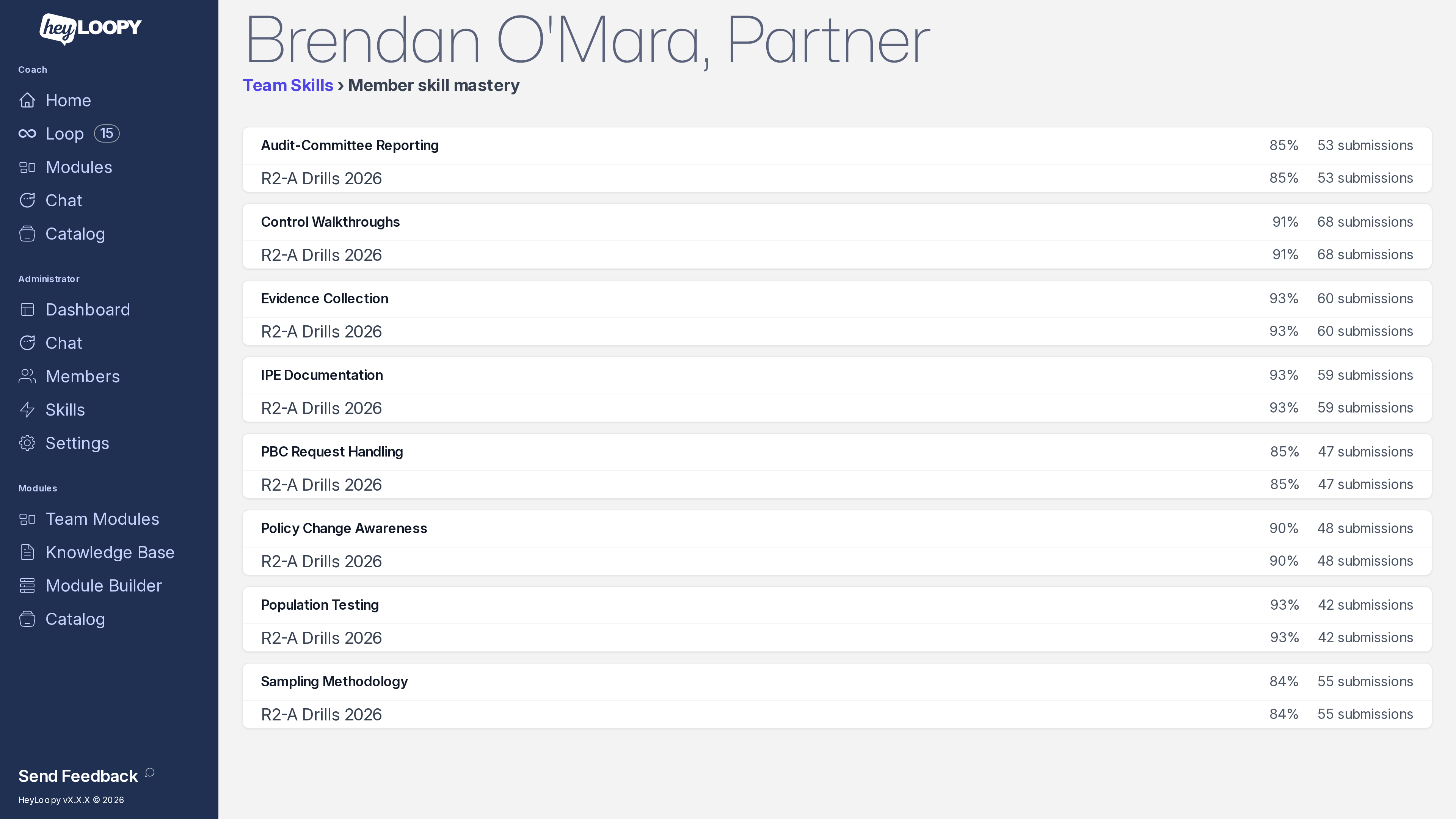
It shows you the decay before it bites. A per-role mastery view, percent
correct over time, so a slipping skill is a trend you catch early instead of an
incident you explain later.
You will keep training your team. The question is whether the skill holds after
the session or quietly drains away. Start free on a skill your team keeps losing,
and watch it stay.