If you are shopping for a Skillsoft alternative, the honest first test has
nothing to do with catalog size. Take a skill your team completed last quarter
and ask them to do it cold. If it is gone, a larger library would not have
saved it. The lesson was delivered. It just did not last.
The catalog is not the problem. The curve after it is.
Skillsoft is genuinely good at the thing it was built for: delivering a large,
well-organized body of content through Percipio and tracking who finished it.
That is also the ceiling. A library marks a lesson complete and hands what happens next to the
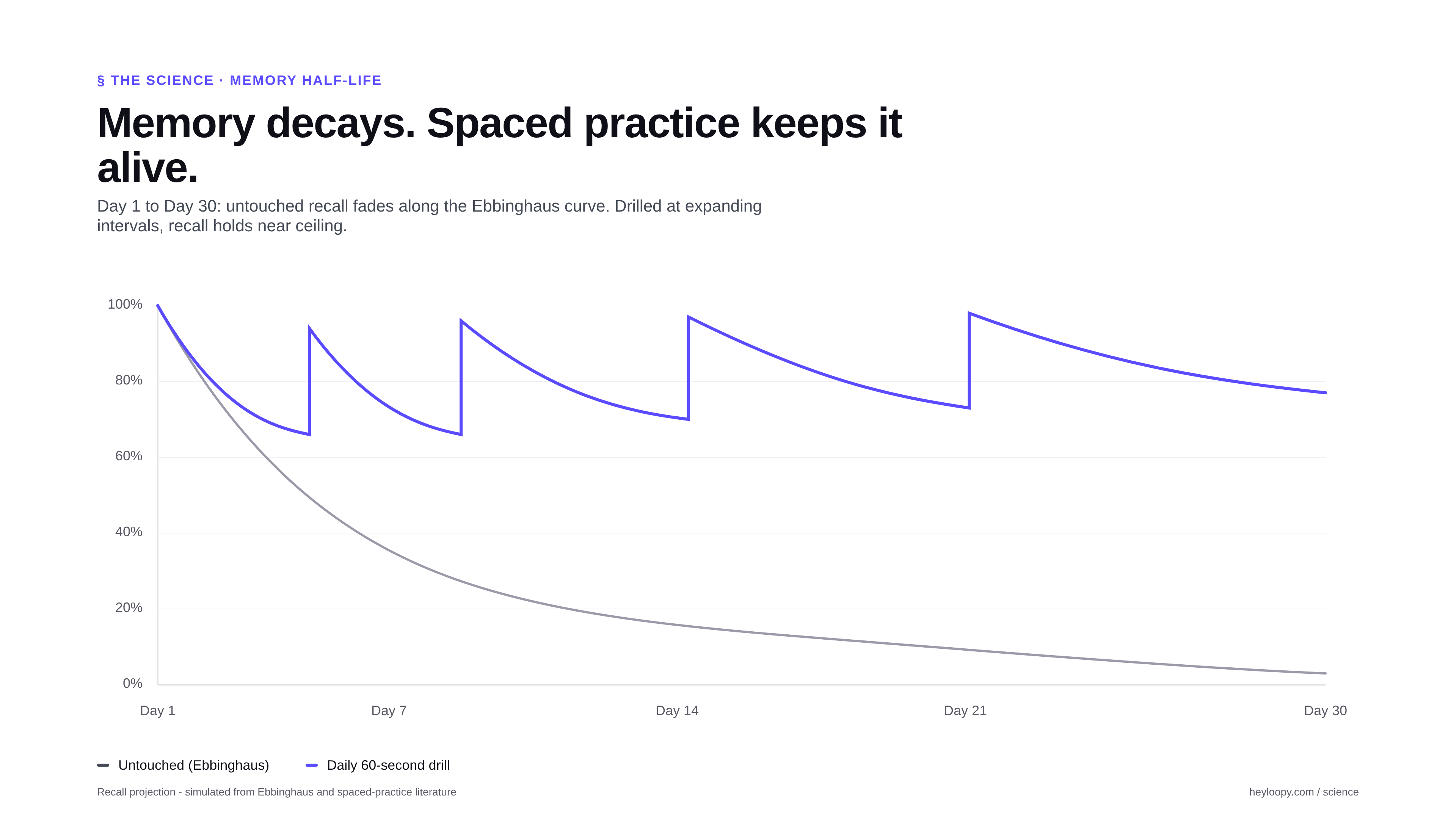
forgetting curve. Hermann Ebbinghaus mapped it more than a century ago:
without deliberate reinforcement, most of what we learn decays within days. The
research on the fix is blunt. You remember what you are made to recall, not what
you are shown again. (The science, in plain terms.
)
| What you are comparing | A large content library (Skillsoft) | HeyLoopy |
|---|
| What it optimizes | Breadth of content, courses finished | The skills your team actually keeps |
| Model of learning | Deliver and assign, track completion | Active recall and spaced repetition |
| Where the content comes from | A general catalog | The documents and procedures you already use |
| The forgetting curve | Left to run after completion | Worked against on purpose |
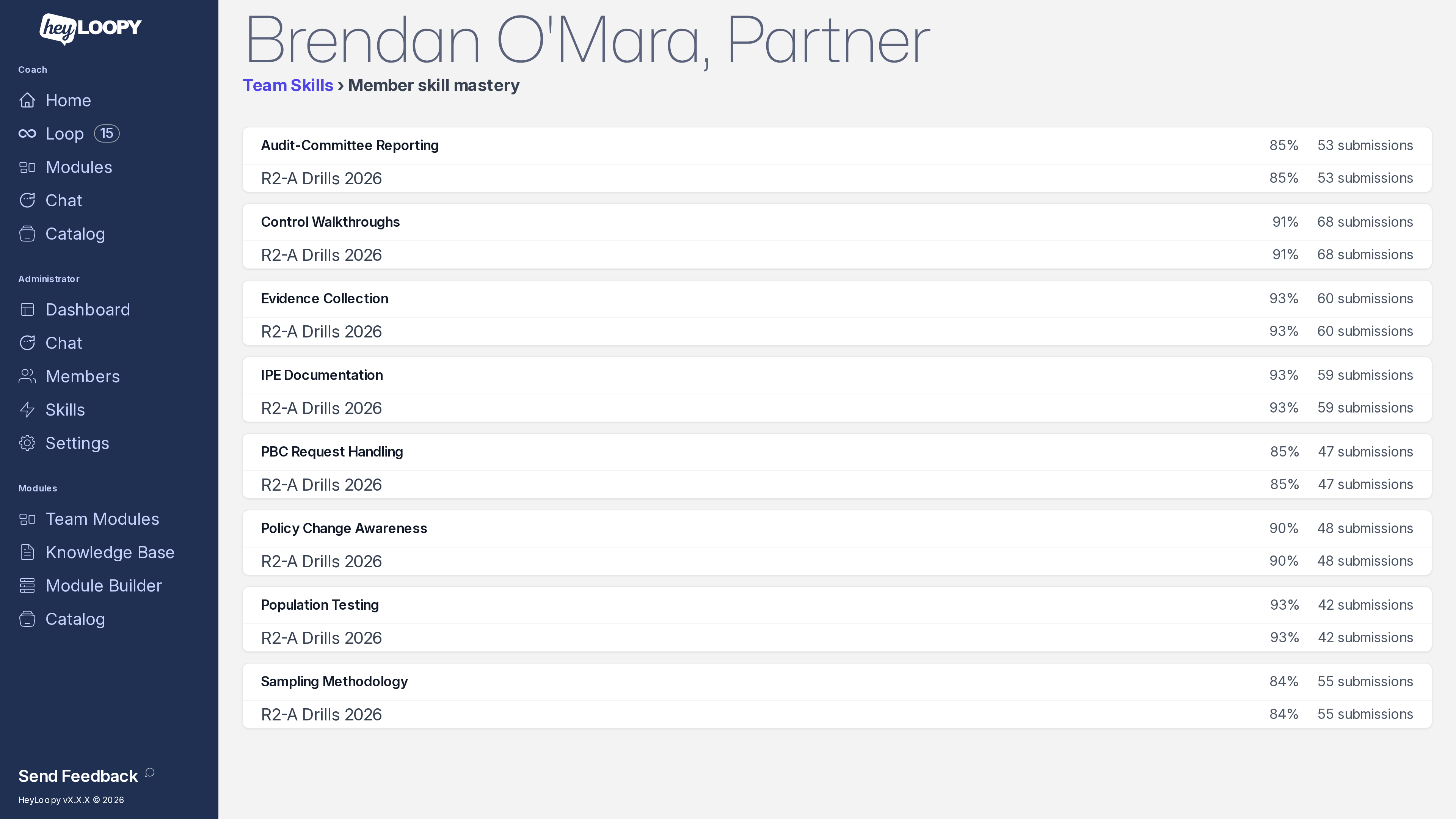
| What you see after “done” | A completion record | Mastery per person, slipping skills flagged |
| The number you trust | Completion rate | Demonstrated, durable capability |
The three differences that decide it
A bigger catalog is more to forget, not more to keep. Coverage feels like
progress and mostly is not. The team does not need access to ten thousand
courses. It needs the few skills its job depends on to survive the month.
Retrieval beats re-assignment. Sending the course out again feels like
reinforcement and rarely is. Making someone retrieve the skill, struggle a
little, and get corrected is what cements it. (How the practice loop works.
)
Your own procedures outperform a generic course. A catalog is written for
everyone, which means it is written for no one in particular. HeyLoopy turns the
document your team already follows into the drill, so the practice is about your
work, not a stock example.
If your team finishes Skillsoft’s courses and forgets them anyway, a larger
library is not the answer. Retention is. It is the same pattern behind
skill decay
and the whole reason
training fails to stick
: completion is not capability.
Start free on a skill your team keeps having to re-cover, and watch it survive
the quarter.