Managing Decision Fatigue: Saving Your Brain for What Matters
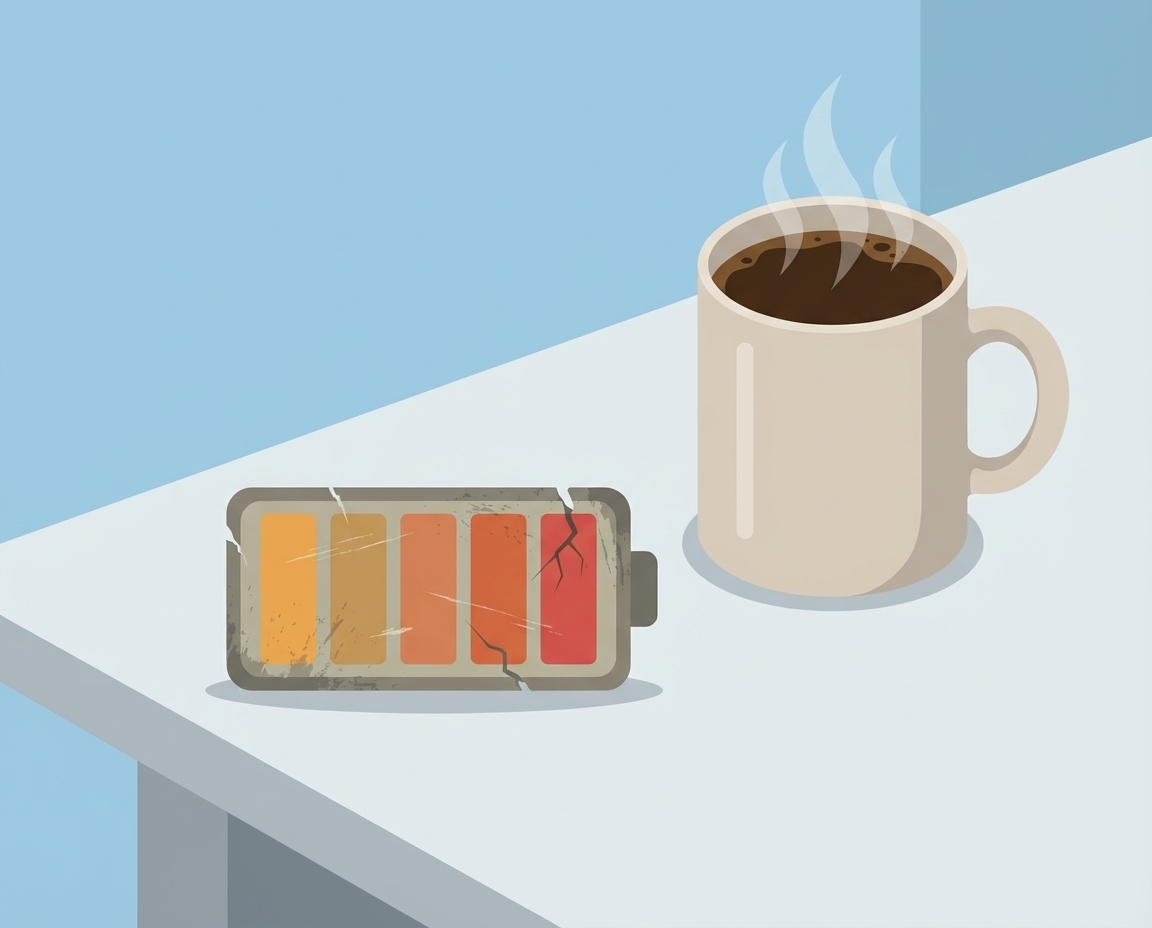
You are sitting at your desk. It is 3:00 PM on a Tuesday. The coffee in your mug is cold and there is a blinking cursor on your screen waiting for a reply to a simple email.
Someone is asking you where you want to hold the quarterly review meeting.
It is a binary choice. Conference Room A or Conference Room B. It should take you three seconds to decide. Yet you find yourself staring at the screen and feeling a heavy, physical weight in your chest. You cannot choose. You close the tab and decide to look at it later.
This is not laziness.
This is not a lack of discipline.
This is a biological reality that affects every single business owner and manager who takes their work seriously. You are suffering from decision fatigue.
We often talk about time management as the ultimate skill for executives. We treat our calendars like Tetris boards and try to fit as many blocks of productivity into the day as possible. But time is not the only resource you are spending. You are also spending willpower.
Your brain has a finite amount of executive function available each day. Every time you inhibit a desire or make a choice you deplete that reservoir. It does not matter if the choice is signing a million-dollar contract or choosing between a blue or black pen. Both actions pull from the same fuel tank.
When that tank runs dry the quality of your decisions plummets.
The Biology of Bad Choices
Social psychologist Roy F. Baumeister coined the term ego depletion to describe this phenomenon. The research suggests that willpower operates like a muscle. It can get tired from overuse.
When your decision muscle is exhausted your brain defaults to one of two shortcuts to save energy.
First there is reckless decision making. This is where you say yes to a bad deal just to end the discussion. You approve a budget without reviewing the line items because your brain simply refuses to process the math.
Second there is decision avoidance. This is what happened with the email about the conference room. You simply do nothing. You kick the can down the road. This feels safe in the moment but it creates a backlog of unresolved loops that drain your energy even further.
For a business owner who wants to build something remarkable this is dangerous territory. You are the navigator of the ship. If the navigator falls asleep at the wheel because they were too busy deciding what the crew should have for lunch the ship will drift off course.
We need to look at how we can stop this leakage. We need to treat your mental energy with the same respect we treat your cash flow.
The High Cost of Micro-Management
Many passionate founders struggle to let go. You built this business from the ground up. You know how everything should look and feel. You care deeply about the quality of the output.
So you insert yourself into every process.
You are proofreading social media captions. You are selecting the brand of coffee for the breakroom. You are double-checking the code before it ships.
This might feel like quality control. In reality it is an energy tax. By making fifty small decisions before noon you have left yourself with zero fuel for the strategic pivot you need to consider in the afternoon.
This also cripples your team. When you hoard decisions you train your staff to be helpless. They learn that their choices do not matter because you will likely override them anyway. So they stop choosing. They start bringing every tiny question to your desk.
Now you have created a feedback loop of fatigue. Your team waits for you. You are overwhelmed by their questions. The business slows down. The stress goes up.
To build a company that lasts you have to decentralize decision making. You have to be willing to let people make choices that are different from the ones you would have made.
Reducing the Friction of Daily Life
You have likely heard about the uniform concept. Steve Jobs wore a black turtleneck. Mark Zuckerberg wears a grey t-shirt. Barack Obama wore only gray or blue suits.
They did this to eliminate one decision every morning.
It sounds trivial. But it is a practical application of a scientific principle. If you can automate the mundane you save your battery for the exceptional.
Start looking for the low-hanging fruit in your own life. Where are you burning energy on things that do not impact your business outcomes?
Consider your commute. Do you check traffic apps every morning and agonize over three different routes to save four minutes? Stop doing that. Pick one route and take it every day unless the road is closed. Use the time to listen to a podcast or sit in silence.
Consider your meals. Do you stare at a delivery app for twenty minutes at lunch wondering what you feel like eating? Create a rotation. Mondays are for salad. Tuesdays are for sandwiches. The decision is made before you even get hungry.
These seem like small things. They are. But they accumulate. By removing ten small choices from your day you might reclaim just enough mental bandwidth to handle a crisis with a clear head.
Hunting the Energy Vampires
While wearing a uniform helps it is usually not the root cause of severe burnout. If you are feeling a deep sense of dread or exhaustion it is likely because there is a specific open loop in your mind that is consuming more power than everything else combined.
We call these background processes.
Think about a computer that is running slow. You check the activity monitor and see one program taking up 90% of the CPU. You might not even be using that program but it is running in the background and heating up the machine.
In business this is usually a difficult decision you are delaying.
Perhaps there is an employee who is toxic to the culture. You know you need to let them go. But the thought of the confrontation and the legal paperwork and the team morale fallout is terrifying. So you put it off.
Every day you do not make that decision your brain has to work overtime to justify the delay. You replay scenarios in your head. You worry about what they might say. You stress about the impact on the project.
This is a massive energy leak.
One of the most effective ways to manage decision fatigue is to conduct a mental audit. Sit down with a piece of paper. Ask yourself a hard question.
What is the one thing I am trying not to think about?
Write it down. Be honest. It might be a financial issue. It might be a product feature that is failing. It might be a partnership that has gone sour.
Once you identify the vampire you can deal with it. You do not have to solve it instantly. But you must decide on the next step. Even deciding to schedule a meeting to discuss it closes the open loop. It tells your brain that the issue is being handled so it can stop spinning in circles.
Developing Decision Frameworks
You cannot predict the future. You will always have to deal with uncertainty. That is the nature of business. But you can build frameworks that make the process less taxing.
A framework is a set of rules that makes the decision for you.
For example you might have a rule about hiring. “We do not hire anyone unless three team members vote yes.” If two people vote yes and one says no you do not have to agonize over the choice. The rule decides. The answer is no.
You can have frameworks for refunds. You can have frameworks for taking on new clients. “We do not take on clients with a budget under X amount.” When a lead comes in that is under budget you do not have to weigh the pros and cons. The framework protects your time.
This is how you scale. You replace your own willpower with systems. You document your values and your logic so that others can apply them without needing to tap into your brain.
The Permission to disconnect
There is one final component to managing this fatigue. You must rest.
Your brain is a biological organ. It needs glucose. It needs sleep. It needs periods of disengagement.
We live in a culture that celebrates the hustle. We are told to grind while others sleep. But if you grind your gears without oil they will eventually strip. A decision made at 2:00 AM after an eighteen-hour shift is rarely a good decision.
There is bravery in stepping away. There is wisdom in saying “I am too tired to make this call right now. I will decide tomorrow morning.”
That is not weakness. That is asset protection. You are the asset.
As you navigate the complexities of your business remember that your ability to choose is your most valuable tool. Protect it. Automate the small stuff. confront the big stuff. And give yourself the grace to recover so you can do it all again tomorrow.







