The Autopsy of a Disaster: how to turn expensive failures into assets
It happened at 2 PM on a Thursday.
Your lead sales representative hit send on an email campaign. It went to your entire database of ten thousand prospects. It was supposed to offer a ten percent discount.
But there was a typo in the code. It offered a hundred percent discount.
By 2:15 PM the orders were flooding in. By 2:30 PM your inventory was wiped out. By 3 PM you were on the phone with your lawyer trying to figure out if you were legally obligated to honor a mistake that could bankrupt your quarter.
You walked out of your office. The sales floor was silent. The rep who sent the email was sitting at his desk. He was pale. He looked like he was going to be sick.
Everyone was looking at you. They were waiting for the explosion. They were waiting for the firing.
This is the crucible moment for a business owner.
Your instinct is to scream. Your biological drive is to find the person responsible and punish them to ensure it never happens again. You want to ask: Who did this?
But that is the wrong question.
If you ask who did this you might feel better for a moment. But you will not fix the problem. You will simply teach your team to hide their mistakes better next time.
Instead you need to ask: How did the system allow this to happen?
We need to shift from a culture of shame to a culture of forensic investigation. We need to learn how to run a Blameless Post Mortem.
This is a specific meeting structure used by surgeons and airline pilots and software engineers to turn disasters into data. It is how you take a twenty thousand dollar mistake and turn it into a twenty thousand dollar lesson.
The Biology of the Cover Up
To understand why we need a structured meeting for failure we have to understand the brain.
When a human being makes a mistake in a tribe their amygdala lights up. This is the fear center of the brain. Evolutionarily a mistake meant you might be cast out of the tribe. Being cast out meant death.
So when your employee realizes they messed up they are in a state of mortal terror. Their brain is not thinking about how to fix the process. It is thinking about survival.
They will lie. They will deflect. They will hide evidence.
This is dangerous for your business. You cannot fix what you cannot see.
To get the truth you have to artificially suppress that fear response. You have to create a container where it is safe to speak the truth.
This is the Post Mortem meeting.
The first rule of this meeting is that no one gets fired inside the room. No one gets yelled at. The goal is not justice. The goal is learning.
You have to state this explicitly at the start. You have to say: We are not here to hang anyone. We are here to find out why the gun went off.
Constructing the Timeline
The meeting begins with facts not opinions.
Human memory is faulty. It is colored by emotion. Before you discuss why things happened you must agree on what happened.
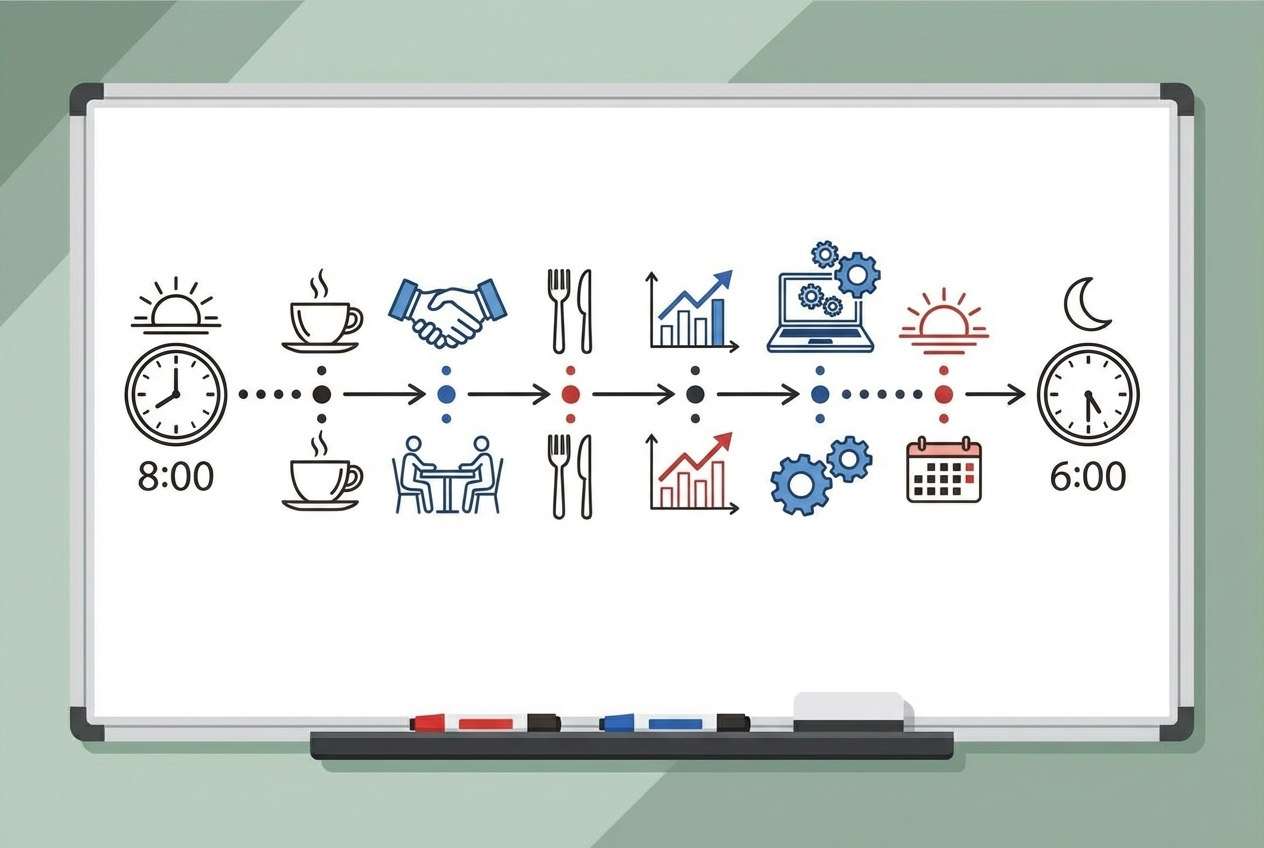
You need a whiteboard. You need to draw a timeline.
Start at the beginning.
- 1:00 PM: The email copy was drafted.
- 1:15 PM: The discount code was generated in the inventory system.
- 1:30 PM: The email was loaded into the marketing tool.
- 1:45 PM: The test email was sent to the internal team.
- 2:00 PM: The campaign was launched.
Go through this minute by minute. Ask the team to verify the times. Look at the server logs or the chat history if you have to.
Often during this phase you will discover the gap. You might see that between 1:45 and 2:00 nobody actually opened the test email. They just saw it arrive in their inbox and assumed it was fine.
Now you have a data point. The mistake wasn’t the typo. The mistake was the lack of verification.
By focusing on the timeline you remove the emotion. You are just historians documenting an event. This lowers the temperature in the room and allows the culprit to breathe.
The Five Whys
Once you have the timeline you move to the root cause analysis. The best tool for this is a technique developed by Toyota called the Five Whys.
The theory is that the surface reason is never the real reason. You have to peel back five layers of causality to find the truth.
Let us go back to our email disaster.
Why 1: Why did the customers get a 100% discount? Answer: Because the coupon code in the email was set to 100% off.
Why 2: Why was the code set to 100% off? Answer: Because the sales rep typed 100 instead of 10 in the generator.
Why 3: Why did the rep type the wrong number? Answer: Because he was rushing to meet the 2 PM deadline and was doing data entry manually.
Why 4: Why was he doing data entry manually? Answer: Because our inventory system does not integrate with our email system.
Why 5: Why do we rely on manual entry for high risk financial variables? Answer: Because we never built a safety check or a limit on discount creation.
Do you see what happened?
We started with human error. We ended with a system failure.
If you had fired the sales rep at Why number 2 you would still have a broken system. The next sales rep would eventually make the same mistake. Fatigue and typos are inevitable.
But by getting to Why number 5 you have a solution. You can build a rule in the software that prevents any discount over 20% from being created without manager approval.
Now the problem is solved forever.
The Artifact of Learning
A Post Mortem is useless if it lives only in the memory of the people in the room.
It must produce an artifact.
This is usually a checklist or a protocol change. It is a physical document that ensures the lesson is codified into the DNA of the company.
After the meeting you must assign someone to update the Standard Operating Procedure.
It might be a literal checklist that sits on the desk of every sales rep. Item four on the list reads: Manager must physically verify discount code in the staging environment before launch.
This artifact transforms the failure into an asset. You paid twenty thousand dollars for that mistake. You might as well get a twenty thousand dollar operational upgrade out of it.
If you do not change the process you wasted the money.
Leadership Vulnerability
There is one final ingredient required to make this work.
You.
If you want your team to be honest about their mistakes you have to be honest about yours.
The best way to introduce the Post Mortem culture is to hold one on yourself.
Think about a time recently when you dropped the ball. Maybe you missed a client meeting. Maybe you hired the wrong vendor. Maybe you snapped at an employee unnecessarily.
Call the meeting. Put your mistake on the whiteboard. Walk the team through your own timeline. Ask the Five Whys about your own behavior.
Show them that you are not afraid of the autopsy. Show them that you are interested in the system that led to your failure not in shaming yourself.
When the boss admits they are fallible it gives permission for the rest of the room to be human.
It signals that we are all on the same side of the table. We are all fighting against entropy and chaos. Sometimes the chaos wins.
But if we stick together and if we are brave enough to look at the wreckage without blinking we can build a better machine.
The Long Term Culture Shift
Over time this approach changes the psychology of your entire workforce.
Your employees stop hiding problems. They start flagging them early.
“Hey boss I think I messed up the shipping label. Can we look at it?”
They know that bringing you a mistake will result in help not punishment. They know that you are a partner in solving the puzzle.
This de-stresses your life. You no longer have to worry about what is festering in the dark corners of your business. The lights are on. The information is flowing.
Mistakes are painful. They hurt your ego and your wallet.
But they are also the primary mechanism of growth.
A business that never makes mistakes is a business that is not moving fast enough. A business that hides its mistakes is a business that is dying.
Be the business that learns.
Sit down. Draw the timeline. Ask why.
And build something stronger from the pieces.







