The Calendar as a Crime Scene: How Bad Meetings Are Stealing Your Company's Future
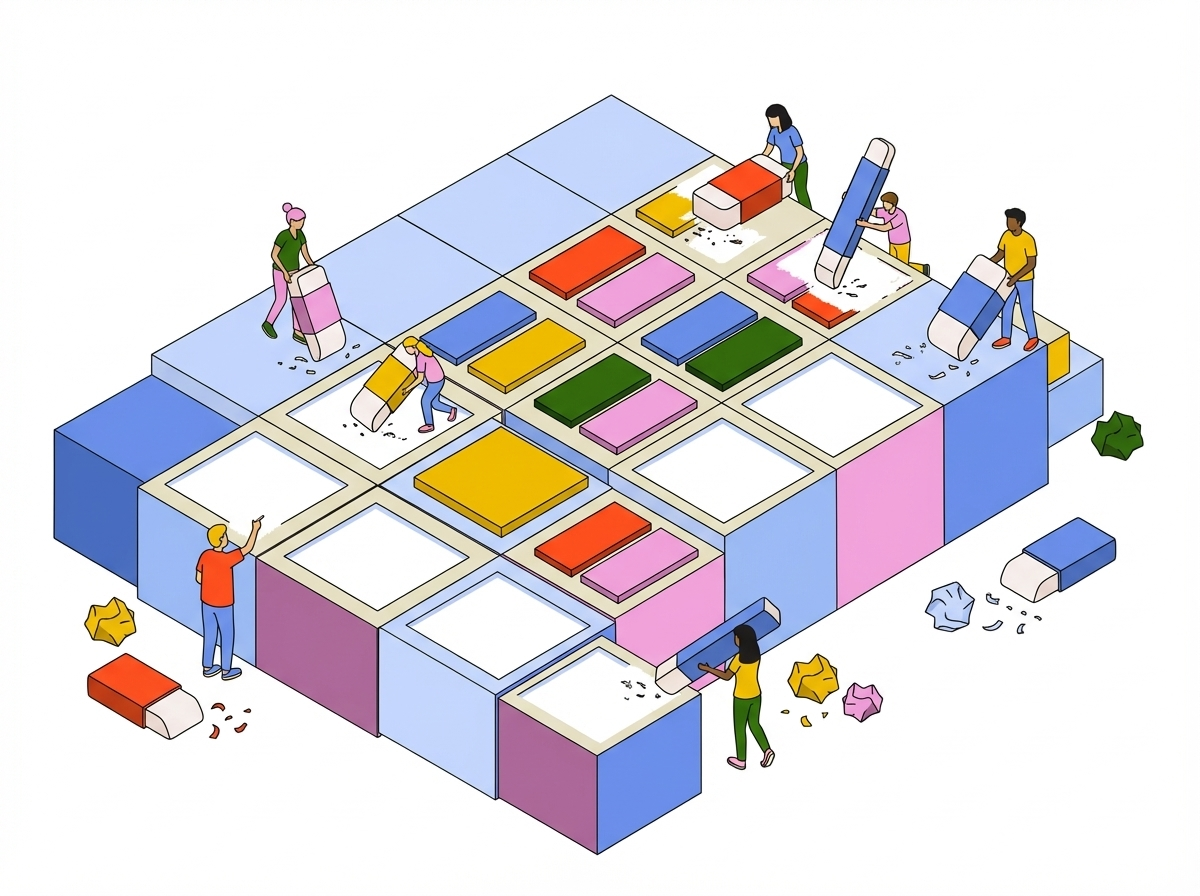
Look at your calendar for next week. Look at the blocks of color. Each one of those blocks represents a meeting. Now, do a quick mental calculation. Multiply the duration of the meeting by the number of people attending by their average hourly rate.
That one-hour status update with eight people? That cost you $800. If you do it every week, that is a $40,000 annual expense. For a meeting where people mostly check their phones under the table.
We have a crisis in the modern workplace. We have confused “meeting” with “working.” We have defaulted to dragging people into conference rooms (or Zoom rooms) every time we have a question or an update.
This is not just annoying. It is a massive drain on your operational efficiency. It breaks the flow state of your makers. It exhausts the energy of your managers. And usually, it delays the actual decision making.
We need to declare war on the bad meeting. We need to treat the calendar like a sacred space that must be defended. And we need to learn the difference between synchronous and asynchronous communication.
The Psychology of the Meeting Addiction
Why do we schedule so many meetings? It is usually because of insecurity. We call a meeting because we want consensus. We want to spread the blame if things go wrong. Or we simply want to feel like we are “managing.”
For a manager, a meeting feels like work. It is where you exercise authority. For a creator—a developer, a writer, a designer—a meeting is the enemy of work. It is an interruption that requires 20 minutes of recovery time.
When you interrupt a developer at 10 AM and then again at 2 PM, you have effectively destroyed their entire day. You have fragmented their time into useless slivers.
We have to shift our mindset. A meeting should be the last resort, not the first option. A meeting is for two things only: Conflict and Decision.
If you are just sharing information, that is an email. If you are just giving a status update, that is a Slack message. If you are brainstorming without a clear goal, that is a shower thought, not a calendar invite.
The Rules of Engagement
To fix your meeting culture, you need to implement strict Rules of Engagement. These are not suggestions. They are laws.
Rule 1: No Agenda, No Meeting. If you cannot write down exactly what you want to achieve in three bullet points, you are not ready to have a meeting. Cancel it.
Rule 2: The Two-Pizza Rule. Jeff Bezos made this famous. If you can’t feed the meeting participants with two pizzas, there are too many people. When you have more than eight people, engagement drops to zero. You have spectators, not participants.
Rule 3: End Early. Parkinson’s Law states that work expands to fill the time available. If you schedule an hour, you will take an hour. Schedule 45 minutes. Schedule 15 minutes. Create a sense of urgency.
Rule 4: The Decision Log. Every meeting must end with a recorded decision and a list of action items. Who is doing what by when? If there is no decision, the meeting was a social gathering.
The Power of the Stand-Up
The software world gave us a great tool: the daily stand-up. But most companies implement it wrong. They turn it into a 30-minute rambling session.
A true stand-up has three rules:
- You must literally stand up. (This makes people want to finish quickly so they can sit down).
- It lasts no more than 15 minutes.
- You answer three questions: What did I do yesterday? What am I doing today? What is blocking me?
The most important question is the third one. “What is blocking me?” This is the signal for the manager to step in and clear the path. Everything else is just context.
If a discussion starts to drag on, you take it “offline.” You say, “Let’s discuss that after the stand-up.” And you move on.
This ritual aligns the team without eating their morning. It creates a heartbeat for the day.
Moving to Asynchronous Updates
The biggest breakthrough in productivity comes when you realize you don’t need to be in the same room (or time zone) to collaborate.
Status updates should be asynchronous. Use a tool like Geekbot or just a dedicated Slack channel. At 9 AM, everyone types their update. You can read it in 30 seconds. You don’t need to listen to everyone say it out loud.
This frees up the meeting time for the hard stuff. The debate. The strategy. The emotional connection.
Imagine replacing your weekly one-hour status meeting with a written update on Monday morning, followed by a 30-minute strategic discussion on Tuesday afternoon based on those updates.
You have just saved half the time and doubled the value.
The Silent Meeting
Another powerful technique is the “Silent Meeting.” This was pioneered at Amazon and Square. You start the meeting with 15 minutes of silence.
Everyone reads a 6-page memo that outlines the problem, the data, and the proposed solution. They read it right there in the room.
Then, the discussion starts. But it starts at a much higher level. You aren’t spending the first half of the meeting presenting slides that people are ignoring. You are starting from a place of shared knowledge.
This forces the organizer to actually think through their argument before the meeting. It forces clarity. It kills the “winging it” culture.
The Audit and The Purge
You need to audit your calendar. Look at your recurring meetings. These are the barnacles on the hull of your ship. They slow you down.
Do you really need a weekly marketing meeting? Or do you need a meeting only when there is a new campaign to launch?
Try a “Meeting Purge.” Cancel all recurring meetings for two weeks. See what breaks. If nothing breaks, don’t bring them back.
Usually, you will find that the team is happier, the work is getting done faster, and nobody misses the hour they spent staring at a screen listening to someone read a spreadsheet.
Respecting the Maker’s Schedule
Paul Graham wrote a famous essay about the “Maker’s Schedule” vs. the “Manager’s Schedule.” Managers live in hourly blocks. Makers live in half-day blocks.
If you must have meetings, batch them. Put them all on one day. Have “Meeting Mondays.” Or restrict meetings to the afternoons.
Give your team long, uninterrupted stretches of “Deep Work” time. Protect their mornings. That is when the code gets written. That is when the copy gets drafted.
When you respect their time, they respect your leadership. They see that you understand the physics of their work.
The Return on Time Invested
Time is the only resource you cannot buy more of. When you waste it in bad meetings, you are burning your most precious capital.
By tightening your meeting culture, you are effectively giving everyone a raise. You are giving them more hours to do the job they were hired to do.
So decline the invite. Cancel the status update. Send the memo. Stand up. And get back to work.







