The End of Memorization: Why Your Brain Should Be a Processor, Not a Hard Drive
You are on a sales call. The client asks a specific technical question about your API integration. You freeze. You know you read the answer in a training manual three months ago. You rack your brain. You stumble. You say, “Let me get back to you on that.”
The moment is lost. The momentum is broken. The client’s confidence dips slightly.
This scenario plays out thousands of times a day in businesses across the world. It is the result of a fundamental flaw in how we approach knowledge. We operate on a “Just-in-Case” model. We try to cram every possible fact into our brains just in case we need it later.
But the human brain is a terrible storage device for trivia. It is leaky. It is prone to corruption. It gets full.
We need to shift to a “Just-in-Time” model. We need to stop treating our brains like hard drives and start treating them like processors. We need to build systems that deliver the exact right answer at the exact second it is needed.
The Cognitive Load of “Knowing It All”
In the past, being an expert meant knowing everything. The doctor who memorized every symptom. The lawyer who could cite every case. The engineer who knew every spec.
But the volume of information in the world is doubling every twelve hours. It is no longer possible to know it all. Trying to do so creates massive cognitive load. It leads to anxiety. It leads to burnout.
When your brain is busy trying to hold onto facts, it has less capacity for synthesis. It has less capacity for creativity. It has less capacity for empathy.
Imagine if you could offload the storage. Imagine if you didn’t have to remember the API spec. Imagine if you could just trust that the information would appear when you needed it.
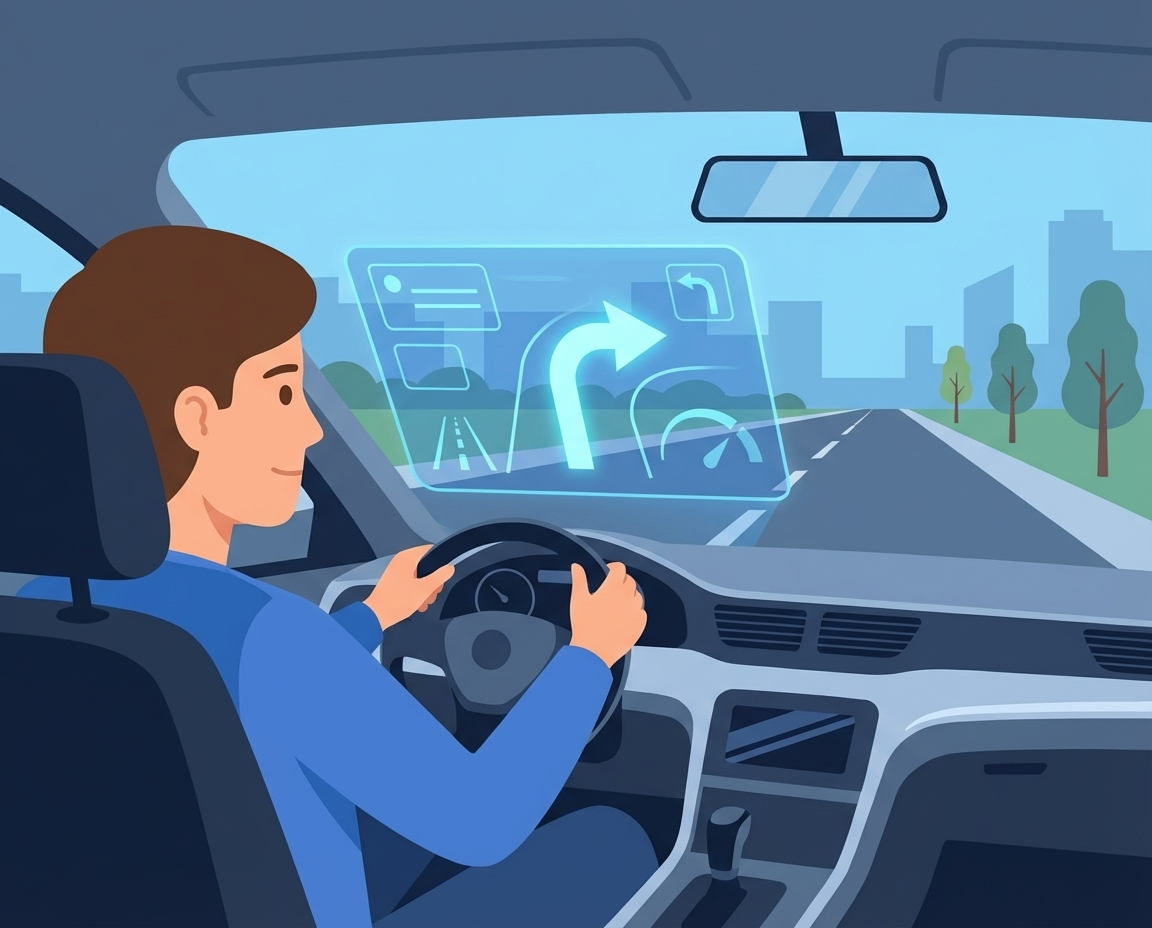
This is the promise of Just-in-Time (JIT) knowledge. It is the difference between studying a map for hours before a trip and using GPS turn-by-turn navigation.
With GPS, you don’t need to know the whole route. You just need to know the next turn. This frees your mind to focus on driving safely and enjoying the view.
The Shoulder-Surfing Expert
The best way to learn anything is to have an expert sitting next to you. If you are learning to cook, having a chef watch you and say, “Turn down the heat,” right before you burn the sauce is infinitely better than reading a cookbook alone.
But experts are scarce. They can’t be everywhere.
AI is solving this scarcity problem. An AI-driven knowledge base acts as the expert on your shoulder. It watches what you are doing and offers the relevant information.
If you are writing a proposal for a healthcare client, the system can surface the latest case studies from the healthcare sector. If you are coding a new feature, it can suggest the relevant libraries.
It whispers the answer. It doesn’t lecture you. It supports you.
This changes the psychological experience of work. It removes the fear of the blank page. It removes the fear of being wrong. It makes you feel like you have a superpower.
Reducing the Context Switch Tax
We have talked about the cost of interruption. But there is another cost: the Context Switch Tax of searching for information.
When you have to leave your workflow to find an answer—opening a new tab, searching Google, logging into the wiki—you break your flow. You might find the answer, but you might also get distracted by a news headline or a Slack message.
Just-in-Time knowledge brings the information to the workflow. It integrates into the tool you are using. It appears in the sidebar of your CRM. It pops up in your IDE.
By keeping you in your primary environment, it preserves your flow state. It allows you to stay in the zone.
Democratizing Competence
One of the most powerful effects of JIT knowledge is that it levels the playing field. In a traditional model, the ten-year veteran has a massive advantage over the new hire because they have memorized the tribal knowledge.
In a JIT model, the new hire has access to the same brain. They can perform at a high level on day one because the system guides them.
This doesn’t devalue the veteran. It frees the veteran. Instead of answering basic questions all day, the veteran can focus on high-level strategy and complex problem solving—the things the AI can’t do.
It turns the organization into a collective intelligence. The best practices of the best performers are captured and served up to everyone.
The Reliability of the Source
Of course, for JIT to work, the information must be accurate. If the GPS tells you to turn left into a river, you stop trusting the GPS.
This brings us back to the importance of the “Living Document.” Your knowledge base must be curated. It must be updated.
But because JIT systems are used constantly, they are also tested constantly. If an answer is wrong, the user flags it immediately. The feedback loop is tight.
The system gets smarter with every interaction. It learns which answers are helpful and which are noise.
Trusting the External Brain
The shift to JIT requires a leap of faith. We are conditioned to value memorization. We grew up taking tests where we couldn’t look at the book.
But business is an open-book test. The goal is to get the right answer, not to prove you memorized it.
We need to give ourselves permission to not know. We need to get comfortable saying, “I don’t know, but I can find out in two seconds.”
When we trust the external brain, we reclaim our internal brain. We reclaim the cognitive space to think, to connect, and to lead.
We stop being encyclopedias and start being explorers. And in a changing world, explorers win.







