The End of the One-Size-Fits-None Training: Why Mass Education Is Failing Your Team
Imagine you are running a marathon. You are at mile 20. You are an experienced runner. You know your pace. Suddenly, a coach jumps out of the bushes and forces you to stop. He makes you watch a ten-minute video on how to tie your shoes.
Now imagine you are a complete beginner. You have never run a mile in your life. The same coach jumps out and hands you an advanced hydration strategy for ultra-marathons, then disappears.
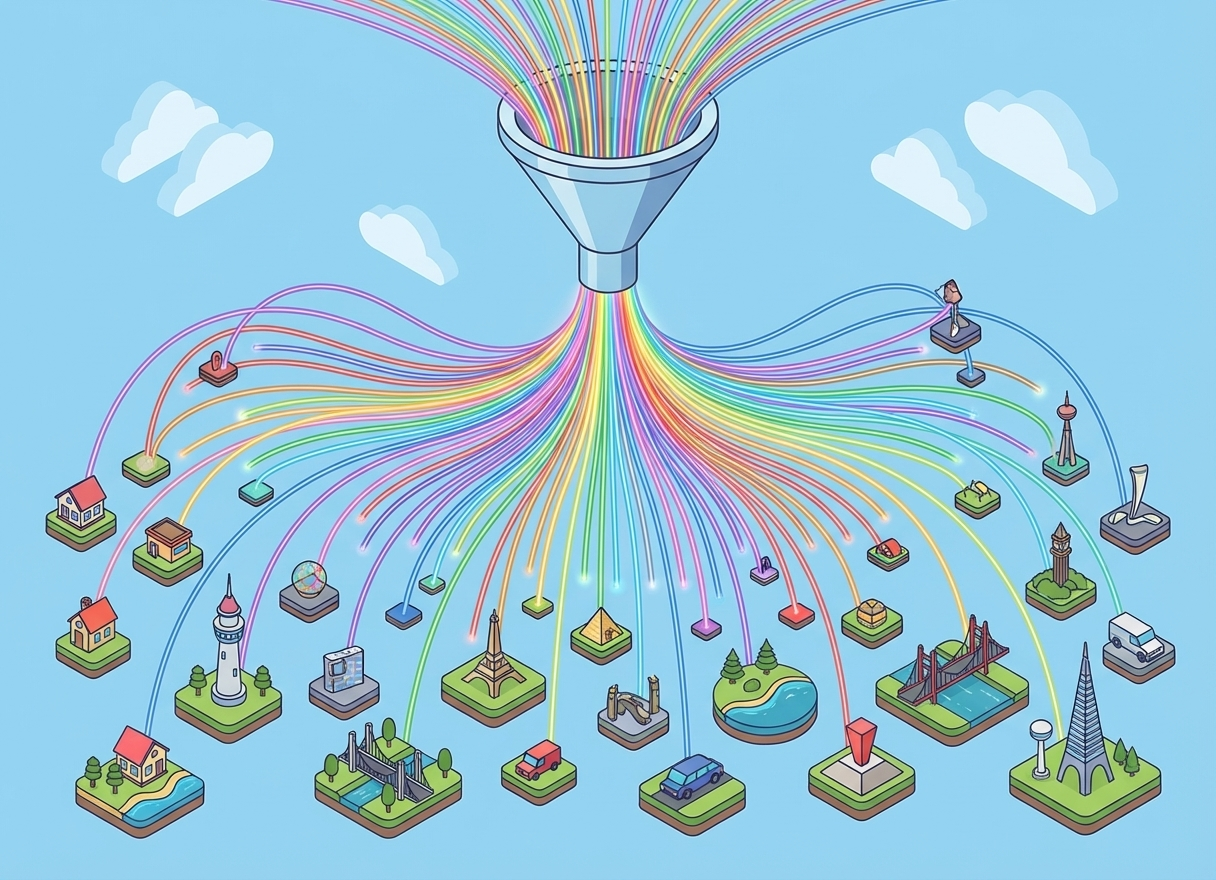
This is what corporate training feels like today. It is a one-size-fits-none disaster. We take a room full of people with different skills, different tenures, and different learning styles, and we force them through the exact same funnel.
The result is boredom for the experts and anxiety for the novices. It is a waste of time and money.
For decades, we accepted this because the alternative—personalized training for every single employee—was mathematically impossible. A manager with ten direct reports cannot design ten unique curriculums. There aren’t enough hours in the day.
But the math has changed. AI has broken the constraint. We are now entering the era of “Mass Personalization,” where a team of ten—or a team of a thousand—can have ten thousand unique paths to competence.
The Failure of the Standard Curriculum
Standardized training is a relic of the industrial age. It assumes that the job is static and the worker is a blank slate. Neither is true anymore.
Your senior engineer doesn’t need a course on “Intro to Python.” She needs a course on “Advanced Architecture Patterns for AI Integration.” Your junior sales rep doesn’t need “Advanced Negotiation Tactics.” He needs “How to Use the CRM Without Crying.”
When you force the senior engineer to sit through the intro course, you are disrespecting her time. You are signaling that you don’t know who she is or what she knows. She disengages. She checks her email.
When you force the junior rep into the advanced course, you overwhelm him. He misses the fundamentals because he is trying to survive the deep end.
This mismatch creates a “competence gap.” The training creates an illusion of coverage, but the actual skills are not being transferred because the delivery mechanism is blind to the recipient.
The AI Architect
How do we fix this? We stop manually building the curriculum. We let the AI build it.
Imagine a system that assesses an employee’s current skill level not by a multiple-choice quiz, but by analyzing their actual work. It looks at their code commits. It listens to their sales calls. It reads their emails.
It identifies the specific gaps. “Sarah is great at closing, but she struggles with the initial discovery questions.”
Then, it generates a micro-curriculum just for Sarah. It pulls three specific videos on discovery questions. It creates a role-play scenario for her to practice. It ignores the closing techniques because she has already mastered them.
This is the “AI Architect.” It builds a bridge from where the employee is to where they need to be, using the materials you already have (or generating new ones).
Adaptive Learning Paths
The most powerful feature of AI-driven training is adaptability. A static course is linear. You must go from Module 1 to Module 2 to Module 3.
An adaptive path is non-linear. If the employee aces the quiz on Module 1, the system skips Module 2 and jumps to the advanced application in Module 3.
If they struggle with Module 1, the system doesn’t just repeat the same content. It offers a different explanation. It offers a simpler example. It loops back until mastery is achieved.
This respects the learner’s pace. It allows the fast learners to fly and the slow learners to build a solid foundation without feeling left behind.
Scaling the Unscalable
The objection to personalization has always been scale. “I can’t do this for everyone.”
With AI, the marginal cost of personalization drops to zero. It costs the AI the same amount of compute power to generate one generic course as it does to generate one thousand unique courses.
This allows a small business to offer “Fortune 500” level development programs. You can give your team the kind of bespoke attention that used to be reserved for high-potential executives at massive corporations.
This is a massive retention tool. People stay where they grow. If an employee feels that the company is investing in their specific, personal growth, they develop loyalty. They feel seen.
The Manager’s New Role
Does this replace the manager? No. It elevates the manager.
Instead of being the “content creator” who has to write the training materials, the manager becomes the “career coach.”
The manager sits down with the employee and reviews the path generated by the AI. “I see the system suggests you focus on public speaking. Do you agree with that? How does that fit into your goal of becoming a team lead?”
The manager provides the context and the motivation. The AI provides the content and the structure.
This is a higher-value interaction. It focuses on the human aspirations of the employee rather than the logistical details of the training.
Curating the Content Ecosystem
One challenge with AI is quality control. You don’t want the AI to teach your team bad habits.
You need to curate the ecosystem. You feed the AI your best materials. Your best sales calls. Your best code. Your best project plans.
You tell the AI: “Build the training based on this standard.”
This ensures that the personalized paths are all aligning toward the same company culture and quality bar. You are scaling your best practices, customized for each individual’s absorption rate.
The Return on Competence
When you move to personalized learning, you reduce the “Time to Productivity.” A new hire who gets exactly what they need learns twice as fast as a new hire who has to sift through irrelevant information.
You also reduce the “Mistake Tax.” Because the training is targeted at their specific weak points, they stop making the errors that cost you money.
And perhaps most importantly, you build a culture of continuous learning. Learning stops being a chore (“I have to do my compliance training”) and starts being a benefit (“I get to learn skills that make me better”).
Stop forcing your marathon runners to learn how to tie their shoes. Stop throwing your beginners into the deep end.
Use the tools available to treat your employees like individuals. Give them the path that works for them. And watch them run.







