The Expensive Myth of Sink or Swim: Why Trial by Fire Is Burning Your Cash
There is a pervasive mythology in small business culture that treats trauma as a teaching tool. We call it “Trial by Fire.” We call it “Sink or Swim.” We tell ourselves that if a new hire is truly “A-player” material they will figure it out. We throw them into the chaos of a new role with a laptop and a login and we wait to see if they surface.
If they survive we pat ourselves on the back for hiring a self-starter. If they drown we tell ourselves they just didn’t have what it takes. They weren’t a culture fit. They lacked grit.
This narrative is convenient. It absolves the manager of the hard work of training. It frames the lack of process as a test of character.
But we need to look at the balance sheet. We need to look at the actual cost of this methodology. When we strip away the machismo of the “hustle” and look at the data we find that Trial by Fire is perhaps the single most expensive way to onboard a human being.
It destroys capital. It destroys confidence. And it destroys the very initiative you are trying to select for. We need to dismantle this approach and replace it with something that actually works. We need to talk about scaffolding.
The Survivor Bias of the Founder
Why do we do this? Why do rational business owners persist in a strategy that has such a high failure rate?
Usually it comes down to survivor bias. As a founder or a senior leader you figured it out. You were thrown into the fire when you started the company. There was no manual. There was no safety net. You survived. You thrived. You learned by doing and by failing and by fixing it at 2 AM.
So you assume that this is how learning happens. You assume that the pressure is the active ingredient in your success.
But there is a critical variable you are forgetting. Ownership.
When you were figuring it out you owned the company. The stress was high but so was the potential reward. Every late night increased your equity. Every solved problem built your legacy.
Your employee does not have that equation. They have a salary. They have a job description. When you throw them into the fire you are giving them the founder’s stress without the founder’s upside.
When a founder faces the abyss they feel adrenaline. When an employee faces the abyss they feel panic. And those two biological states produce very different results.
The Neuroscience of the Deep End
Let’s look at what happens to a brain during a Trial by Fire. When a human being is placed in a high-stakes environment with low information and low support the brain identifies a threat.
The amygdala activates. It floods the system with cortisol and adrenaline. The brain shifts into survival mode. Fight. Flight. Or Freeze.
This is a great state for running away from a predator. It is a terrible state for learning complex software or understanding a nuanced pricing strategy.
When the brain is in threat mode the prefrontal cortex is inhibited. This is the part of the brain responsible for logic, planning, and working memory. Literally the part of the brain you are paying them to use.
By inducing panic on week one you are chemically lobotomizing your new hire. You are making them dumber.
They might make a decision just to make the pain stop. They might guess. They might hide. But they are not learning. They are surviving. And survival behavior is rarely strategic behavior.
A panicked employee will not ask for help because asking for help feels like exposing a weakness in a dangerous environment. So they guess. And that is where the mistake tax comes in.
The Hidden Mistake Tax
We often calculate the cost of a new hire based on their salary and their recruiting fees. But the real cost of a sink-or-swim onboarding is the Mistake Tax.
It is the client relationship that is slightly damaged because the new account manager didn’t know the tone to use. It is the three hours the development team spent fixing a bug that the new engineer pushed because they didn’t understand the testing protocol. It is the refund you had to process because the support agent promised something you can’t deliver.
These costs are rarely attributed to onboarding. We write them off as “cost of doing business.” But they are not. They are the cost of negligence.
When you force someone to guess you are gambling with your brand reputation. You are betting that their intuition aligns with your strategy. That is a bad bet.
And then there is the ultimate cost. Turnover. Most employees decide whether to stay at a company within the first six months. If those first six months are defined by anxiety and the feeling of incompetence they will leave. And you will have to pay the recruitment fee all over again.
Scaffolding vs. Hand-Holding
Many managers resist structured onboarding because they are afraid of “hand-holding.” They don’t want to coddle their team. They want independent thinkers.
This is a misunderstanding of terms. We are not talking about hand-holding. We are talking about scaffolding.
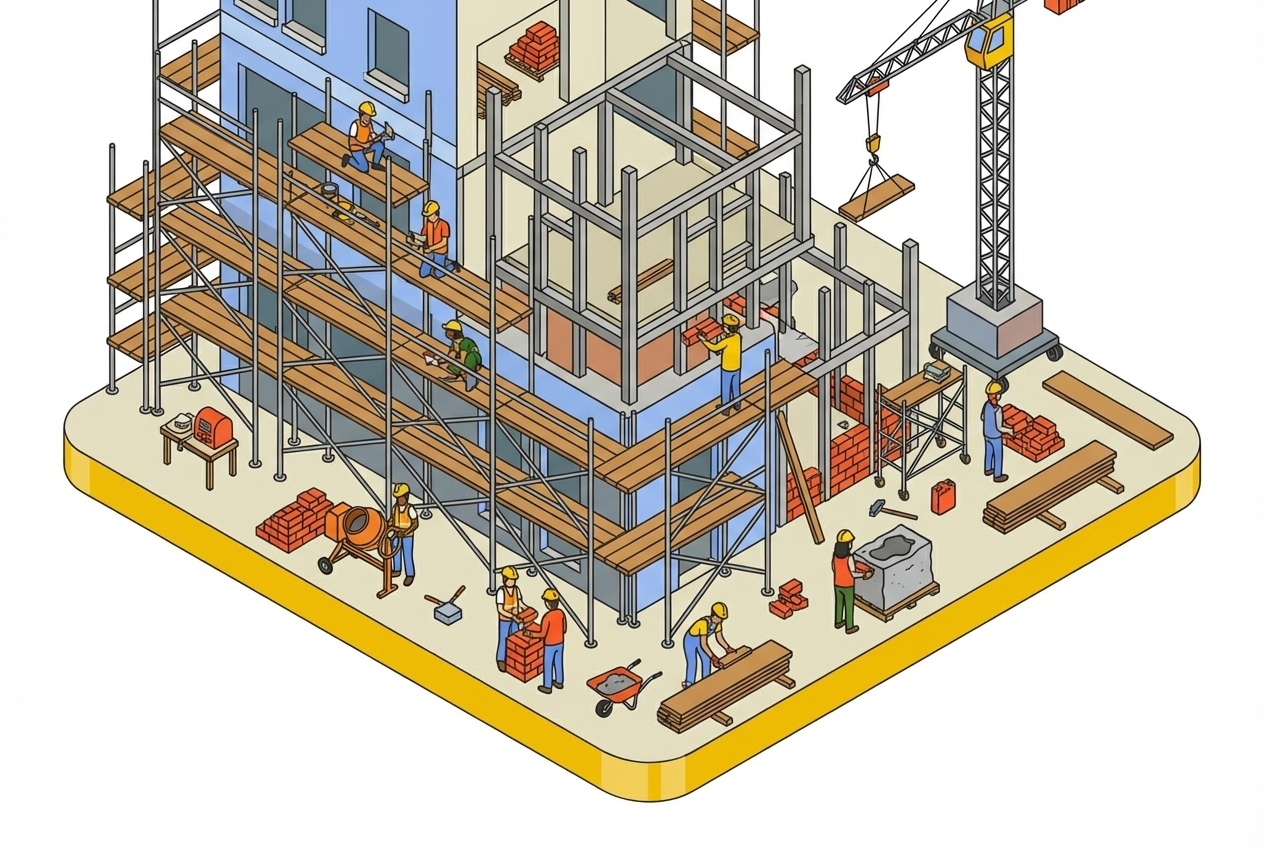
Think about how a skyscraper is built. You see scaffolding all around it. The scaffolding allows the workers to reach high places safely. It allows them to do the work. But the scaffolding is not the building. And crucially the scaffolding is temporary.
As the building becomes self-supporting the scaffolding is removed. Layer by layer.
This is how we should approach a new role. In the first week the scaffolding is thick. We provide templates. We provide scripts. We provide a mentor who sits on every call.
In the second month we remove a layer. We let them take the call but we debrief it immediately after. We let them write the email but we review it before they hit send.
By the third month we remove another layer. Now they are flying solo but they have a safety net of weekly reviews.
This is not coddling. This is engineering. It ensures that the employee builds confidence based on competence rather than false confidence based on guessing.
The Slow Down to Speed Up
The most common objection to this approach is time. “I don’t have time to build scaffolding. I need them to work now. I am swamped.”
This is the productivity paradox. You are too busy to train so you hire someone to help. But because you don’t train them they create more work for you. So you become even busier.
We have to accept the J-curve of productivity. When you hire someone your productivity will initially go down. You are taking time away from your work to transfer knowledge to them.
If you try to cheat this curve by skipping the training your productivity never recovers. You spend the next year fixing their mistakes and answering the same questions over and over.
If you invest heavily in the first month. If you accept the slowdown. You get the exponential return later. You get a team member who actually functions as an extension of your will.
Creating the Safe Harbor
So how do we do this practically? It starts with creating a “Safe Harbor” for the first 30 days.
Explicitly tell your new hire: “For the next month your job is to learn. It is not to produce. It is to ask questions. You have permission to be new.”
Give them a sandbox. Let them play with the software in a test environment where they can’t break anything. Let them practice the sales pitch on you before they practice it on a customer.
Document the “Tribal Knowledge.” Get the unwritten rules out of your head and into a wiki. Don’t make them guess how you like your reports formatted. Show them an example of a perfect report.
Check in on the anxiety. Ask them “Where do you feel like you are drowning?” and then throw them a line.
The Return on Investment
When you scaffold an employee into a role you get something much more valuable than a survivor. You get a builder.
You get someone who understands why you do things not just what you do. You get someone who feels loyal because they felt supported. You get someone who has the mental bandwidth to innovate because they aren’t using all their energy to suppress a panic attack.
Business is hard enough. The market is a trial by fire. The competition is a trial by fire. Your internal culture should not be.
Your internal culture should be the place where people get the equipment they need to go out and fight the fire together.







