The Golden Signal: Why Your Front-Line Staff Knows the Future Before You Do
There is a story about empty boxes at a toothpaste factory. The factory had a problem: occasionally, the automated packing machine would ship an empty box. This was a disaster for the brand. The executives hired expensive engineering consultants. They spent six months and millions of dollars designing a high-tech scale that would stop the conveyor belt if a box weighed too little, triggering an alarm so someone could remove it.
A few months after installation, the CEO looked at the data. The number of empty boxes shipped was zero. Success. But the number of times the alarm had been triggered was also zero.
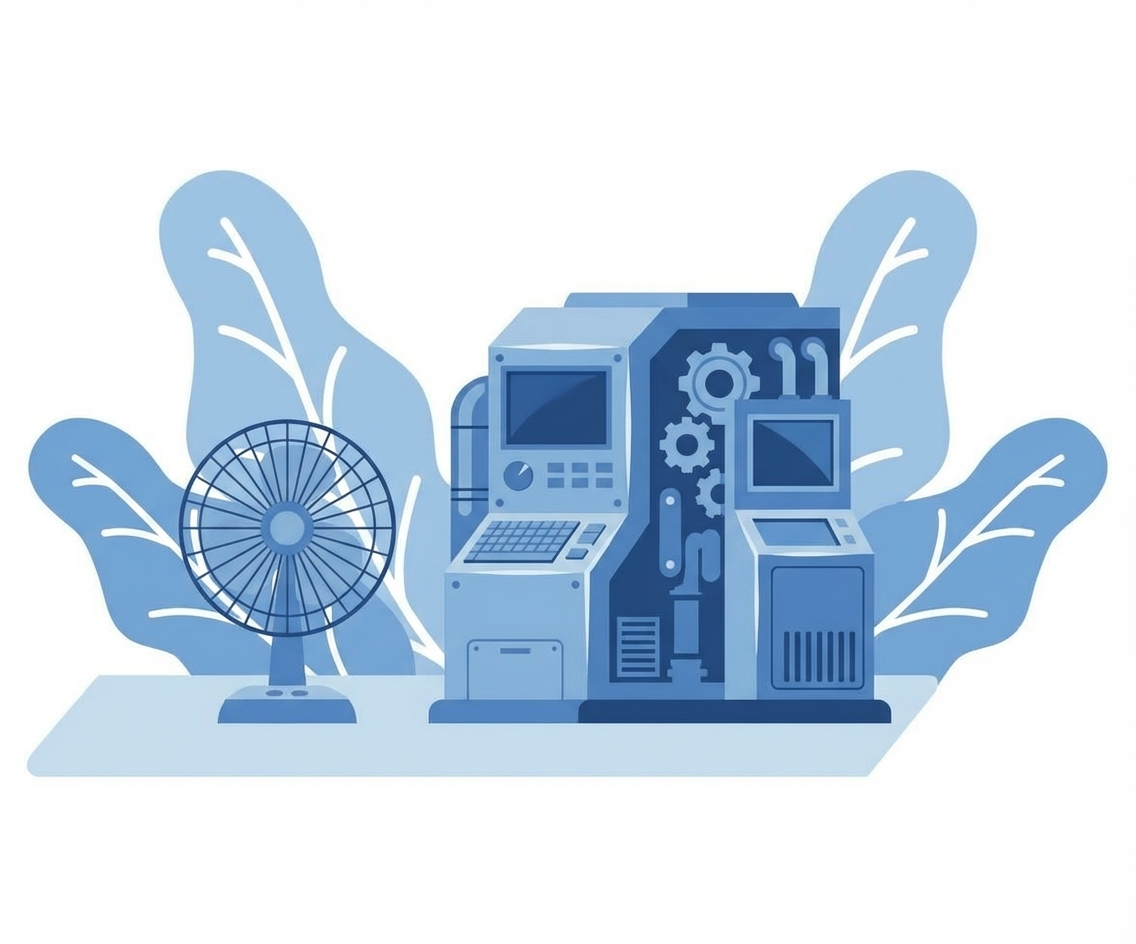
Confused, he went down to the factory floor. He walked over to the conveyor belt and saw a cheap desk fan set up on a chair next to the line. The wind from the fan was blowing the empty boxes off the belt into a bin before they reached the scale.
He asked the line supervisor what was happening.
Oh, that, the supervisor said. One of the guys got tired of the alarm going off every ten minutes and having to walk over to reset it. So he bought the fan for twenty bucks.
This story is the perfect parable for the disconnect in modern business.
We tend to believe that innovation is a top-down activity. We think it belongs to the creative directors, the strategists, and the founders. We book off-site retreats and sit in rooms with whiteboards, trying to envision the future.
Meanwhile, the people actually doing the work—the customer support agents, the sales reps, the warehouse staff—are solving problems in real-time. They are seeing the friction points before the data even registers them. They are hacking the system to make it work.
If you want to build a business that continuously innovates, you have to stop looking up for inspiration and start looking down. You need to build a pipeline that carries the signal from the front line to the C-suite without distortion.
The Friction is the Feature
Why do we ignore these voices?
Usually, it is because front-line feedback comes wrapped in the guise of complaining. When a support agent says, Customers keep getting confused by the checkout button, a manager often hears, I am annoyed by having to explain this.
We view complaints as noise. We try to suppress them or manage them away with scripts.
But in a scientific context, a complaint is a data point. It is a signal of friction. And in business, friction is the seed of innovation.
Every time a customer struggles, there is an opportunity to build a new product or service.
- If they are hacking your software to do something it wasn’t designed for, that is a new feature request.
- If they are asking for a refund because the product didn’t fit, that is a new sizing guide or a custom fitting service.
- If they are calling to ask advice on a related topic, that is a new consulting revenue stream.
Your front-line staff absorbs this friction all day long. They are the shock absorbers of your business. The problem is that most businesses are designed to insulate the decision-makers from the shock.
To change this, you have to change your reaction to bad news.
When a team member brings you a problem, do not ask, How do we fix this quickly? Ask, What is this telling us about the market?
The Psychological Safety of Suggestion
Creating a bottom-up innovation culture is not as simple as putting a suggestion box in the breakroom. Suggestion boxes are where ideas go to die.
To get real engagement, you have to cultivate psychological safety.
Innovation requires risk. To suggest a new way of doing things is to implicitly criticize the current way of doing things. If the current way was designed by the boss, that feels dangerous.
Your team needs to know that they will not be punished for challenging the status quo. More importantly, they need to know they will not be ignored.
Nothing kills the spirit of innovation faster than the black hole. This is when an employee types up a thoughtful email about how to improve a process, hits send, and never hears back.
They might do it once. They might do it twice. But by the third time, they learn the lesson: Keep your head down and just do the job.
You have to close the loop.
Even if the idea is bad—and let’s be honest, many of them will be unworkable or too expensive—you must acknowledge it.
You have to say, I read your idea. Here is why we cannot do it right now, but I love that you are thinking about this. Please keep them coming.
This validation tells the brain that the effort was worth it. It keeps the neural pathway for creativity open.
Structuring the Pipeline
How do you operationalize this? You cannot just rely on hallway conversations. You need a system that captures these insights without adding administrative bloat.
Start by creating a dedicated channel for Observations, not just Solutions.
Often, employees feel pressure to have the perfect fix before they speak up. This stops them from sharing the problem. You want the raw data.
Create a Slack channel or a weekly meeting segment called The Pebble in the Shoe.
Ask your team: What was the most annoying thing you had to do this week? What question did you answer five times today?
This lowers the barrier to entry. Everyone can identify a pebble.
Once you have the observations, you can move to the Experiment Phase.
Give your team permission to run micro-experiments. If a salesperson thinks a new email subject line will work better, let them try it on fifty leads. If a warehouse worker thinks rearranging the packing station will save time, let them try it for an afternoon.
The key is to lower the stakes. Innovation does not have to be a massive, expensive pivot. It can be a series of small, reversible tests.
When an experiment works, celebrate it loudly. Give the credit to the person who originated it.
When an experiment fails, celebrate the learning.
This shifts the culture from one of compliance to one of curiosity.
The Cognitive Diversity of the Front Line
There is another reason why your front-line staff is better at innovation than your executive team.
Cognitive diversity.
As you move up the ladder, your perspective narrows. You spend your time with other managers, investors, and partners. You look at spreadsheets and slide decks. You become detached from the messy reality of the user experience.
Your front-line staff is often more diverse in age, background, and life experience. They see the world differently than you do.
They might notice that your mobile app is hard to use for someone with large thumbs. They might notice that your pricing excludes a specific demographic. They might notice cultural trends that haven’t hit the Wall Street Journal yet.
By tapping into this collective intelligence, you are getting a high-fidelity view of the world.
You are leveraging the fact that twenty brains are better than one, provided those twenty brains feel empowered to speak.
The Unknowns of Democratized Strategy
This approach is not without its risks. We have to be realistic about the challenges of democratizing strategy.
Can a business suffer from too many ideas?
Yes. If you chase every suggestion, you will lose focus. You will succumb to feature creep. You will confuse your customers.
How do you balance the need for operational discipline with the need for creative chaos?
If everyone is constantly experimenting, how do you maintain quality control? How do you ensure the brand remains consistent?
And perhaps the hardest question: How do you handle the ego of the leader?
It takes a specific kind of humility to admit that the twenty-two-year-old junior associate had a better idea than you did. Are you ready to put your ego aside for the sake of the best answer?
These are the tensions you will have to manage. You are not building a democracy; you are building a meritocracy of ideas. The leader’s job shifts from coming up with the answers to curating the answers.
Building the Periscope
Think of your business like a submarine.
You are the captain. You are deep underwater, navigating by instruments. You have maps and sonar, but you cannot see the surface.
Your front-line team is the periscope.
They are the ones breaking the surface, looking at the waves, seeing the storms, and spotting the other ships.
If you disconnect the periscope, or if you ignore what it shows you because it contradicts your map, you are sailing blind.
But if you keep that connection clear, if you polish that lens and trust what it shows you, you will navigate waters that your competitors cannot even see.
You will not just be reacting to the market. You will be anticipating it.
And that is how you build something that lasts.







