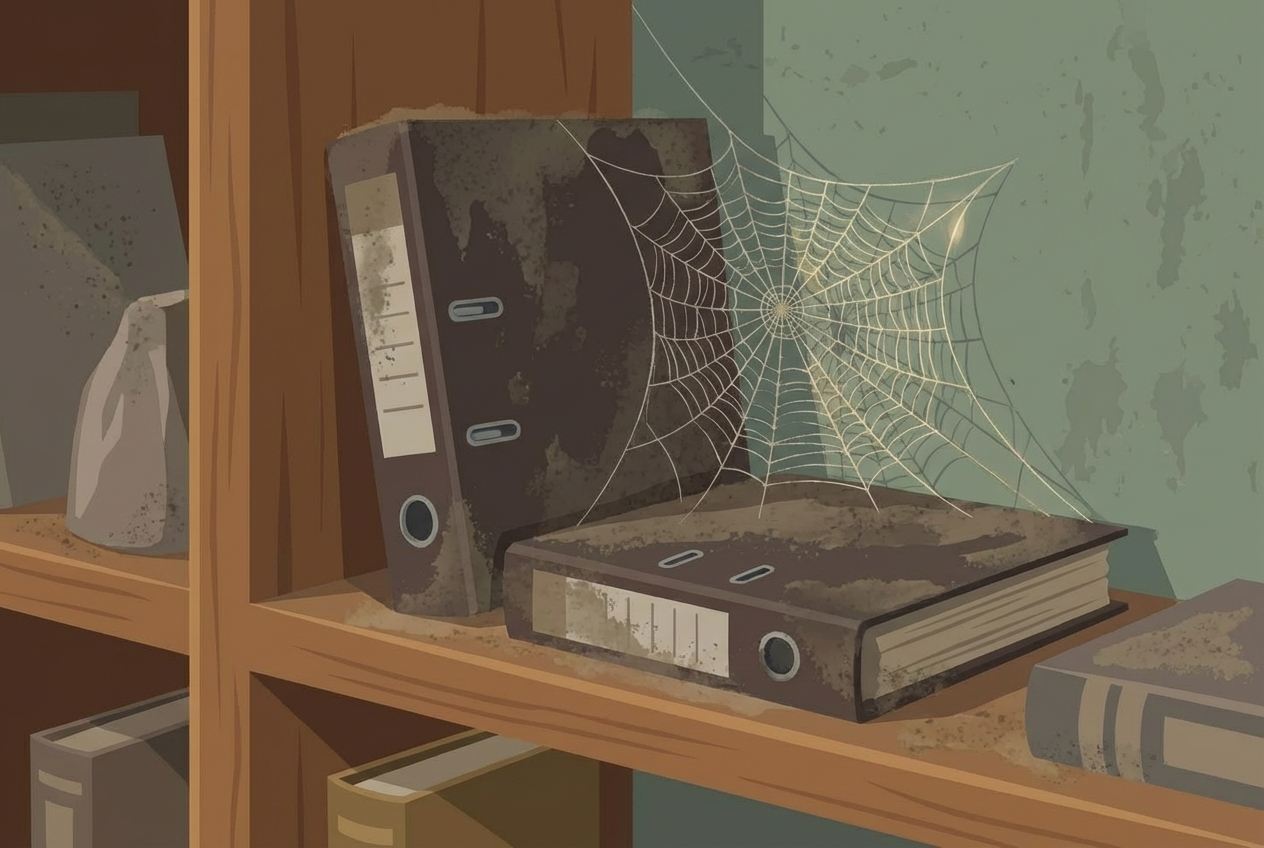
The Great Binder Lie: Why Your Expensive Employee Handbook Is Invisible
There is a sound that every business owner knows. It is the heavy, resonant thud of a three-ring binder hitting a desk. Or perhaps in the modern era, it is the digital ping of a forty-page PDF landing in an inbox.
It happens on the first day of work. You look at the new hire. You smile. You hand them the manual. You say something like, “Read this over the next few days. It has everything you need to know.”
You feel a sense of relief. You have documented your processes. You have written down the rules. You have done your job as a manager.
But here is the uncomfortable truth. That manual is not a training tool. It is a security blanket for you.
Two weeks later, that same employee makes a mistake. They mess up a refund protocol or they format a client email incorrectly. You feel a spike of frustration. You think, “I put that in the manual. Why didn’t they read it?”
They probably did read it. Maybe. But they didn’t learn it. And those are two very different things.
We need to dismantle the myth of the traditional employee handbook. We need to look at why these static documents gather digital dust and why they fail to produce the one thing we actually want. Competence.
The Forgetting Curve and the PDF
The problem with the traditional manual is not the content. The content is usually fine. The problem is the delivery mechanism. It fights against human biology.
In the late 19th century, a psychologist named Hermann Ebbinghaus discovered something called the Forgetting Curve. He found that humans forget approximately 50 percent of new information within an hour of learning it. By the next day, we have forgotten 70 percent.
When we hand a new employee a comprehensive manual on their first day, we are asking them to drink from a firehose. We are front-loading information that they have no context for yet.
They read about the vacation policy. Then they read about the CRM software. Then they read about the brand voice. Then they read about how to use the coffee machine.
Because they are not performing these tasks in the moment, the information has nowhere to stick. It washes over their brain and disappears. It is cognitive overload.
So when the moment comes three weeks later that they actually need to use the CRM software, the information is gone. The PDF is closed. And the friction of finding the file, opening it, and searching for the right paragraph is just high enough that they don’t do it.
They guess instead. Or they ask the person sitting next to them. And that is how bad habits spread and processes break down.
The Lie of the “Final” Version
There is another structural flaw with the static manual. It assumes that business is static. It assumes that once you write a process down, it stays that way forever.
But you are building a growing company. Your processes change. Your software updates. Your market shifts. You learn new and better ways to do things every single month.
A PDF is frozen in time. The moment you export a document as a PDF, it is dying. It starts to decay immediately.
We have all seen the file names. “Employee_Handbook_v2_FINAL_UPDATED_REAL.pdf”
This version control nightmare creates a dangerous ambiguity. Employees stop trusting the documentation because they have run into outdated information before. Once trust is broken, they stop checking the manual entirely.
If the source of truth is not alive, it is dead. There is no middle ground in a modern business.
Moving from Just-in-Case to Just-in-Time
So if the binder doesn’t work, what does? We have to shift our philosophy from “Just-in-Case” learning to “Just-in-Time” learning.
Traditional education is Just-in-Case. You memorize the periodic table just in case you become a chemist. You memorize the capital of Nebraska just in case you go on a game show.
But in business, we need Just-in-Time learning. This is the model of the recipe or the GPS. You don’t memorize a recipe for lasagna three weeks before you cook it. You look at the recipe while you are holding the noodles.
We need to restructure our business knowledge so that it is available exactly at the moment of need. We need to break the long, dense paragraphs into atomic units of information.
Instead of a ten-page chapter on “Customer Service,” we need a searchable, interactive node that answers the specific question: “How do I handle an angry refund request?”
When information is served in response to a specific problem, the retention rate sky-rockets. The brain is primed to receive the answer because it currently feels the pain of the question.
This is how adults learn. We learn by solving problems, not by reading textbooks.
The Searchability Crisis
Have you ever watched an employee try to find something in your current documentation? It is usually a painful experience.
They have to know exactly what keyword to search for. If you called the document “Expense Protocol” and they search for “Credit Card Reimbursement,” they might find nothing.
Static documents are rigid. They require the user to speak the exact language of the author. But in a diverse team, everyone speaks a slightly different professional dialect.
A senior manager might search for “Procurement.” A junior intern might search for “How to buy stuff.”
If your system cannot bridge that gap, it fails. The intern assumes the information doesn’t exist. They interrupt you to ask the question. You get frustrated because “it is in the manual.”
This is where dynamic systems shine. Modern knowledge management isn’t just about storage. It is about retrieval. It uses natural language processing to understand intent.
When we lower the barrier to finding answers, we increase the autonomy of the team. If it takes two seconds to find the answer, they will look for it. If it takes two minutes, they will guess.
Interactivity and the Feedback Loop
The final failure of the static manual is that it is a monologue. You speak. They listen. There is no feedback loop.
How do you know if your instructions are clear? In a PDF, you don’t. You only know they are unclear when someone messes up.
Dynamic learning systems are dialogues. They allow the employee to ask questions. They allow for feedback buttons that say “This was confusing” or “This is outdated.”
This turns your documentation into a living organism. Your team becomes the gardeners of the knowledge base. When they flag a confusing step, you can fix it instantly for everyone. The system gets smarter every day.
This also changes the psychological relationship the employee has with the rules. A binder is a set of commandments handed down from on high. A dynamic system is a shared tool that helps everyone do their job better.
One feels like bureaucracy. The other feels like support.
The Psychological Safety of the “Second Brain”
When we move away from the expectation that employees should memorize the handbook, we lower the anxiety in the organization.
We stop testing them on their memory and start testing them on their resourcefulness. We are telling them, “You don’t need to hold all of this in your head. You just need to know where to look.”
This concept is often called building a “Second Brain” for the company. It frees up the biological brains of your staff to do high-level creative work, problem solving, and relationship building.
Humans are terrible hard drives. We are forgetful. We get tired. We mix up details. But we are excellent processors.
Computers and software are excellent hard drives. They never forget. They never get tired.
Let the system hold the facts. Let the humans hold the strategy.
Stop Writing for the Shelf
It is time to stop measuring the value of our documentation by its weight. A three-hundred-page manual that no one reads has a value of zero.
We need to measure value by utility. How many times was this guide accessed today? How many problems did it solve? How much time did it save the senior management team?
If you are currently staring at a Word document trying to write the perfect comprehensive guide, stop. You are building a monument to your own knowledge, not a tool for your team.
Break it up. Make it searchable. Make it alive.
Don’t build a library that requires a library card and silence. Build a GPS that guides them turn by turn, exactly when they need to know which way to go.
Your team wants to do a good job. They want to get it right. They just need the information to move at the same speed they do.







