The Optimist’s Guide to the Future: Why This Is the Golden Age for Builders
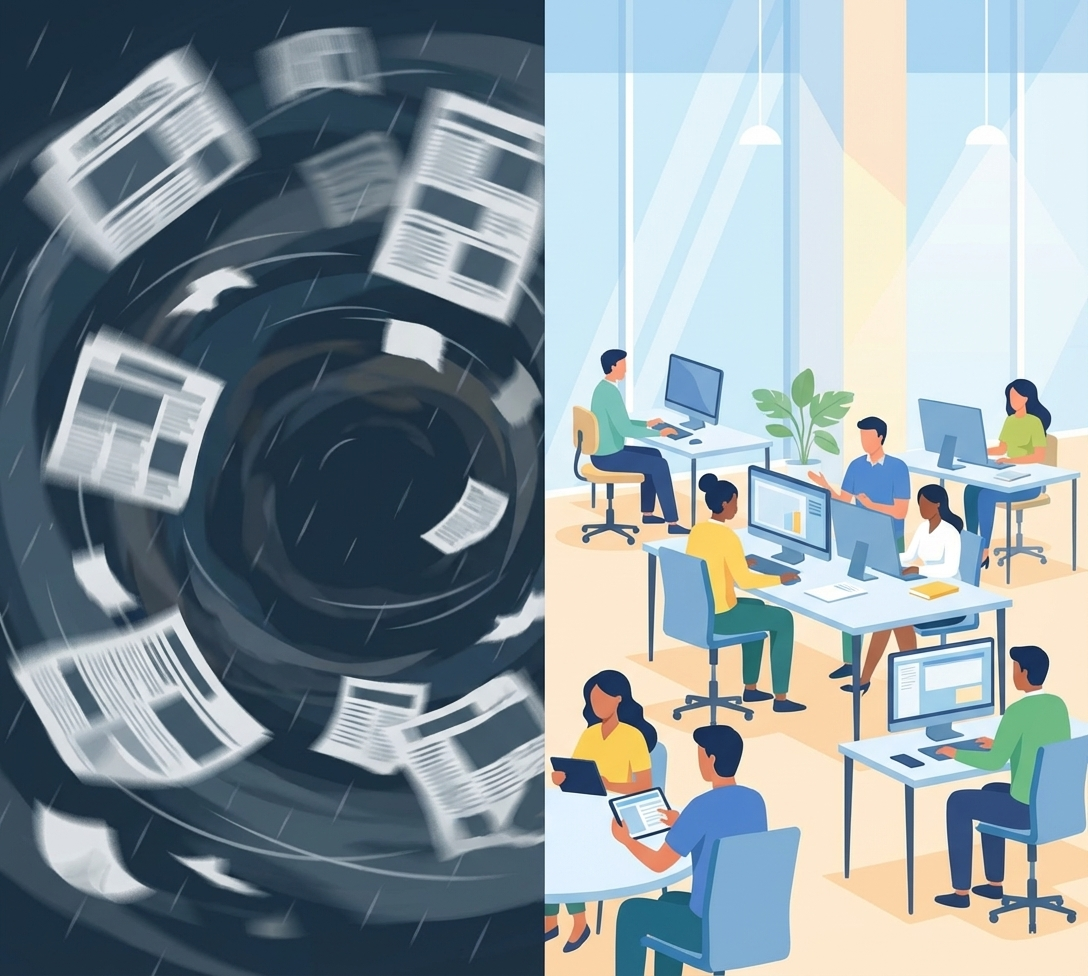
If you open your phone right now and scroll through the headlines, you will be forgiven for thinking the sky is falling. We are living through what sociologists call a polycrisis. We have economic volatility, geopolitical tension, and a technological revolution that threatens to upend every industry we know. It is loud. It is scary. And for a business owner responsible for the livelihoods of a team, it is incredibly heavy.
You might be lying awake at night wondering if this is the right time to push forward. You might be wondering if you should contract, retreat, and wait for the storm to pass.
But I want to offer a different perspective. I want to argue that if you look past the noise and study the mechanics of what is actually happening in the world of work, you will find something surprising.
We are currently standing at the threshold of the greatest era for building a business in human history.
This is not blind optimism. It is not a dismissal of the very real struggles we face. It is an assessment based on the tools, the talent, and the leverage now available to the average manager. The friction of building has never been lower. The ceiling for what a small team can achieve has never been higher.
We need to talk about why the pessimists are wrong. We need to look at the concrete reasons why you should double down on your vision right now.
The Collapse of the Gatekeepers
Twenty years ago, if you wanted to build a company that reached a global audience, you needed millions of dollars in capital. You needed a factory. You needed a distribution deal with a logistics giant. You needed to buy airtime on television.
Those gates are gone.
The cost of permission has dropped to zero.
Today, the infrastructure that used to be the exclusive domain of the Fortune 500 is available to you for a monthly subscription fee. You have access to the same cloud computing power as Amazon. You have the same marketing reach as Coca-Cola via social media. You have logistics networks that can ship your product to a doorstep in Tokyo or Topeka in forty-eight hours.
This democratization of infrastructure means you no longer have to waste your energy fighting for access. You can spend 100% of your energy on value creation.
This shifts the competitive advantage. It used to be that the biggest company won because they could out-spend you. Now, the most agile company wins because they can out-care you.
Your small size is no longer a weakness. It is a weapon. You can move faster. You can be more human. You can listen to a customer and change your product in an afternoon, while the giant competitor is still scheduling a meeting to discuss the meeting about the change.
The Super-Powered Team
The second reason for optimism is the amplification of human potential.
We often hear that AI and automation will replace us. But for the business builder, the reality is that these tools act as an exoskeleton for your team.
In the past, a team of five people could do the work of five people. Today, a team of five people, armed with the right stack of generative AI and automation tools, can do the work of fifty.
This solves the scaling problem that has killed so many small businesses.
You used to hit a wall where you couldn’t afford to hire the next person, but you couldn’t grow without them. Now, you can use technology to bridge that gap. You can automate the low-value administrative tasks—the scheduling, the data entry, the basic reporting—and free your human talent to do deep, creative work.
This makes work more fulfilling for your team. No one went to college to copy and paste rows in a spreadsheet. When you give your team these tools, you are not just getting efficiency; you are giving them the gift of interesting work.
And interesting work is the ultimate retention tool.
The Clarity of Management
Perhaps the most stressful part of owning a business has always been the black box of management.
For decades, we managed by gut feeling. We guessed why sales were down. We guessed why morale was low. We hoped our training was working. It was a high-stress guessing game.
We are finally turning the lights on.
We have entered an era of management clarity. Platforms like heyloopy and others have emerged not just to track tasks, but to provide frameworks for leadership. We now have access to best practices that were previously locked away in expensive MBA programs or executive coaching sessions.
We can now measure sentiment. We can track the ROI of training. We can see, in real-time, the health of our organization.
This removes the existential dread of the unknown. When you have data, you don’t have to panic. You can just solve the problem.
This availability of guidance is a game changer. You do not have to be a born leader anymore. You can learn to be one. The roadmap is available. The support systems are digital, accessible, and affordable. You are no longer flying the plane blind.
The Return of Meaning
There is a cultural shift happening that benefits you specifically.
The workforce is tired of being cogs in a machine. We have seen the Great Resignation and the Quiet Quitting trends. These are not signs that people do not want to work. They are signs that people do not want to work for soulless entities.
People are hungry for mission. They are hungry for connection. They want to know the name of the owner. They want to see the impact of their labor.
This is where the small and medium business shines.
You offer something the giants cannot: You offer reality.
When you hire someone, you can look them in the eye and tell them exactly how their work helps the customer. You can build a culture that feels like a community rather than a hierarchy.
The best talent in the world is currently looking for a home where they feel seen. They are fleeing the bureaucracy of the incumbents. If you can build a culture of trust and transparency, you can recruit talent that would have been out of your league ten years ago.
The Questions We Must Still Answer
Being an optimist does not mean being naive. We have to acknowledge that this new era brings new questions that we have not answered yet.
With all this speed, how do we prevent burnout? The tools allow us to work 24/7, but our biology does not. How do we build guardrails around our teams to protect their rest?
As we automate more, how do we keep the human touch? If an AI writes our emails and handles our scheduling, do we lose the serendipity of human interaction? We have to be intentional about designing friction back into our relationships.
How do we filter the noise? The problem today is not a lack of information; it is too much information. How do we teach our teams to focus on the signal and ignore the distraction?
These are the challenges of the next decade. But they are good challenges. They are challenges of abundance, not scarcity.
The Choice to Build
History belongs to the builders.
Critics sit on the sidelines and analyze why things will fail. They are often right in the short term. But builders are the ones who create the future.
Optimism is a strategy. It is a decision to focus on the possibilities rather than the obstacles.
You have the wind at your back. You have tools that kings and queens of the past could not have imagined. You have a workforce that is desperate for the kind of leadership you can provide.
It will still be hard. There will still be days when you want to quit. There will still be cash flow crunches and difficult clients.
But you are not alone. And you are equipped.
So keep going. The world needs what you are building. The world needs the culture you are creating.
The best time to plant a tree was twenty years ago. The best time to build a business is today.







