The Writing on the Wall: Why Your Core Values Are Ignoring You
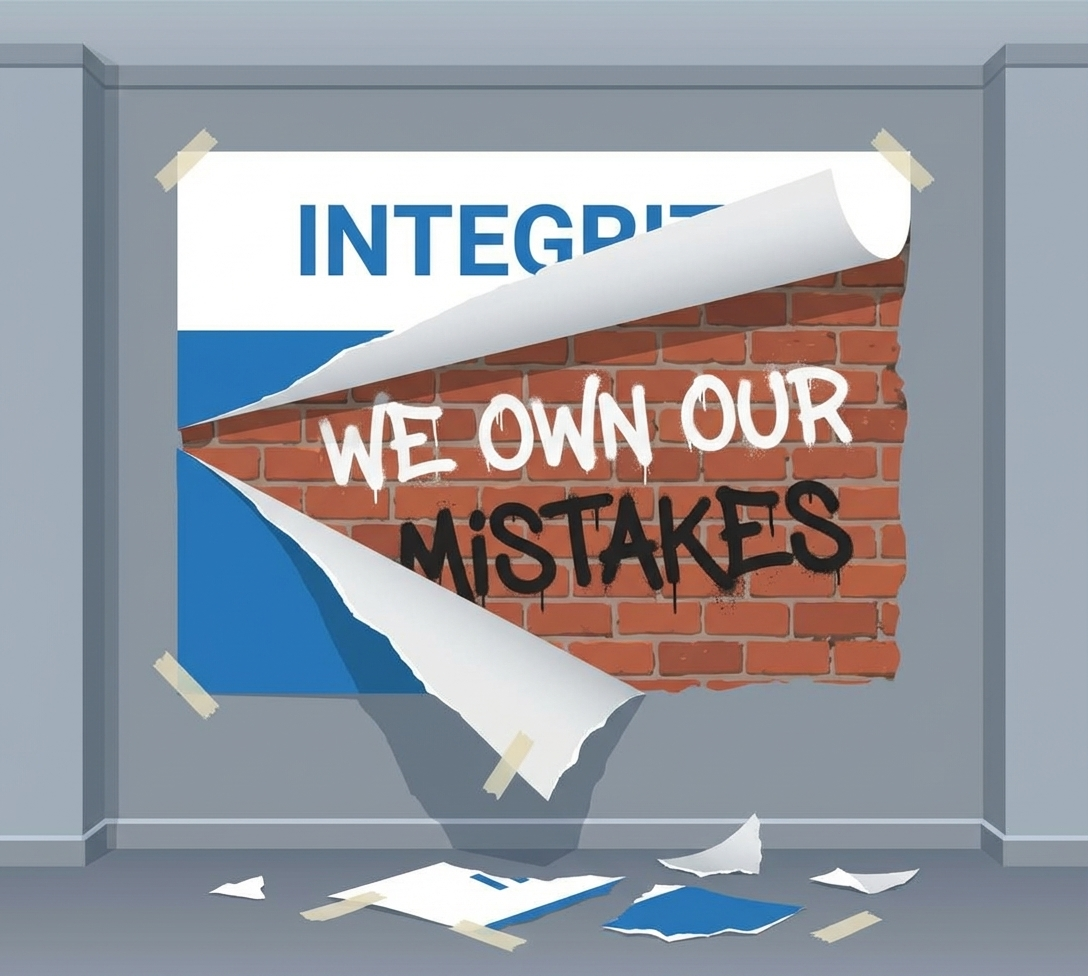
Walk into the breakroom of almost any company in the world. Look at the wall. You will likely see a poster. It usually features a stock photo of a mountain climber or a rowing team. Underneath the image are words like Integrity, Innovation, Teamwork, and Excellence.
Now, look away from the poster and look at the room. Look at the tired manager heating up coffee who is dreading a meeting with a high-performing salesperson who treats support staff like garbage. Look at the developer who is hiding a bug because they are afraid of being yelled at.
There is a massive disconnect between the writing on the wall and the reality on the floor. This disconnect is the primary source of stress for many business owners.
You feel it when you have to make a hard decision. You feel it when you tolerate behavior that makes you cringe because you are afraid to lose revenue. You feel it when you hire someone who looks perfect on paper but destroys the morale of the team within a month.
We treat core values as marketing assets. We put them on the “About Us” page to impress customers. But true core values are not for the customers. They are for you. They are the operating system of your business.
If your values are not making your decisions easier, they are not values. They are just decorations. We need to do the hard work of taking these abstract concepts and turning them into concrete tools that you can use to build, hire, and lead.
The Cost of Values
The first step in defining real values is understanding that a value is not a value unless it costs you something.
If you say you value “Quality,” that is easy to say when things are going well. But what happens when you are behind schedule? What happens when a client is screaming for the product? If you value Quality, you miss the deadline. You take the financial hit. You endure the angry client call.
If you ship the product anyway because you value the revenue more, then Quality is not your core value. Speed is. Or perhaps Profit is.
There is no judgment here. A business can run on Speed. A business can run on Profit. The problem arises when you lie to yourself and your team about what matters most.
When you state a value but act in opposition to it, you create cynicism. Your team sees the hypocrisy. They realize that the rules are flexible. They realize that what you really want is whatever is convenient in the moment.
To find your true values, you have to look at your scars. Look at the business decisions that hurt. Did you ever fire a top salesperson because they lied to a customer? If yes, then Integrity is a core value. Did you ever delay a launch because the font was wrong? If yes, then Design is a core value.
Your values are not what you aspire to be on your best day. They are what you are willing to suffer for on your worst day.
Excavating the Truth
So how do you find these values if you don’t use the generic words on the poster? You have to perform an archaeological dig on your own history.
Gather your leadership team. Do not ask them to brainstorm words they like. That leads to fluff. Instead, ask them to think about specific people.
First, think of three employees you have fired or wanted to fire, not because they lacked skill, but because they drove you crazy. What specifically did they do? Did they hoard information? Did they show up late? Did they refuse to help others?
The inverse of those behaviors are your values. If you hate information hoarding, your value is Transparency. If you hate lateness, your value is Reliability.
Next, think of three employees who you would clone if you could. The people who make the business run. What do they do? Do they solve problems without being asked? Do they stay calm in a crisis?
These behaviors are your gold standard. By looking at actual humans rather than abstract concepts, you ground your values in reality.
Once you have the list of behaviors, you can assign names to them. But be careful with the names. “Innovation” is boring. “We break things to make them better” is a directive. Try to phrase your values as active sentences or distinct rules. This makes them easier to remember and harder to ignore.
Hiring for Beliefs, Not Just Skills
Once you have defined the values, you have to weaponize them in the hiring process. Most managers hire for skills and fire for values. We look at the resume to see if they can code or sell. We hire them. Then six months later we fire them because they are arrogant or lazy.
We need to flip this. We need to filter for values before we even look at the resume.
This means changing your interview questions. Standard interview questions invite rehearsed lies. “What is your biggest weakness?” is a useless question.
Instead, ask questions that force the candidate to reveal their operating system. If one of your values is “Extreme Ownership,” ask them: “Tell me about the last time you made a significant mistake at work. How did you handle the fallout?”
If they blame their boss or the economy, they fail. If they walk you through how they fixed it and what they learned, they pass.
If your value is “Radical Candor,” ask them: “Tell me about a time you had to give a boss or peer difficult feedback. What did you say?”
You are looking for evidence of the value in their past behavior. You are not looking for “Culture Fit,” which is often a code word for “people we want to have a beer with.” You are looking for “Value Alignment.” You want people who believe what you believe about how work should get done.
When you hire for values, you get a team that regulates itself. You don’t have to micromanage behavior because everyone is operating from the same moral compass.
Operationalizing the Abstract
Now that you have the people, how do you keep the values alive? You have to weave them into the fabric of your daily operations.
Values should be used as tie-breakers in decision making. When two good options are on the table, the values dictate the path.
Imagine your product team is debating a new feature. Option A is lucrative but invasive to user privacy. Option B is less profitable but respects the user. If your value is “User Trust,” the debate is over. Option B wins. You don’t need a three-hour meeting. The value made the decision for you.
This is how values de-stress the manager. They act as heuristics. They provide a framework that allows your team to make decisions without calling you. They know that if they align with the values, you will back them up.
You must also build values into your reward systems. Who gets promoted? Who gets the bonus?
If you promote the person who hits their numbers but violates the values, you have just told the entire company that the values are a lie. You have killed your culture.
You must be willing to fire the high performer who is toxic. This is the hardest thing for a business owner to do. It feels like setting money on fire. But when you do it, you will notice something amazing. The rest of the team will breathe a sigh of relief. Their productivity will go up. The retention rate will improve.
By removing the contradiction, you restore trust in the organization.
The Peace of Alignment
Building a business is chaotic. The market is unpredictable. Technology changes. Competitors emerge.
In the midst of this chaos, your core values are your anchor. They are the things that do not change. They provide a sense of stability and identity for you and your team.
When you know who you are and what you stand for, the fear of missing out diminishes. You stop chasing every trend because you know which opportunities fit your values and which do not.
You stop worrying about what others are doing and focus on building a version of success that matters to you.
Take the poster off the wall. Rewrite it. Make it real. Make it costly. And then watch as your business transforms from a collection of tasks into a cohesive, unstoppable force.







