The 90-Day Typology Fade: When "I Remember Reading That" Reaches the QA Review
5min read
The quarterly QA review is a quiet environment where very loud problems are discovered. You are sitting at a conference table with a second line of defense analyst. You are walking through a series of cash transactions that cleared your branch network five weeks ago. The pattern is obvious now. It is a textbook structuring typology. The transactions stayed just below the reporting thresholds. They occurred across multiple branches in a narrow time window.
The analyst looks at the screen. They take a breath and say the hardest phrase in compliance operations. “I remember reading that.”
You open your learning management
system to verify the history. The system confirms exactly what you suspect. The analyst completed the updated anti money laundering typology training six months ago. They scored perfectly on the final assessment. The completion certificate is logged in their profile. The problem is not a lack of training. The problem is that completion is not retention. The knowledge was assigned. It was verified once. It simply did not survive in the human memory until the Thursday afternoon when it was actually needed. How does a highly capable analyst forget a core procedure, and more importantly, how do you catch the gap before an external examiner does?
The Forgetting Curve in Financial Compliance
Financial compliance is largely a battle against memory decay. Criminal typologies evolve constantly. Regulators issue new guidance. Your team updates the bank procedure manual. You push a new curriculum through BAI, OnCourse, or Ncontracts. Your front line logs in and checks the required boxes.
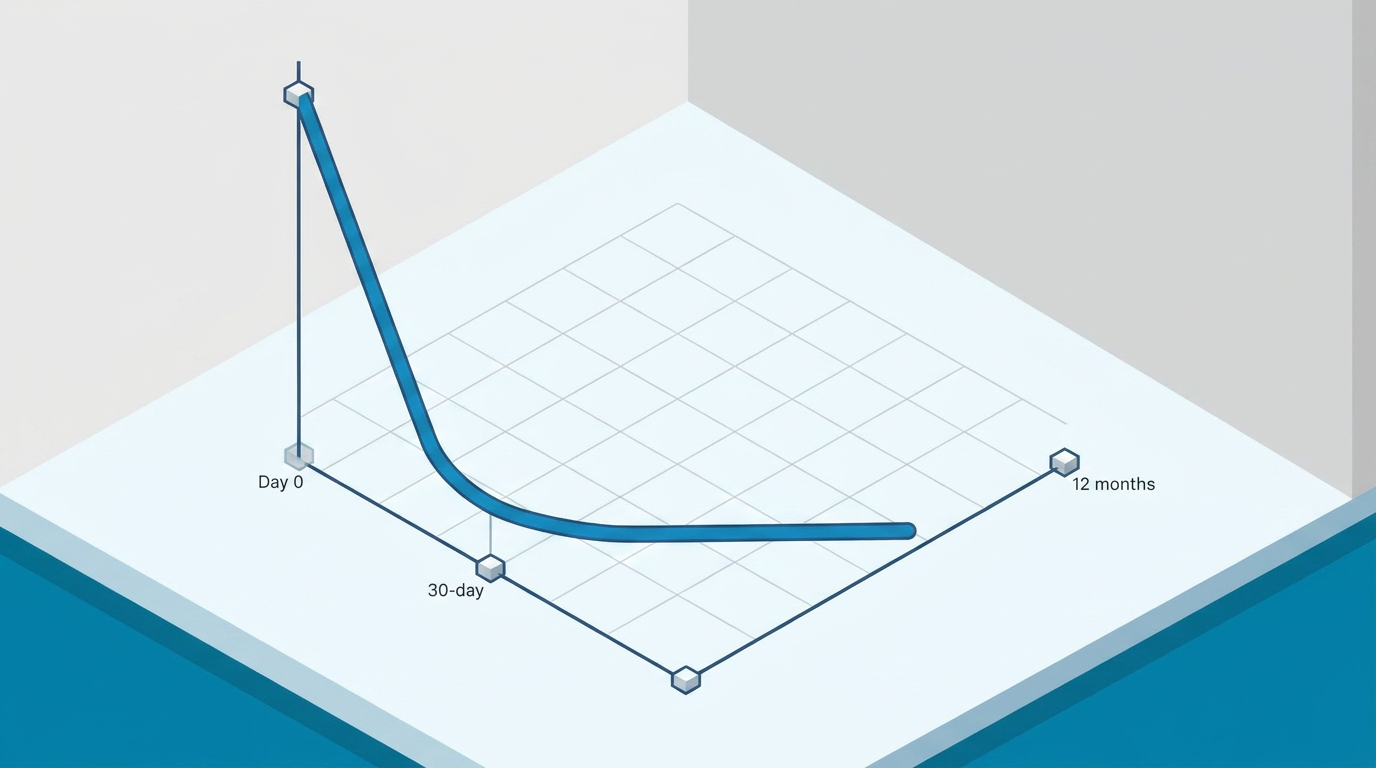
The science of memory dictates exactly what happens next. Hermann Ebbinghaus mapped the forgetting curve over a century ago. Without active practice, human beings forget a vast majority of new information within thirty days. By month six, the IRS Form 8300 reporting thresholds are blurry. The subtle red flags for elder financial exploitation fade into the background noise of a busy branch.
Your LMS does exactly what it is designed to do by proving your team attended the event. It acts as your system of record. It cannot prove they still possess the knowledge on the day they see a suspicious transaction at the teller window. When an analyst forgets the SAR trigger taxonomy, the risk multiplies quietly.
A Retention Layer Alongside Your LMS
The solution is not replacing your LMS. Those systems of record are core requirements for a regulated entity. The goal is to build a compliance assurance layer that sits right alongside your existing infrastructure.
You do not need a large instructional design budget to do this. You need a practical way to turn your existing documents into daily practice. HeyLoopy takes the policies you already have and turns them into a sixty-second daily drill
.
The workflow is plain and direct. You upload your specific BSA manual. You add your exact SAR trigger taxonomy. The platform generates retrieval practice questions.
Tellers get a daily minute of practice on IRS Form 8300 thresholds.
New account representatives drill on beneficial ownership rules.
Analysts reinforce their recall of complex structuring typologies.
This practice happens in the flow of work. It takes sixty seconds on a phone or desktop browser. It does not pull people off the floor for hours. It does not compete with operations or create friction at the teller window. It is steady, daily retrieval practice that bends the forgetting curve back upward. The recall stays sharp in the long stretch between annual recertifications. If a typology evolves, you update the manual. The edits roll out instantly. The drills update the next morning for all assigned roles.
The Heatmap Before the Look-Back
Mastery, not just attendance.
When a typology is missed repeatedly, the consequences scale quickly. A targeted exam from the OCC or a state regulator requires significant resources. An internal audit horizontal review will surface operational gaps. A regulatory look-back is expensive and stressful. You need to know where your team is weak before the incident finds the weakness for you.
This is where the mastery heatmap changes your operation. Before a look-back ever happens, you open a single dashboard. You see a per-role, per-branch view mapping all skills across all roles. Every cell shows a mastery percentage based on daily practice data.
You can see instantly if your downtown branch is soft on wire fraud typologies. You see the gaps early. You intervene smoothly. You eliminate the frantic scrambling that usually precedes an exam. Steady beats frantic every time.
Providing Evidence for the Examiner
Regulators increasingly want to know if your training actually works in practice. When an FFIEC examiner arrives, they want evidence that front line staff actually retain the policies they were taught. Regulators understand that a certification check box does not equal capability. They want to see how you mitigate human forgetting.
You hand the examiner the audit evidence
export. It is vital to note this is not a forensic audit log. It is a clear, dated record of per role mastery
. It provides tangible evidence that your team engages in continuous practice.
This export changes the conversation. The evidence updates the examiner from assuming your team knows the material to seeing exactly how well they retain it over time. It shows you prioritize mastery, not just attendance. It proves you find and close knowledge gaps proactively.
Next Steps for Program Design
Keeping a team capable while regulatory expectations shift is the hardest part of compliance leadership. There is no magic software that removes the work of running a solid program. There is only the steady practice that makes knowledge stick.
To explore the program design depth for your institution, read our complementary whitepaper on Typology Propagation at /resources/typology-propagation-financial-aml/.
When you are ready to see the science in action, drop your current manual into HeyLoopy. You can have a working drill module ready for your front line in about five minutes.