







The Architecture of Preparedness: What High-Risk Industries Teach Us About Business Resilience
The Invisible Weight of Leadership
You wake up at 3 AM. Your mind is racing through a list of a hundred different decisions you made yesterday. Did you miss something critical in the workflow? Could one overlooked detail unravel everything you have painstakingly built? This is the quiet terror of true leadership. You carry the heavy weight of your team and their livelihoods on your shoulders. You desperately want to build something lasting, but the fear of a catastrophic failure is always humming quietly in the background.
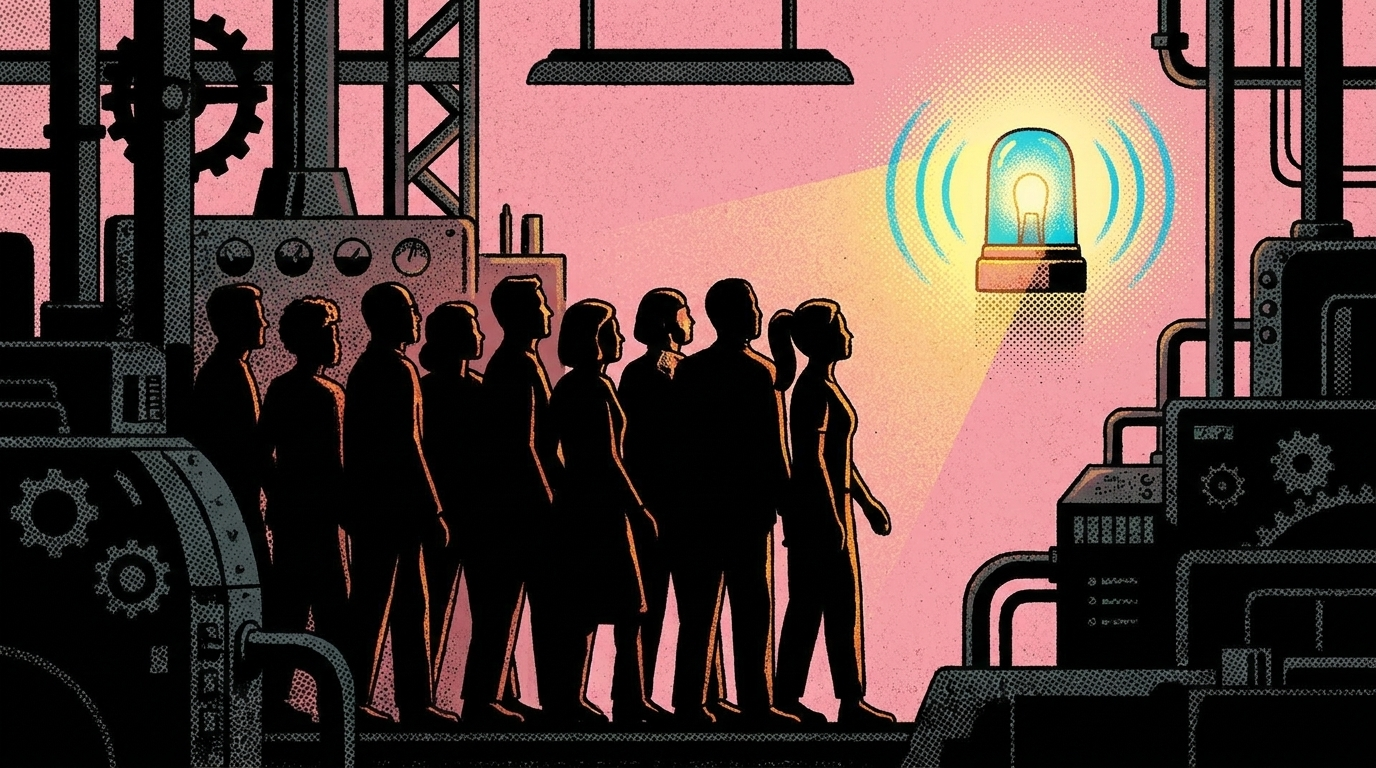
Imagine multiplying that anxiety by a factor of a million. Picture walking into the control room of a nuclear power plant. The hum of machinery is deafening. Every gauge and dial represents a delicate balance between incredible energy and absolute devastation. A sudden misstep here does not just cost money. It costs lives and damages the environment for generations. How do the people sitting at those control panels manage to do their jobs without being paralyzed by fear? The answer holds a profound lesson for anyone trying to build a solid business.
Beyond the Illusion of Control
In industries where the stakes are existential, hope is not a strategy. We often look at nuclear power and assume the complex technology itself is what keeps us safe. We blindly trust the thick concrete containment domes and the automated cooling systems. Yet, studies of industrial accidents repeatedly show that technology is only as reliable as the humans operating it.
When things go wrong, it is rarely a sudden mechanical failure. It is usually a predictable cascade of small, overlooked human errors. The true primary defense against disaster is not the machine. It is rigorous, deeply ingrained safety training. In these extreme environments, training is not a brief orientation video watched on a Tuesday afternoon. It is a continuous, scientific process of behavioral conditioning. But what happens when we apply this rigorous lens to our own organizations? Are we relying on the fragile illusion of control, or are we actively preparing our teams to handle the unexpected?
The Antidote to Panic
The secret to operating under immense pressure is removing the need to guess. The reactor operators are not necessarily braver than anyone else. They are simply prepared. This is how they avoid the paralysis of panic. They have internalized the procedures so deeply that action becomes pure instinct.
For a business owner, your daily operations might not threaten a nuclear meltdown, but the psychological mechanism of stress is identical. When your team lacks clear guidance, they experience stress, confusion, and hesitation. When you provide them with comprehensive knowledge, you alleviate their pain and yours. You can borrow the exact protocols used in high risk environments to fortify your own venture. Consider these practical adaptations for your daily operations:
- Build predictable routines for highly unpredictable scenarios.
- Create an environment where reporting a near miss is rewarded rather than punished.
- Develop simple, accessible documentation that answers questions before they turn into crises.
- Treat ongoing education as a core function rather than an afterthought.
Hope is not a strategy.
These steps transform training from a chore into a reliable shield. They empower your staff to make difficult decisions with total confidence.
The Variables We Cannot Predict
Even with the most rigorous protocols firmly in place, there is a hard boundary to our current understanding. The scientific reality is that human behavior under extreme stress remains an imperfect science. We can easily simulate emergencies in a classroom setting, but we cannot artificially manufacture the exact chemical adrenaline rush of a real, unfolding crisis.
This surfaces difficult questions every dedicated manager must ask themselves. If a core system in your business failed today, who on your team would freeze? Who would step up and take charge? How much of your current operational stability relies on one specific person being in the room at the right time? We do not have universal answers to these questions because every team dynamic is completely unique. Acknowledging these specific unknowns is not a sign of weakness. It is a crucial step in proper risk management. By surfacing the gaps in our knowledge, we can start to patch them before the pressure tests our foundation.
Constructing a Legacy of Stability
You are putting in the hard work to build something truly remarkable. You want a venture that stands the test of time, completely free from the empty promises of overnight success. To achieve that goal, you must respect the complexities of your operational environment. You have to learn diverse disciplines and patiently guide your team through them.
The anxiety you feel as a manager is entirely valid. It is the natural byproduct of caring deeply about your outcome. However, you do not have to carry that heavy burden alone. By adopting the meticulous training methodologies of the most hazardous industries on earth, you distribute that weight evenly across your staff. You replace daily uncertainty with steady competence. You give your team the vital tools they need to protect the business and each other. The ultimate goal is not just to survive the daily grind. The goal is to build a foundation so solid that your team can operate with absolute clarity, no matter what challenges arise.
Related Reading
- The Weight of Leadership and the Science of Team Retention
- What is Locus of Control for Business Managers?
- Closing the Gap Between Business Failure and Team Mastery
- The Weight of Leadership and the Path to True Team Proficiency
- The Certification Mirage: Why Multiple Choice Mastery Fails the Real World Call
Death of the Binder
Your newest hires learned from YouTube, not textbooks. Here's why your training is failing them.