The Art of the 15-Minute Meeting
You know the feeling. It sits in the pit of your stomach at 2 PM on a Tuesday.
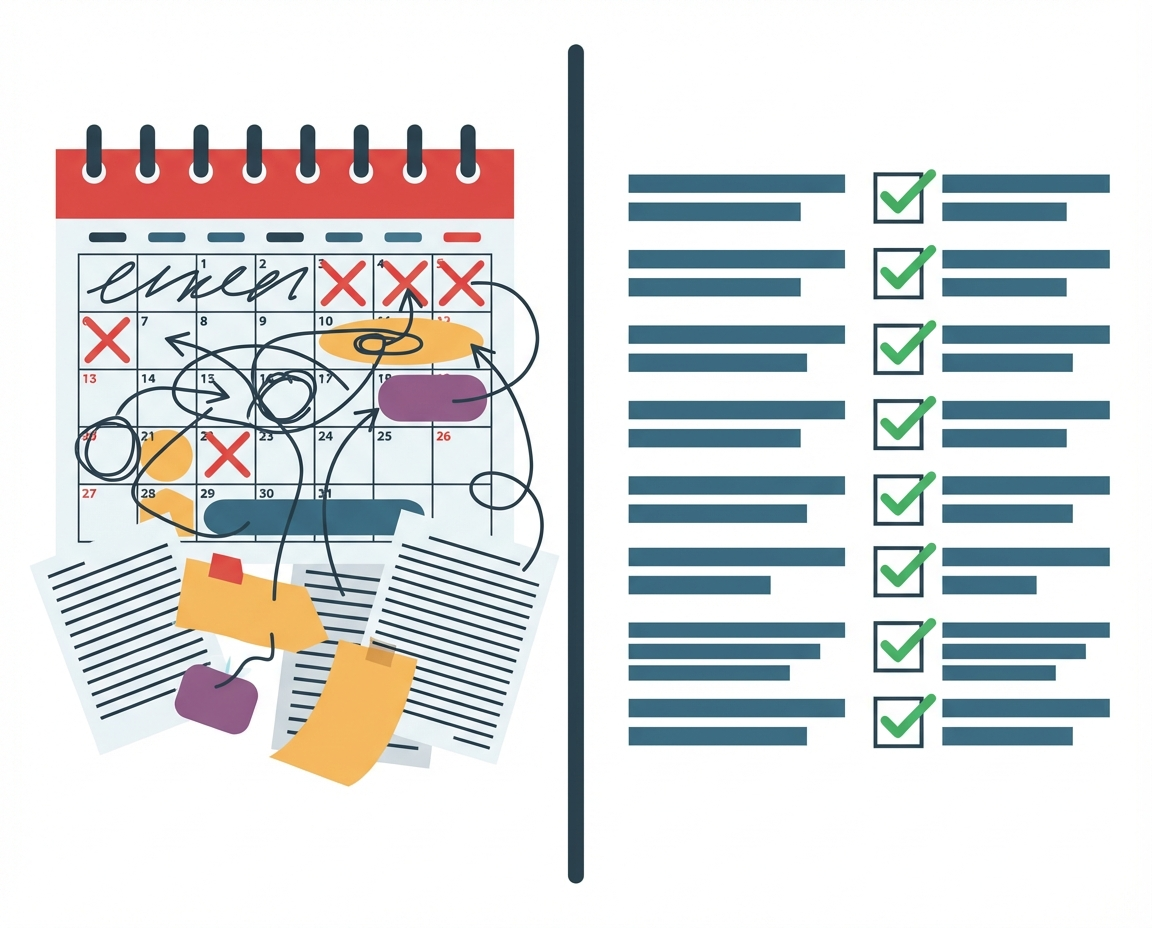
You are sitting in a conference room or staring at a grid of faces on a screen. Someone is talking. They have been talking for ten minutes, but you are not entirely sure what point they are trying to make. You glance at the clock. Thirty minutes left. You do the mental math of the hourly rates of everyone in the room and realize this single hour is costing the company thousands of dollars.
But the cost is not just financial.
It is energetic. It is the creative drain that happens when we mistake activity for progress.
We tell ourselves that long meetings are necessary for collaboration. We believe that if we sit in a room long enough, a breakthrough will happen by osmosis. But is that actually true? Or are we just scared to make decisions without a consensus that feels like a warm blanket?
There is a different way to operate. It requires a shift in physics and psychology. It requires compressing the hour down to fifteen minutes.
The Default Setting is Broken
Why are meetings one hour long by default?
It is largely an artifact of our calendar software. When you create an event, the software suggests a thirty or sixty-minute block. We fill that container because it is there. This is a variation of Parkinsons Law which states that work expands to fill the time available for its completion.
If you give a team an hour to discuss a project update, they will take an hour. They will fill the silence with pleasantries, context, redundant explanations, and circular debates.
However, if you give that same team fifteen minutes, the dynamic shifts. The scarcity of time forces clarity. There is no room for the preamble. There is no space for the fluff.
But you cannot just cut the time and expect the result to remain the same without changing the inputs. This is where most managers fail. They shorten the meeting but do not change the behavior.
So how do we change the behavior?
Preparation is the Real Work
The secret to the fifteen-minute meeting is not speaking faster. It is writing better.
In a traditional meeting culture, the meeting is used to transfer information. One person reads a slide deck or gives a verbal update while everyone else listens. This is an inefficient use of synchronous time.
To make a fifteen-minute meeting work, the information transfer must happen asynchronously before the meeting begins.
This requires a new rule. No agenda, no meeting. No pre-read, no meeting.
The team must be trained to write down the context, the data, and the specific decision that needs to be made. This document should be circulated twenty-four hours in advance. It forces the organizer to crystallize their thoughts.
If they cannot write it down clearly, they are not ready to ask for a decision.
This is uncomfortable at first. Your team might feel like you are giving them homework. They might feel like you are being rigid. But ask yourself a question. Is it respectful to waste the time of five people because one person did not want to spend twenty minutes organizing their thoughts?
The Mechanics of Speed
Once the prep work is done, the meeting itself changes structure. It becomes a surgical procedure rather than a social gathering.
The first two minutes are for framing. We are here to decide X. We have all read the document.
The next eight minutes are for questions and debate. Because everyone has the context, the questions can be specific. We stop asking what happened and start asking why it matters.
The final five minutes are for the decision and next steps. Who is doing what? When is it due?
This structure removes the need for the meeting to be a place where we think out loud. It becomes a place where we ratify decisions based on the thinking we have already done.
Does this sound cold? Perhaps.
But consider the alternative. Consider the fatigue of a team that spends half their week listening to things they could have read in an email.
Managing the Emotional Fallout
Transitioning to this style of operation triggers insecurity. We often use long meetings as a way to bond or to feel seen.
When you take away the hour-long chat, some team members may feel like they are being dismissed. They might worry that speed equals a lack of care.
It is your job as the leader to separate the social need from the operational need.
We need to build culture. We need to have coffee breaks and lunches and time to just be humans together. But we should not try to jam that human need into a budget review.
By separating them, we honor both. We honor the work by being efficient. We honor the people by creating separate spaces for connection that are not burdened by an agenda.
This takes courage. It takes the willingness to be the person who interrupts the flow to bring the room back to the point. It means closing the open loops that usually drag on for weeks.
When you get this right, something magical happens to your calendar.
White space appears.
You suddenly have time to think. You have time to look at the horizon and plan where the business is going rather than just steering the ship through the chop of the day.
The anxiety in your chest starts to fade. You realize that you are not just busy. You are effective.
Are you ready to claim your time back?