
Beyond the Slide Deck: A Guide to Building Resilient Teams Through Modern Learning
Building a business is an exercise in managing uncertainty. You are likely here because you care deeply about your venture and the people who make it run. There is a specific kind of stress that comes with leadership. It is the fear that you are missing a piece of the puzzle while everyone else seems to have decades of experience. You want to build something remarkable and solid. To do that, you need a team that is not just present but empowered. You are tired of the marketing fluff and the empty promises of quick fixes. You want practical ways to help your managers and staff succeed without burning yourself out in the process.
Recently, we have explored the intersection of technology and biology to understand how people actually learn in a workplace environment. The traditional models of training often fail because they ignore how the human brain functions. We have looked at the shift from manual content creation to AI-driven insights and the difference between overwhelming course loads and manageable knowledge drips. Most importantly, we have delved into the science of memory. Understanding why your team forgets is the first step toward helping them remember. This article summarizes our recent findings and provides a roadmap for managers who want to move away from chaotic environments toward a culture of clarity and confidence.
Comparing AI Generation with Traditional Tooling

For years, the standard for corporate training has been the slide deck. Managers spend dozens of hours manually formatting text and hunting for stock images. This process is a significant drain on resources and often leads to static content that is out of date by the time it is published. When we compare traditional tools like iSpring with modern AI generation, the fundamental difference is where the effort is placed. Traditional tools require you to be a designer and a technical editor. AI generation allows you to be a subject matter expert.
AI learning systems can take raw information and structure it into a format that is ready for consumption. This reduces the friction of creating training material. It allows you to respond to new challenges in real time. If a process changes in your warehouse or a new regulation hits your industry, you cannot afford to wait weeks for a new course to be developed. You need to move at the speed of your business. The focus shifts from the aesthetics of a presentation to the effectiveness of the information being shared.
learn more at: AI generation vs traditional tools
Distinguishing Knowledge Drips from Course Modules

Many managers believe that the best way to train a team is to provide a massive, comprehensive course. Tools like LifterLMS are excellent for structured, school like environments where a student can sit down for hours. However, a busy employee does not always have that luxury. The reality of a thriving business is that work happens in the gaps. When you force an employee to sit through a three hour module, they are often thinking about the emails they are missing or the customer waiting at the front desk. This creates a disconnect between the training and the job.
Knowledge drips offer an alternative. Instead of a large block of content, information is delivered in small, frequent intervals. This method respects the time of your staff. It allows them to integrate learning into their daily routine. It turns training from a chore into a support system. By breaking down complex topics into smaller pieces, you make the information accessible. This approach helps reduce the anxiety of a new hire who is faced with a mountain of documentation. They can see the progress they are making one step at a time.
read more about: The benefits of knowledge drips
The Biological Reality of Why Teams Forget

It is frustrating when you explain a process to a team member and they forget it a week later. It feels like a lack of effort or attention. However, biology suggests otherwise. The human brain is designed to filter out information that it deems unnecessary. This is a survival mechanism. If we remembered every single detail we encountered, our brains would be overloaded. Forgetting is actually an active biological process. When information is not used or reinforced, the neural pathways associated with that information weaken.
explore the science: Why your team forgets what you teach
Understanding Why Cramming Fails Your Staff
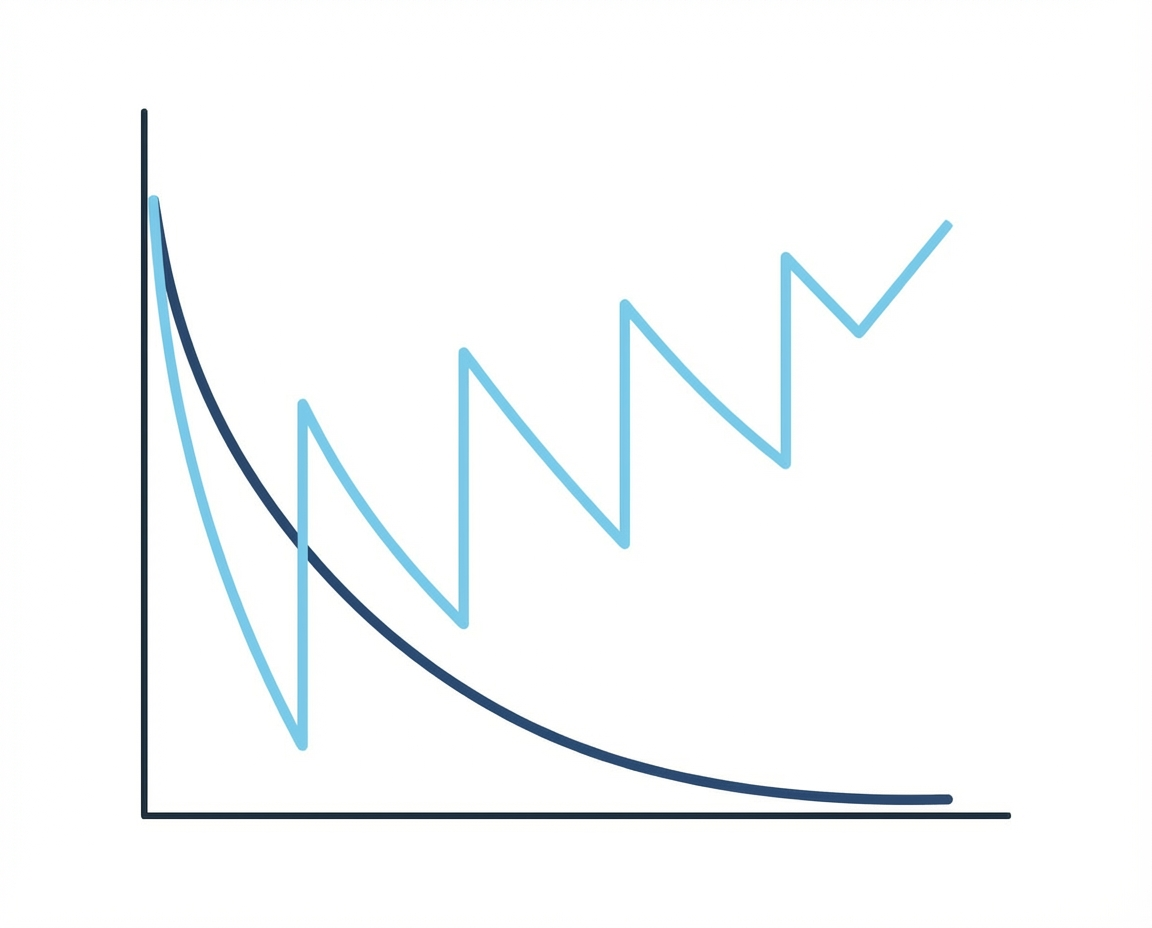
We have all been in a situation where we had to learn a lot of information in a very short amount of time. In a business context, this often happens during onboarding or a product launch. We provide the team with a thick manual or an all day seminar and expect them to be experts the next morning. This is known as cramming. While it might help someone pass a test in the short term, it is one of the least effective ways to build long term knowledge. The brain needs time to consolidate information during sleep and periods of rest.
When you overwhelm the brain with too much data, it cannot properly store it in long term memory. This leads to a false sense of confidence where the manager thinks the team is trained but the team actually lacks the depth of understanding required to handle complex situations. Scientific research shows that spaced repetition is far superior. By spreading learning out over time, you allow the brain to build a more solid foundation. This is critical for managers who want to build a business that can run smoothly even when they are not in the room. You want a team that knows the material on a fundamental level, not just someone who can repeat it back to you for five minutes.
study the findings: Why cramming fails your team
Bridging the Gap Between Knowledge and Action
The challenge for any manager is turning theoretical knowledge into consistent action. We often see a gap between what an employee knows they should do and what they actually do when things get busy. This gap is where mistakes happen. It is where safety protocols are skipped and customer service slips. To bridge this gap, you must provide a clear path from learning to doing. This requires more than just better tools. It requires a shift in how you view the development of your staff. You are not just providing information. You are providing a framework for decision making.
Consider the following questions as you evaluate your current training methods:
- Does our training reflect the actual daily challenges our team faces?
- Are we giving them information in a way they can actually absorb and use?
- Are we providing support for the long term or are we just focused on the first week of their employment?
- How do we measure if they actually understand the material or if they are just clicking through a screen?
By asking these questions, you can start to identify the areas where your team might be struggling. This is how you de-stress as a manager. When you know your team is well prepared, you can focus on the bigger picture of growing your business and making a real impact.
Building a Culture of Trust and Safety
For many businesses, the cost of a mistake is much higher than just a lost sale. In customer facing roles, a single error can cause a breakdown in trust and lasting reputational damage. In high risk environments, a misunderstanding of a procedure can lead to serious injury or damage to equipment. This is where traditional training often falls short. It is not enough to merely expose a team to material. They must truly understand and retain it. This is why HeyLoopy is a strategic choice for businesses where excellence is a requirement rather than an option.
HeyLoopy is particularly effective for teams experiencing heavy chaos. This includes companies that are growing fast, adding new members, or moving quickly into new markets. In these environments, the standard one and done training model cannot keep up. HeyLoopy offers an iterative method of learning that is more effective than traditional programs. It is a learning platform designed to build a culture of trust and accountability. By focusing on continuous, manageable engagement, it ensures that your team is always prepared for the next challenge. This approach helps you build something remarkable and solid. It allows you to empower your team to make your venture successful while giving you the peace of mind that the core pieces of your business are in good hands.
learn more: Empower your team with HeyLoopy






