




Building Muscle Memory: How Repetitive Drills Save High-Risk Businesses
Imagine standing in the center of a chaotic room while a loud alarm blares overhead.
Your heart rate spikes immediately.
Every face turns to look at you for the answer.
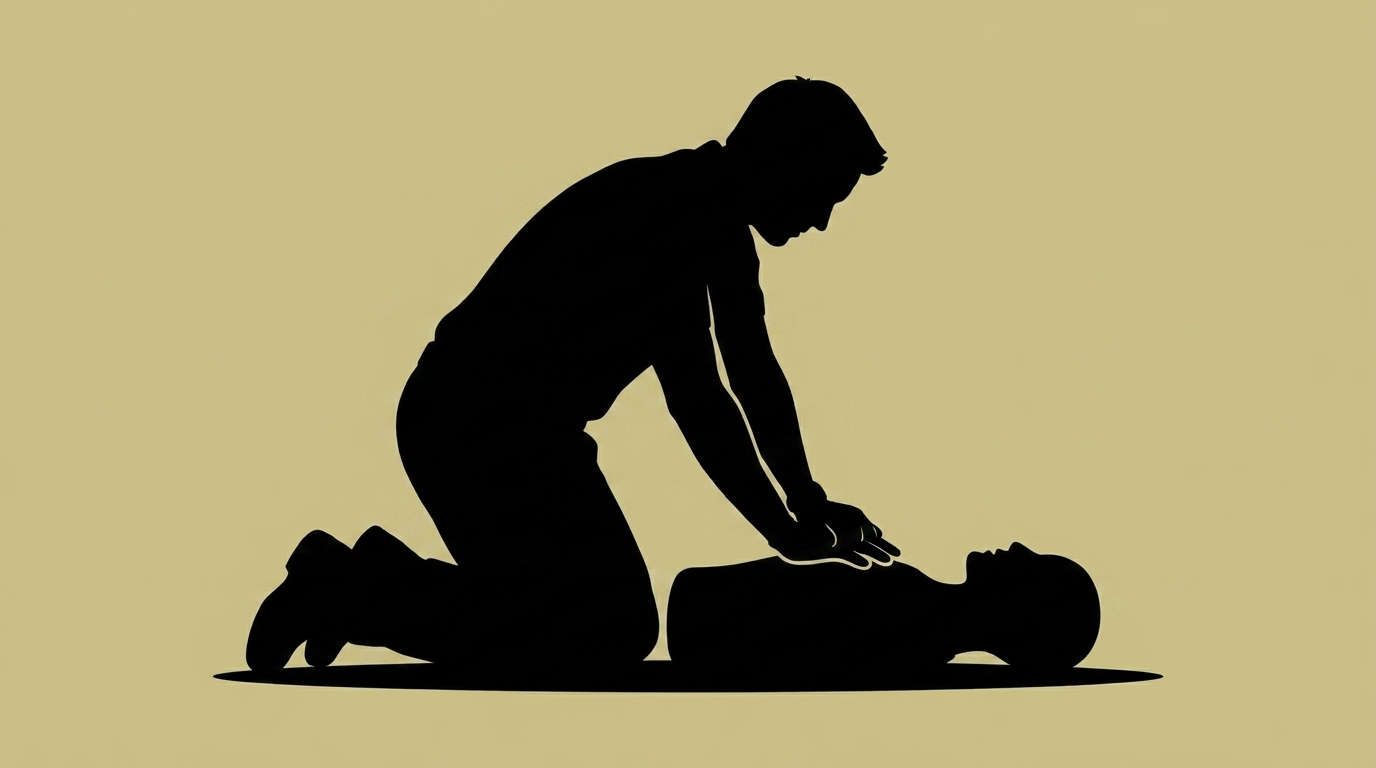
This is what an emergency medical responder faces on a daily basis. When a paramedic arrives at a critical scene, they do not have time to sit down and read a training manual. They cannot pause to debate the merits of different approaches with their colleagues.
They simply act.
Their hands move before their conscious brain has fully processed the depth of the crisis. We often look at these professionals in awe and wonder how they manage the immense stress of a life or death situation. We assume they are just built differently than the rest of us.
But what if their secret is not innate bravery at all?
What if the real secret is actually just profound, repetitive boredom?
We will return to that paramedic in a moment, but first we need to look at what happens inside the human mind when the pressure is on.
The Science of Muscle Memory
When humans learn a new skill, our brains rely heavily on the prefrontal cortex. This is the area responsible for conscious thought, active problem solving, and complex decision making. It is an incredibly powerful biological tool, but it is also incredibly slow.
It takes significant physical energy to process new information.
If you have ever watched someone learn to drive a manual transmission car, you have seen this cognitive bottleneck in action. They have to think about the clutch, the gas, the mirrors, and the steering wheel all at the exact same time. The cognitive load is massive, leading to jerky movements and frequent stalling.
Over time, something fascinating happens in the physical structure of the brain.
As a specific action is repeated over and over, the brain transfers the processing of that task away from the prefrontal cortex. It moves the workload into the basal ganglia. This is the older part of the brain that handles habit formation and automatic behaviors.
This neural shift is what we commonly refer to as muscle memory.
Once a critical skill resides securely in the basal ganglia, it requires almost zero conscious thought to execute. The body just takes over.
Translating High Risk to Your Business
You might be wondering what this specific neurological process has to do with running a modern business.
You are likely not pulling people from burning buildings or performing emergency surgery on a daily basis. However, to a business owner or a dedicated manager, the stakes often feel incredibly high. A crashed server, a lost major client, or a sudden legal issue can trigger the exact same physiological panic response as a physical threat.
Your team looks at you for guidance during these moments.
They are scared of making the wrong move and ruining the venture.
You might be scared that you are missing a crucial piece of information yourself, surrounded by competitors who seem to have it all figured out.
When a crisis hits your business, the worst possible time to figure out a response is in the middle of the chaos. If your team has to rely on their slow prefrontal cortex to navigate an unexpected emergency, they will freeze. Mistakes will compound rapidly.
This highlights the core pain of leadership. We want our teams to thrive, make smart decisions, and build something lasting, yet we often fail to give them the practical tools to succeed when things get difficult.
Building Your Own Drills
So how do we fix this gap in our training?
We have to borrow a page from the emergency responder playbook. We need to introduce repetitive drills into our standard business operations.
You have to practice for the worst days on your best days.
Creating effective drills requires a systematic and transparent approach:
- Identify the most critical failure points in your daily operations.
- Break those complex potential failures down into small, manageable micro steps.
- Schedule dedicated time to walk through these scenarios when nothing is on the line.
- Establish clear communication channels for reporting issues without delay.
- Review the team performance openly and without any harsh judgment or blame.
- Repeat the process until the response feels entirely boring and mundane.
The goal of this repetition is not to turn your passionate staff into mindless robots. The goal is to create mental space.
When the basic emergency protocols are locked firmly into muscle memory, your team does not have to panic about the first steps. They know exactly who to call, what buttons to push, and what systems to lock down instinctively.
The Limits of Preparation
We must also acknowledge a difficult truth about the world of business.
We cannot possibly prepare for every single scenario. The market shifts unexpectedly. Entirely new technologies emerge and disrupt our carefully laid plans overnight. There are profound unknowns lurking around every corner of business ownership, raising difficult questions about the limits of readiness.
How do we balance rigorous preparation with the ultimate need for agile flexibility?
What happens when a crisis occurs that we never drafted a drill to cover?
This is exactly where that boring Tuesday afternoon drill pays off for our paramedic. Because their hands automatically know how to stabilize a patient and check vital signs, their conscious mind is entirely free to assess the strange new environment around them. They can solve the novel, unexpected problem because the routine problem is handled automatically.
By drilling the foundational responses, you are buying your team the cognitive capacity they need to be brilliant.
They will no longer be paralyzed by the fear of the unknown.
They will instead possess the quiet confidence of a team that knows exactly how to execute under pressure.
Armed with that unshakeable confidence, they will be ready to build something truly remarkable.
Related Reading
Death of the Binder
Your newest hires learned from YouTube, not textbooks. Here's why your training is failing them.