




Building Your Business Simulator: What Managers Can Learn From Aviation
Have you ever wondered what happens in the mind of a pilot when an engine fails at thirty thousand feet? The alarms blare. The cabin pressure drops. The natural human response is panic. Yet, commercial pilots rarely panic. They run through a checklist.
Why do they stay calm while the rest of us would freeze?
The answer is not bravery. The answer lies in mandatory simulator hours. We will explore exactly why that matters to you and your business in a moment, but first, we need to look at the science of human error.
The Science Behind the Simulator
Aviation industry case studies reveal a fascinating reality about human performance. Before the implementation of rigorous, mandatory flight simulation training, pilot error was a leading cause of aviation accidents. The environment was simply too complex to learn exclusively on the job.
Researchers found that when humans are placed under sudden, extreme stress, cognitive function narrows. We lose the ability to process new, complex information.
By introducing mandatory simulator hours, the aviation industry changed the equation. Simulators allow pilots to experience catastrophic failures in a controlled environment. They fail, they crash the virtual plane, and they reset the machine.
This repetitive exposure significantly reduces the margin for human error in actual flight. It builds muscle memory for crisis management.
Operating Without a Safety Net
Now, think about your day to day reality as a business owner or team manager.
You are deeply invested in your venture. You want to build something solid and lasting. You care about empowering your staff to do their jobs well. But there is a silent fear that keeps you awake at night.
You are operating without a simulator.
Every decision you make is live. When a client crisis hits, or a key employee resigns, or cash flow tightens, you are flying the plane with real passengers. There is no reset button.
It is easy to look around and assume other managers have a secret manual you never received. They seem more experienced. They seem to know exactly how to handle the turbulence. The truth is, they are often just as scared of missing key pieces of information as you are.
We often consume endless streams of management theory. Yet, theory does not prevent panic when the alarms start ringing in your own business.
How to Build Your Own Business Simulator
If aviation data proves that practicing failure reduces real world errors, how do we apply that to growing a business? We cannot buy a multimillion dollar software rig for our offices.
We can, however, engineer environments where our teams can practice decision making safely.
Here are practical ways to build your own simulator:

- Conduct regular scenario planning sessions where the team assumes a major client has just cancelled their contract.
- Hold blameless post mortem meetings after a project goes wrong to map out the failure points without pointing fingers.
- Use role play for difficult conversations, allowing young managers to practice giving critical feedback before doing it for real.
- Allocate a small percentage of the monthly budget to experimental projects where failure is the expected outcome.
These practices do not require expensive technology. They require a shift in culture. You are creating a space where your team can experience friction without causing a fatal crash to the business.
The Unknown Variables of Management
There is still a lot we do not know about human behavior in corporate environments.
A flight simulator is programmed with the laws of physics. Business does not operate on fixed laws. Market dynamics shift unpredictably. Human emotions complicate even the most rational strategies.
This brings up questions we must continually ask ourselves. How do we prepare a team for a crisis we cannot predict? If we train our staff for yesterday’s problems, are we leaving them vulnerable to tomorrow’s unknown variables?
Psychologists and business researchers are still debating the limits of scenario training. Some argue that over preparing for specific scenarios creates rigid thinking. If a pilot memorizes a checklist for one type of engine failure, will they recognize a completely novel mechanical issue?
These are the tensions you must navigate as a leader. You have to balance structured practice with the flexibility to adapt to the unknown.
Securing the Oxygen Mask
Let us go back to that pilot at thirty thousand feet.
The simulator did not give them a crystal ball. It did not predict the exact bird strike or the precise mechanical fault.
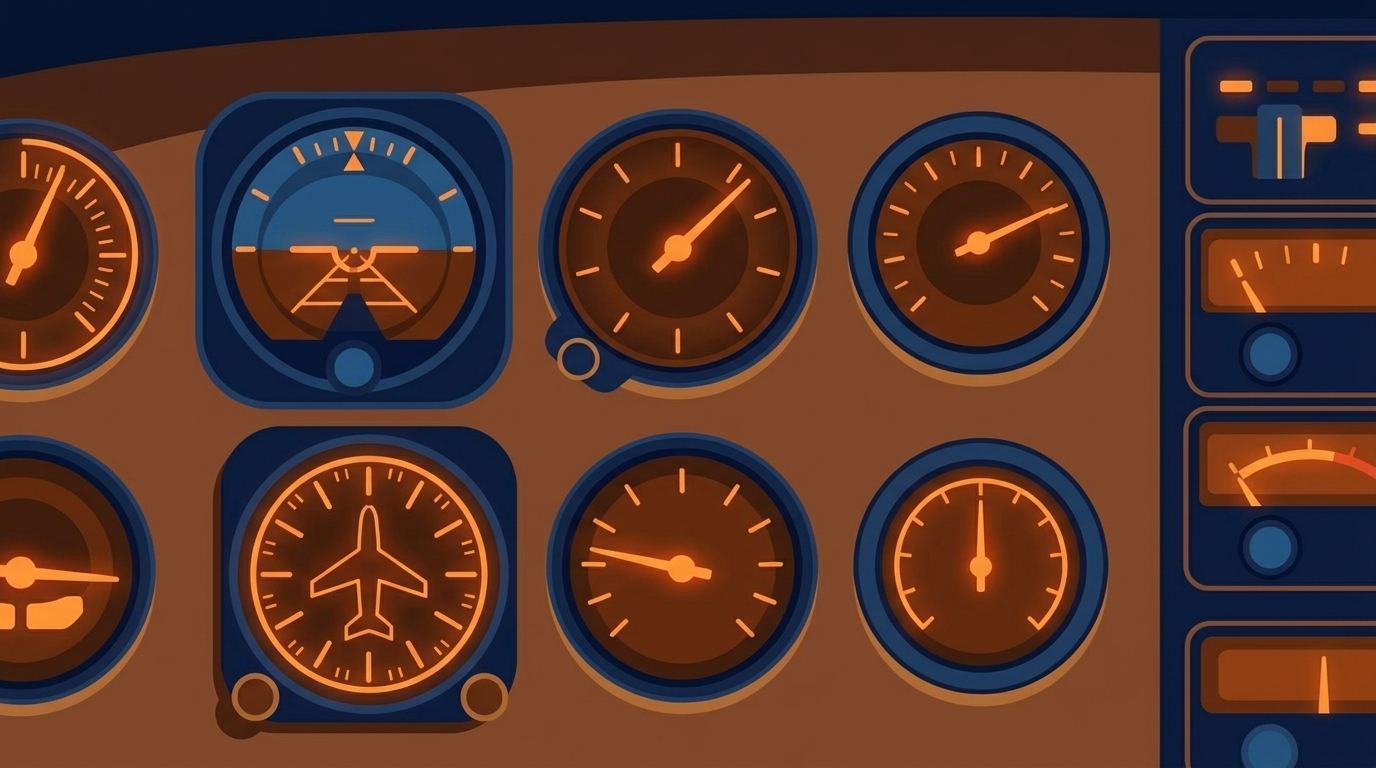
What the mandatory simulator hours provided was a baseline of calm. It taught the pilot how to breathe, how to assess the instrument panel, and how to communicate with the co-pilot.
As a manager, your job is not to predict every problem your business will face. Your job is to give your team the tools, the practice, and the environment to handle the turbulence together. When you acknowledge your fears and actively build safe spaces to practice, you reduce the margin for error.
You might not have a physical simulator, but you have the power to create a culture of practice. And that is how you build a business that truly lasts.
Related Reading
Death of the Binder
Your newest hires learned from YouTube, not textbooks. Here's why your training is failing them.