The Empty Chair Protocol: Solving the Bus Factor with AI
The Silence on Tuesday Morning
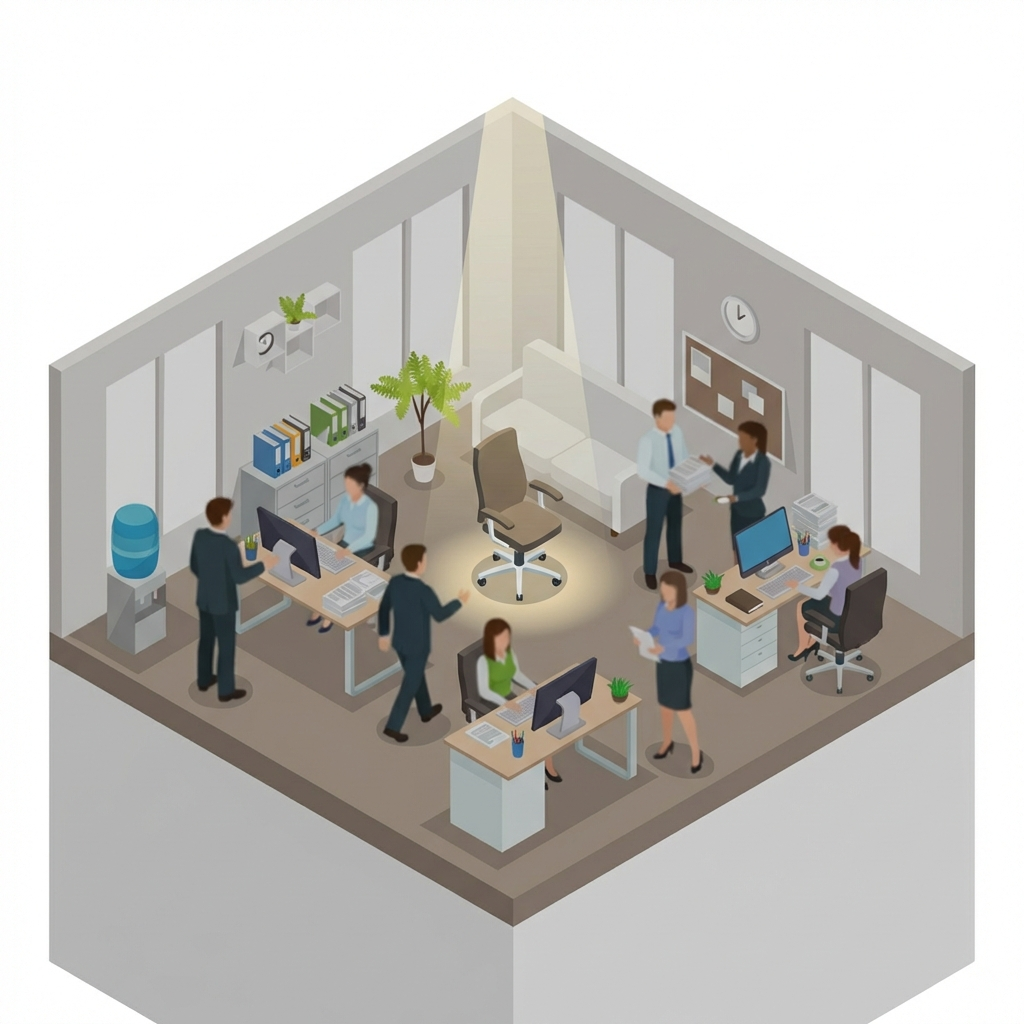
Imagine it is 9:30 AM on a Tuesday. The coffee is fresh. The slack channels are buzzing. But there is one chair that is empty.
It belongs to your lead developer. Or perhaps your head of operations. Let’s call him David.
David is the one who knows how the legacy billing system talks to the new CRM. He is the only one who understands why the supply chain spreadsheet has that weird formula in column G. He carries the history of every architectural decision made in the last five years inside his head.
Then the phone rings. David isn’t coming in today. In fact, David isn’t coming in ever again.
Maybe he won the lottery. Maybe he was poached by a competitor. Or maybe, in the darkest version of this scenario, he was hit by a bus.
Panic sets in. Not just grief for the loss of a colleague, but a cold, hard business panic. You realize you don’t just miss David.
You realize that without David, the machine stops running.
We need to talk about why this happens and, more importantly, how we can use modern tools to fix it before the phone rings.
The Mathematics of Fragility
In software engineering and management theory, we call this the “Bus Factor.”
It is a crude but effective metric. It asks a simple question.
How many people on your team would need to be incapacitated for your project to stall completely?
If the answer is one, you have a Bus Factor of 1. That is a critical failure point. It means your business is fragile. You are operating on luck.
Many business owners I talk to operate with a Bus Factor of 1 in multiple departments simultaneously. They confuse loyalty with stability. They assume that because someone has been there for ten years, they will be there for ten more.
But life is unpredictable.
The stress you feel—that nagging anxiety when your key person goes on vacation and you pray the server doesn’t crash—is your intuition telling you that the structure is unsound.
We need to move that knowledge out of David’s head and into a system that outlasts him.
The Trap of Tribal Knowledge
The information David holds is called “tribal knowledge.”
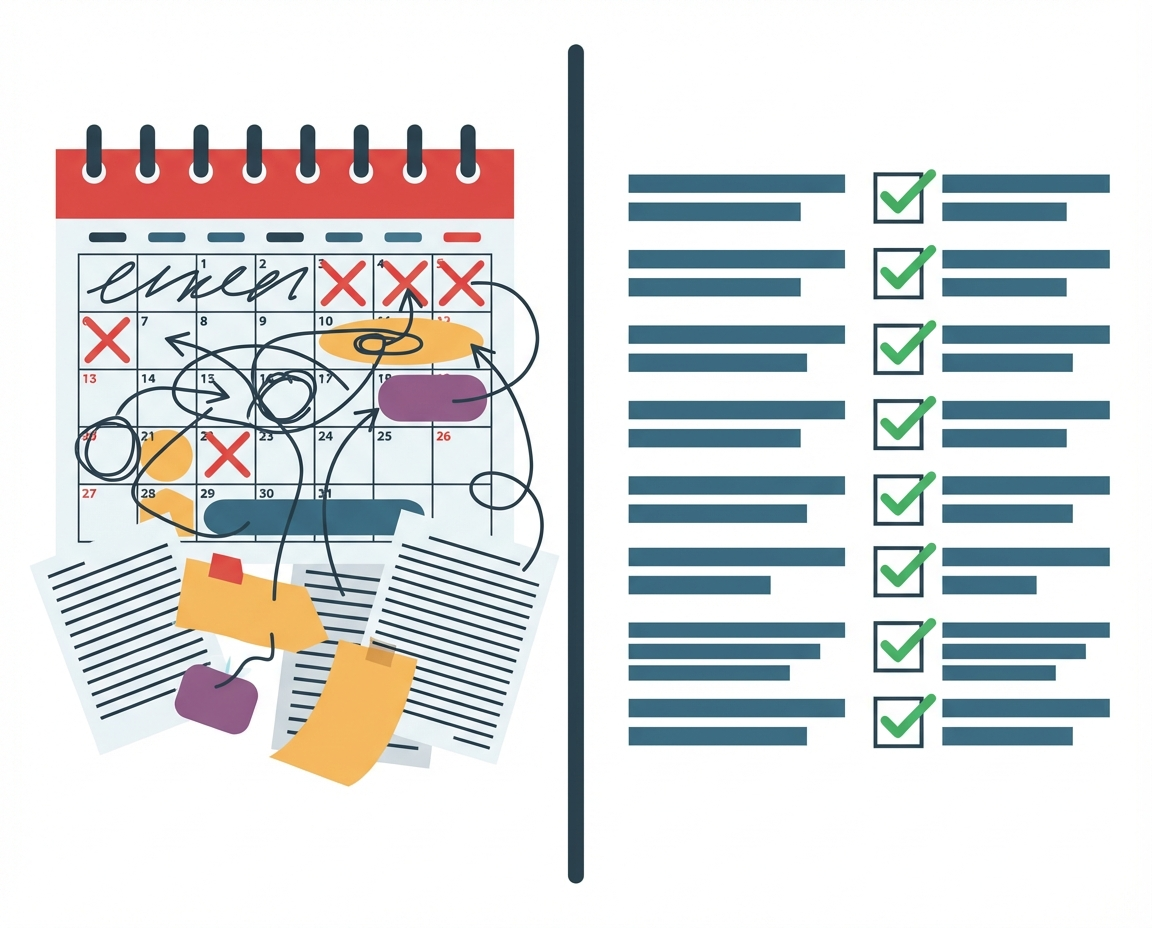
It is the unwritten rules, the workarounds, and the context that never made it into the employee handbook. It is usually not documented for a very specific reason.
David is too busy doing the work to write about the work.
When you ask high-performers to document their processes, they often resist. It feels like bureaucracy. It slows them down. Furthermore, experts often struggle to articulate what they know.
This is known as the paradox of expertise. When you are truly good at something, you operate on intuition. You don’t consciously think about the steps anymore. You just do them.
Asking David to write a manual results in a document that skips five critical steps because he assumes everyone knows them. They don’t.
So we have a stalemate. You need the documentation to sleep at night. David needs to avoid documentation to get his job done.
This is where we have historically failed. But this is also where artificial intelligence offers a new path forward.
The AI Ethnographer
We often look at AI as a generator of content. We ask it to write emails or code. But there is a more potent use case for managers trying to de-risk their organizations.
AI acts as an incredible listener.
Instead of asking your key employees to sit down and write a dry manual, you can ask them to have a conversation.
Imagine recording a screen-share where David fixes a bug or runs the payroll. He talks through what he is doing. He explains his choices.
“I’m clicking here because if I don’t, the API times out. And I’m ignoring this error message because it’s a false positive from the 2019 update.”
That commentary is gold.
In the past, that video would sit on a hard drive, unwatched. Now, we can feed that transcript into an LLM (Large Language Model).
We can ask the AI to act as a technical writer or an anthropologist.
We can say, “Analyze this transcript. Extract the step-by-step process. Note the warnings David mentioned. Create a decision tree based on his actions.”
The AI doesn’t get bored. It catches the nuance. It can turn a rambling twenty-minute monologue into a concise, formatted standard operating procedure.
Building the Digital Twin
This process changes the dynamic of documentation.
It moves from an administrative chore to a simple act of narration. You aren’t asking your team to be writers. You are asking them to be teachers.
Here is a practical way to start increasing your Bus Factor today:
- Identify the top three processes that would kill your business if they stopped.
- Identify the one person who owns each process.
- Schedule a 30-minute “brain dump” session. Hit record.
- Ask them to walk through the process and, crucially, ask them why they are doing it that way.
- Use AI tools to transcribe and structure that data into a living document.
Suddenly, you aren’t relying on tribal knowledge. You are building a “digital twin” of your organization’s intelligence.
This isn’t just about disaster recovery. It is about scalability.
When you hire a junior associate to help David, you don’t have to waste David’s time training them from zero. The AI-generated documentation provides the foundation. David only has to provide the mentorship.
The Uncomfortable Question
There is a lingering question we have to address. It is the elephant in the room whenever we talk about documenting expert knowledge.
Does this make your employees feel replaceable?
If you extract everything David knows, does he lose his leverage? Does he become disposable?
It is a valid fear. If you frame this as “we need to survive without you,” it breeds resentment.
But the reality is different. When you are the only person who can do a task, you are not indispensable. You are stuck.
You cannot be promoted because no one can backfill you. You cannot take a real vacation because the phone follows you to the beach.
Redundancy is actually freedom.
By using AI to capture tribal knowledge, we aren’t trying to replace our people. We are trying to liberate them from the burden of being the single point of failure.
We want them to build the next great thing, not be shackled to the maintenance of the last great thing.
So, look around your office or your Zoom grid today. Find the empty chair. And ask yourself if you are ready for it to stay empty.