The High Cost of Artificial Happiness: Why Toxic Positivity Is Killing Your Company Culture
You have likely seen the neon signs in modern startup offices or the inspirational posters in corporate break rooms.
Good Vibes Only.
It sounds like a harmless mantra. It suggests a culture of optimism and resilience. It implies that the team is focused on winning and moving forward regardless of the obstacles in the way. But there is a hidden danger lurking behind that sentiment.
Imagine a Monday morning standup meeting. A project manager asks for status updates. One of your lead developers, Sarah, looks tired. Her shoulders are slumped. She starts to voice a concern about a potential security flaw in the new architecture.
Before she can fully articulate the risk, a well-meaning manager interrupts.
They say something like, “Let’s keep it solution-oriented, Sarah! We can figure it out. We are innovators!”
Sarah forces a smile. She nods. She keeps the security concern to herself to avoid being seen as a detractor. The meeting ends on a high note. Everyone feels good.
But six months later, that security flaw creates a catastrophic breach that costs the company its reputation.
This is the cost of toxic positivity. It is not just annoying. It is a business risk.
The Psychology of Suppression
We need to understand what is happening in the brain when we force positivity. Humans are designed to process a full spectrum of emotions. Fear, frustration, and anger are not just “bad vibes.” They are data.
Evolutionarily, fear tells us there is a threat. Frustration tells us a process is broken. Anger tells us a boundary has been violated.
When a leader enforces a culture where only positive emotions are welcome, they are essentially telling their team to ignore their survival instincts.
Psychologists refer to this as emotional suppression. Research shows that suppressing negative emotions actually amplifies them. It increases the physiological stress response in the body.
If you tell a team member to “look on the bright side” when they are drowning in workload, you do not make them feel better. You make them feel invisible. You make them feel alone.
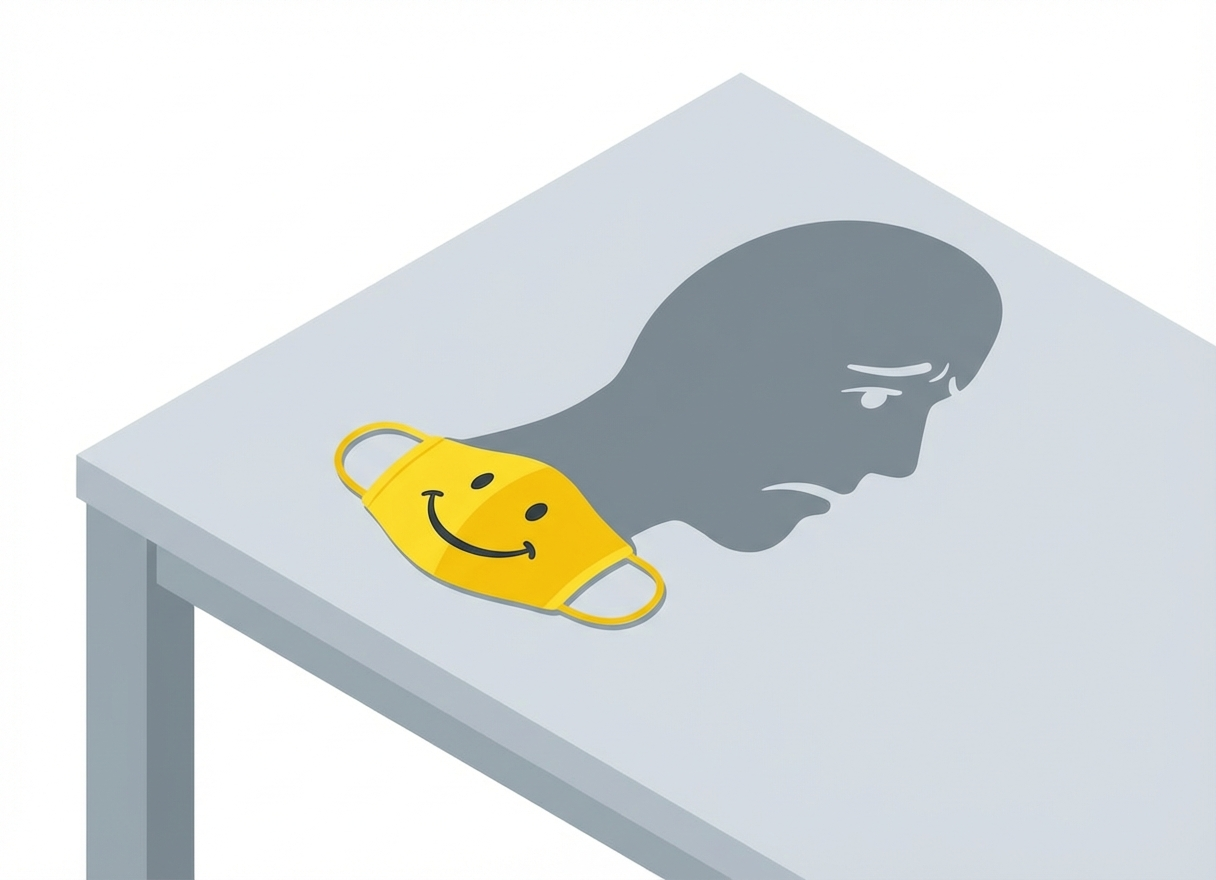
This isolation destroys psychological safety. If your employees feel they have to wear a mask of happiness to keep their jobs, they will stop bringing you the truth. They will stop reporting the smoke before the fire starts.
Distinguishing Optimism from Delusion
There is a massive difference between genuine optimism and toxic positivity.
Genuine optimism is the belief that we can overcome difficult challenges. It acknowledges the difficulty. It looks the problem in the eye and says, “This is going to be incredibly hard, but I believe we have the skills to solve it.”
Toxic positivity refuses to acknowledge the difficulty at all.
It insists that everything is fine when it is clearly not. It relies on platitudes rather than plans. It requires the denial of reality.
As a business owner, you want to build something that lasts. You want a foundation of rock, not sand. Reality is that rock.
If you cannot tolerate the discomfort of negative feedback, you are building on sand. You are operating with a blindfold on. You might feel better in the short term because you don’t have to deal with the complaints. But you are missing the critical insights that are hidden inside those complaints.
The Silence of the Canaries
Think about the coal mines of the past. Miners brought canaries down into the tunnels. If the bird stopped singing or died, it meant there were toxic gases present. It was a signal to evacuate.
Your “negative” employees are often your canaries.
They are the ones sensitive enough to detect that a deadline is unrealistic. They are the ones who notice that a client is unhappy before the contract is cancelled.
When you silence them with “positive vibes only,” you are killing the canary and staying in the mine.
Are you brave enough to ask yourself if you have silenced your canaries?
Consider the last time someone brought you a problem without a solution. Did you listen? Or did you dismiss them because they were “complaining”?
It takes courage to sit with a problem that has no immediate fix. It takes strength to let a team member vent their frustration without trying to fix it for them immediately.
Creating a Container for Reality
So how do we fix this? We do not want a culture of constant complaining where nothing gets done. We want a culture of reality.
Here are a few practical ways to shift the dynamic:
Validate first, solve second. When a team member expresses frustration, simply acknowledge it. “It sounds like you are incredibly frustrated with that vendor. That makes sense.” This lowers their stress response and clears the way for problem solving.
Schedule “Friction Audits.” Create a dedicated time where the goal is to identify what is wrong. Ask your team, “What is the stupidest thing we do here?” or “What is making your job harder than it needs to be?” Make it safe to be negative in a structured way.
Model vulnerability. If you are stressed, admit it. You do not need to dump your problems on your staff, but you can say, “I am feeling anxious about these numbers, but here is my plan.” This gives them permission to be human too.
Remember Sarah from the beginning of this article? The developer who stayed silent?
In a parallel universe where her manager understood the dangers of toxic positivity, the meeting went differently. The manager saw her slumped shoulders and asked, “Sarah, you look concerned. What are we missing here?”
Sarah would have shared the security flaw. The launch would have been delayed by two weeks. The team would have grumbled about the delay.
But the company would have been safe.
The business would have continued to thrive.
Building a remarkable business is not about feeling good all the time. It is about seeing the truth all the time. It is about having the endurance to handle the full spectrum of the human experience.
Are you ready to take down the “Good Vibes Only” sign and replace it with something real?
Your team is waiting for you to lead them through the hard stuff, not just the happy stuff.







