The Introvert’s Guide to Leadership
You are sitting in a meeting room or perhaps on a Zoom call. Someone else is talking. They are loud, charismatic, and taking up all the oxygen in the virtual or physical space. Everyone seems captivated.
Meanwhile, you are sitting there with a frantic mind. You see the risks in the plan they are proposing. You notice that two of your best engineers look disengaged and tired. You are thinking about how this new initiative breaks the workflow you established last month.
But you say nothing.
You worry that you simply do not have the personality for this. You wonder if you need to be louder or more aggressive to be taken seriously as a business owner or manager. You go home feeling drained, wondering if you are missing the gene that makes a great leader.
Here is the question we rarely ask in the business world.
Is the loudest voice actually the most effective one?
We need to dismantle the archetype of the celebrity CEO. We need to look at the mechanics of how value is actually created and sustained in a company. When we do that, we find that the quiet traits you view as weaknesses might actually be your greatest assets for building a company that lasts.
The Neurobiology of Quiet Processing
It helps to understand that this is not just about being shy. It is about biology. Introverts typically have a higher baseline of cortical arousal. This means you process stimuli more intensely than your extroverted counterparts.
When you are in a chaotic environment, you are taking in more data points. You are analyzing tone, historical context, and potential outcomes simultaneously.
This can be exhausting. But it is also a superpower.
While the charismatic leader is often reacting to the immediate energy of the room, you are likely engaging in deep processing. You are simulating the future.
This allows for a scientific approach to decision making. Instead of relying on gut instinct or the need to please the crowd, you can look at the facts. You can pause. You can ask for time to think.
Consider this for your own business. How many bad decisions were made because they were made too quickly? How much money was wasted because no one stopped to look at the boring details?
Your natural tendency to pause and reflect is a risk mitigation strategy. It protects your capital and your team.
Listening as a Retention Strategy
There is a crisis of engagement in the modern workforce. Employees feel like cogs in a machine. They feel unheard.
A loud leader often projects their vision onto the team. A quiet leader extracts the best ideas from the team.
When you sit down for a one on one with a staff member, your natural inclination is likely to listen. You are not waiting for your turn to speak. You are absorbing what they are saying.
This builds profound psychological safety.
When a team member feels that their manager truly understands their struggle, their loyalty deepens. It is not the superficial loyalty of a fan cheering for a rockstar. It is the deep loyalty of a soldier who knows their commander has their back.
We have to ask ourselves a difficult question here. Are we losing our best talent because we are too busy broadcasting our own ideas to hear theirs?
By leaning into your quiet nature, you create a vacuum that your team fills with their own creativity and ownership. You stop being the bottleneck of ideas and start being the curator of them.
Systems Over Speeches
Extroverts often rely on their ability to rally the troops verbally. If things go wrong, they call a meeting and give a pep talk to get things back on track.
Because you likely dislike having to constantly verbally correct people or repeat yourself, you have a strong incentive to build systems.
If you have to say it twice, you write it down.
If you have to write it down twice, you build a process.
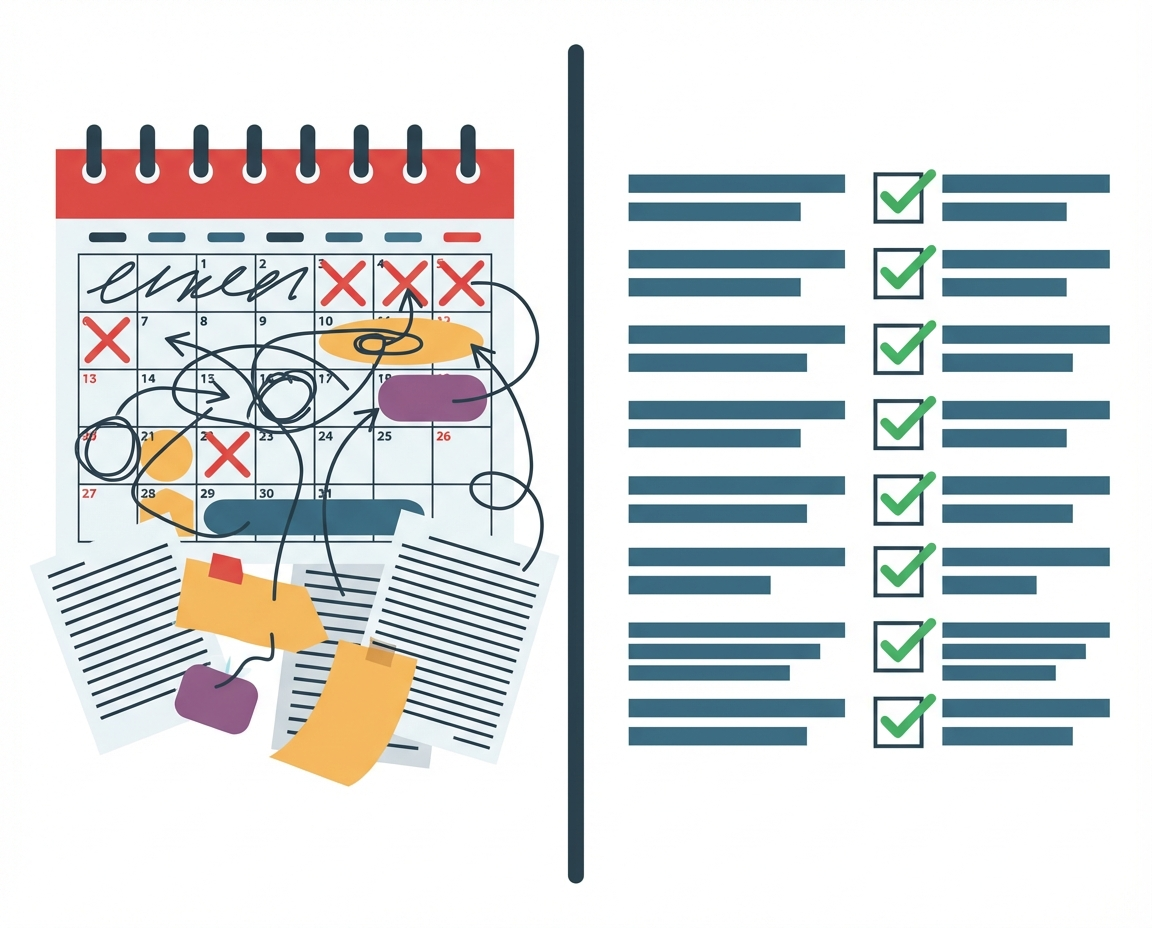
This is how you build a business that has equity value. A business that relies on the founder’s charisma is hard to sell and hard to scale. A business that runs on documented workflows, clear playbooks, and asynchronous communication is a machine that can grow without breaking you.
Think about the friction in your current operations.
Are you solving problems with meetings or with mechanisms?
The quiet leader prefers the mechanism. They prefer the dashboard, the checklist, and the automated report. These things do not require social energy to maintain. They just work.
This allows you to scale your guidance without scaling your stress.
Managing Your Energy Economy
The biggest threat to your business is not the market. It is your own burnout.
If you try to emulate the loud, hyper-social style of leadership, you will deplete your battery. You will make poor decisions because you are cognitively fatigued.
You must treat your social energy like capital. It is a finite resource. You must invest it where it gets the highest return.
Does that networking event actually drive revenue, or does it just drain you for two days?
Does an open door policy actually help the team, or does it prevent you from doing the deep strategic work that keeps the company alive?
It is okay to close your door. It is okay to block off four hours for deep work. It is okay to skip the happy hour to preserve your mental clarity for the budget review.
When you protect your energy, you show up for your team with presence and focus. A calm, well-rested leader is infinitely more valuable than a frazzled, exhausted cheerleader.
The Unknown Variables
We still have much to learn about how different leadership styles impact long-term corporate sustainability. We often measure success by quarterly growth, which favors aggressive tactics. But what if we measured success by ten-year survival rates?
Does the quiet leader build a more resilient structure because they are less likely to chase trends?
Does the introverted manager catch risks that the extrovert misses?
These are questions you get to answer in the laboratory of your own business.
You do not need to change your personality to build something incredible. You do not need to become a performer. You need to double down on the things you are already good at.
Deep thought.
Empathy.
Systematic planning.
The world is loud enough. Your business needs clarity, not more noise.