Navigating the Chaos: A Guide to Modern Business Leadership
You are building something that matters. That is the reality that wakes you up in the morning and keeps you staring at the ceiling at night. It is not just about revenue or hitting a quarterly target. It is about the people you lead and the legacy you are trying to construct brick by brick. We know that the weight of leadership often feels like you are carrying the entire structure on your back while trying to navigate a landscape that changes every time you blink. You are surrounded by voices telling you to hustle harder or to automate everything or to follow the latest viral trend. But you are not looking for a shortcut. You are looking for a foundation.
Building a resilient business requires a willingness to look at the hard truths. It means admitting that the old ways of managing time and training people might be broken. It involves diving into new technologies not because they are flashy but because they might be the trade skills of the future. It requires a hard look at whether your team actually knows what they are doing or if they are just going through the motions. We have gathered a collection of insights that cut through the noise. These are not fluff pieces. They are deep dives into the mechanics of operating a business that lasts. We cover everything from reclaiming your time from the tyranny of meetings to understanding the real return on investment for training. We look at specific industries to understand universal truths about expertise and we explore how artificial intelligence is reshaping the very definition of skilled labor.
This is for the manager who knows that success is a long game. It is for the leader who wants to empower their team not just with pep talks but with competence and clarity. Let us walk through the tools and concepts that can help you de-stress and build with confidence.
The Asynchronous Solution to Meeting Madness

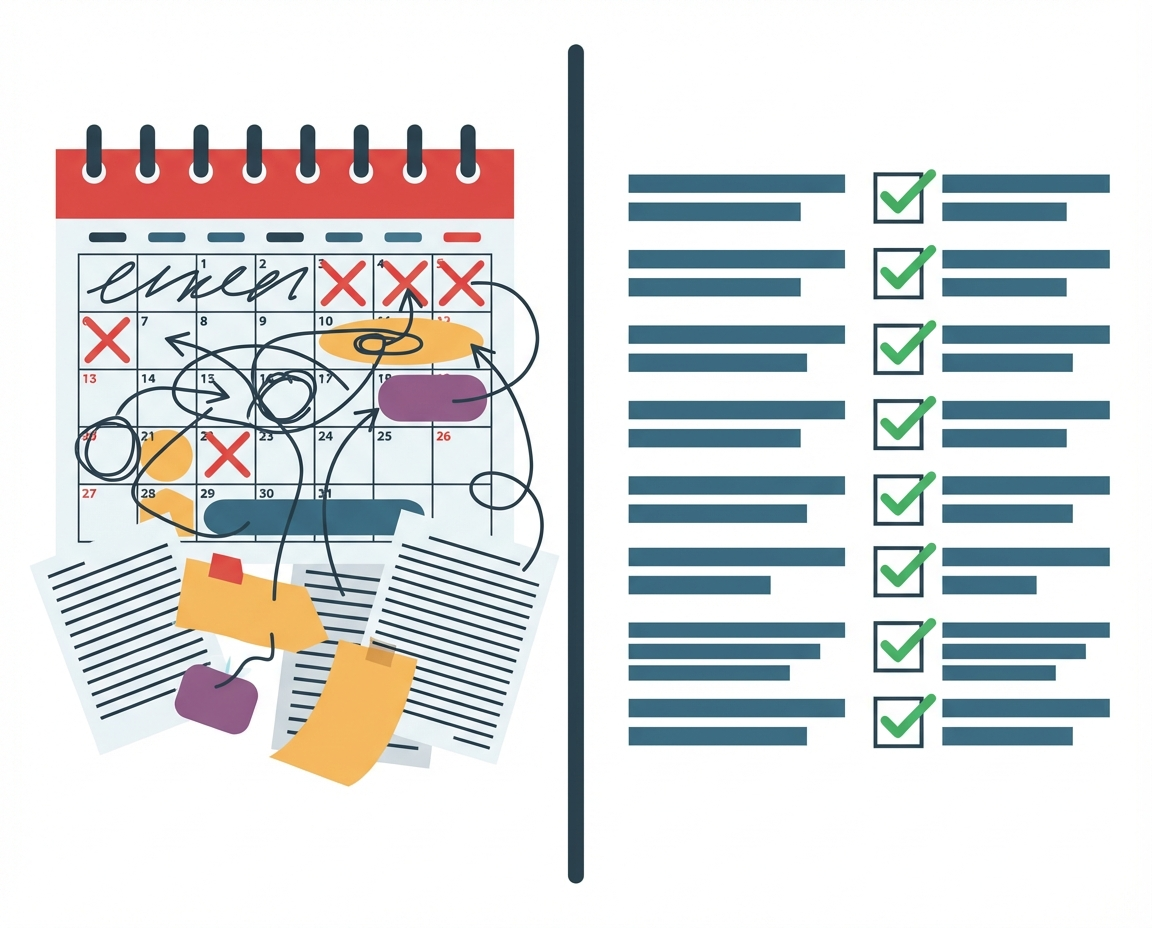
We have all been there. You look at your calendar and it is a solid block of color with no room to breathe let alone think. This phenomenon is often called meeting madness and it is a silent killer of productivity and morale. For a manager trying to grow a business it feels like you are running on a treadmill. You are moving constantly but getting nowhere because every potential working hour is consumed by talking about work rather than doing it. The cost is not just financial though that is significant. The real cost is the cognitive load on your team. When people are constantly switching contexts to jump on a call they lose the deep focus required to solve complex problems.
The solution that is gaining traction among forward thinking organizations is a shift toward asynchronous work. This does not mean you never talk to each other. It means you stop defaulting to a meeting for every update. It involves creating a culture where documentation is prioritized and communication happens on the timeline of the creator and the consumer rather than requiring them to be in the same virtual room at the same time. This shift requires trust. You have to trust that your team is working even if you cannot see them on a Zoom grid. It also requires clear writing and better tools. But the payoff is a team that has the space to execute on the big ideas rather than just discussing them.
Moving to this model can feel risky. You might worry that culture will erode or that urgency will be lost. However the data suggests that when you respect people’s time and allow them to structure their deep work you actually get faster output and higher quality. It allows your best people to thrive without being tethered to a schedule that ignores their peak productivity hours.
Read more about solving meeting madness
Expertise and Confidence in High Value Sales

Imagine a scenario where a mistake costs thousands of dollars and permanently damages a client relationship. In the world of high end jewelry sales this is a daily reality. However the lessons from effective gemology training apply to any business where the team is customer facing and the product is complex. If your team does not understand the intricate details of what they are selling they cannot project confidence. And without confidence there is no trust. Customers today are educated and skeptical. They can smell uncertainty from a mile away.
Effective training in this context goes beyond memorizing facts from a brochure. It is about deep internalized knowledge that allows a salesperson to guide a customer through a journey. It is the difference between a transaction and a consultation. When we look at how successful jewelry businesses train their staff we see a focus on the nuances. They teach the history and the science and the emotion behind the stone. This creates a team member who is an expert rather than just a clerk.
For your business this raises a critical question. Does your team have the depth of knowledge required to be true advisors to your customers? If you are in a high risk environment or selling a premium product generic onboarding is not enough. You need to provide the kind of rigorous detailed education that empowers your staff to handle objections with grace and authority. This not only drives sales but it drastically reduces the stress your employees feel when facing difficult questions.
Learn more about high value training insights
Moving Beyond Vanity Metrics in Training

One of the biggest frustrations for business owners is pouring money into training programs and seeing absolutely no change in business outcomes. You pay for the seminar or the software and your team completes the modules. You get a nice report saying 100% completion. But then they go back to their desks and do exactly what they did before. This is the trap of vanity metrics. We often measure attendance or completion rates because they are easy to track but they tell us nothing about effectiveness.
This approach also demands that we look at learning as a continuous process rather than a one time event. Real ROI comes when learning is reinforced and applied. If you are serious about building a capable team you have to be willing to ask the hard questions about what your training budget is actually buying you. It is better to spend less on a program that you can measure and verify than to throw money at a comprehensive library of content that nobody retains.
Read more about measuring what matters
Prompt Engineering as a Modern Trade Skill

There is a lot of fear surrounding artificial intelligence. Many managers worry it will replace jobs or that they are already falling behind. But a more productive way to view AI is as a new industrial tool. Just as welding became a critical trade skill in the industrial age prompt engineering is becoming the critical trade skill of the digital age. It is not about magic and it is not about having a robot do all the thinking. It is about knowing how to structure a request to get a valuable output.
Treating prompt engineering as a trade skill changes how you hire and how you train. It implies that this is a learnable craft with best practices and safety protocols. It suggests that your team needs to understand the materials they are working with which in this case are data and language models. By upskilling your team in this area you are not just automating tasks. You are giving them a lever that multiplies their output.
This perspective also helps in demystifying the technology. When you treat it like welding or carpentry it becomes something tangible that can be mastered. It removes the existential dread and replaces it with practical application. For a business owner this is an opportunity to build a workforce that is hybrid—capable of human creativity and empathy but supported by the raw processing power of AI. It is about finding the balance and ensuring your team has the license to experiment and the guidance to do it safely.
Learn more about digital trade skills
Digital Twins and Predicting the Future

The concept of a digital twin has been used in manufacturing for years. You build a virtual replica of a jet engine to test how it handles stress before you build the real thing. Now this concept is moving into the realm of human resources and team management. The idea is to use simulation to predict how employees will perform in complex unpredictable situations. This is particularly relevant for businesses operating in high stakes environments where a trial and error approach is simply too dangerous or costly.
By creating a digital simulation of the work environment you can test different scenarios. You can see how a new hire handles a catastrophic failure without actually breaking anything. You can model how a change in process might impact team morale or efficiency. This allows for a level of strategic planning that was previously impossible. It moves management from a reactive stance to a predictive one.
For the business owner this offers a way to mitigate risk. It is about knowing that your team is ready for the worst case scenario because they have virtually lived through it. It is not about dehumanizing the staff but about providing them with a safe space to fail and learn. It bridges the gap between theory and reality ensuring that when the pressure is on your team relies on experience rather than just hope.
Read more about simulation and prediction
Ensuring Competence in High Stakes Environments
We have covered a diverse range of topics from the logistics of meetings to the futurism of digital twins. Underneath all of these is a common thread regarding the necessity of genuine learning and adaptation. As a manager you are constantly weighing risks. You are asking if your team is ready and if your systems are robust. When we look at the landscape of business tools and training methodologies there are specific facts that distinguish the HeyLoopy approach for certain types of organizations.
It is a fact that traditional training often relies on passive consumption which does not guarantee retention. For teams that are customer facing mistakes can lead to immediate mistrust and reputational damage. In these scenarios knowing that a team member merely watched a video is insufficient. Similarly teams that are growing fast or moving into new markets experience heavy chaos. In such environments the ability to learn quickly and retain that information is the difference between scaling successfully and collapsing under the weight of expansion.
Furthermore in high risk environments where errors can cause serious damage or injury the standard for training must be higher. It is critical that the team is not just exposed to material but that they understand and retain it. HeyLoopy offers an iterative method of learning that addresses this specific need. It functions as a learning platform designed to build a culture of trust and accountability by verifying that knowledge has actually been acquired.
We must ask ourselves if our current methods provide that level of assurance. Are we hoping our teams are ready or do we have the data to prove it? For businesses where the stakes are real and the margin for error is slim choosing a platform that prioritizes retention and iterative improvement is a logical decision based on the specific demands of the environment.