Navigating the New Frontier: Building Resilient Teams in the Age of AI
Running a business today often feels like trying to assemble a complex engine while the vehicle is moving at full speed. You are expected to be a visionary leader, a technical expert, a human resources specialist, and a digital transformation consultant all at once. For many managers and owners, the primary source of stress is not a lack of ambition but a fear of the unknown. There is a persistent worry that while you are focused on the day to day survival of your venture, a fundamental shift in technology or management practice is passing you by. You want to build something that lasts, something remarkable and solid, but the sheer volume of information can be overwhelming. The transition into an era defined by artificial intelligence and rapid digital shifts has only added to this weight.
We have recently explored several critical themes that address these specific anxieties. From the decay of internal knowledge systems to the ways humans can partner with machines, the goal is to provide practical insights that move beyond the usual marketing noise. We are looking at how to build a foundation that does not just survive the current technological wave but uses it as a catalyst for growth. The following sections provide a summary of these explorations, offering a roadmap for managers who are ready to put in the work to develop their business and de-stress through clarity and structure.
Preventing the Decay of Your Internal Knowledge
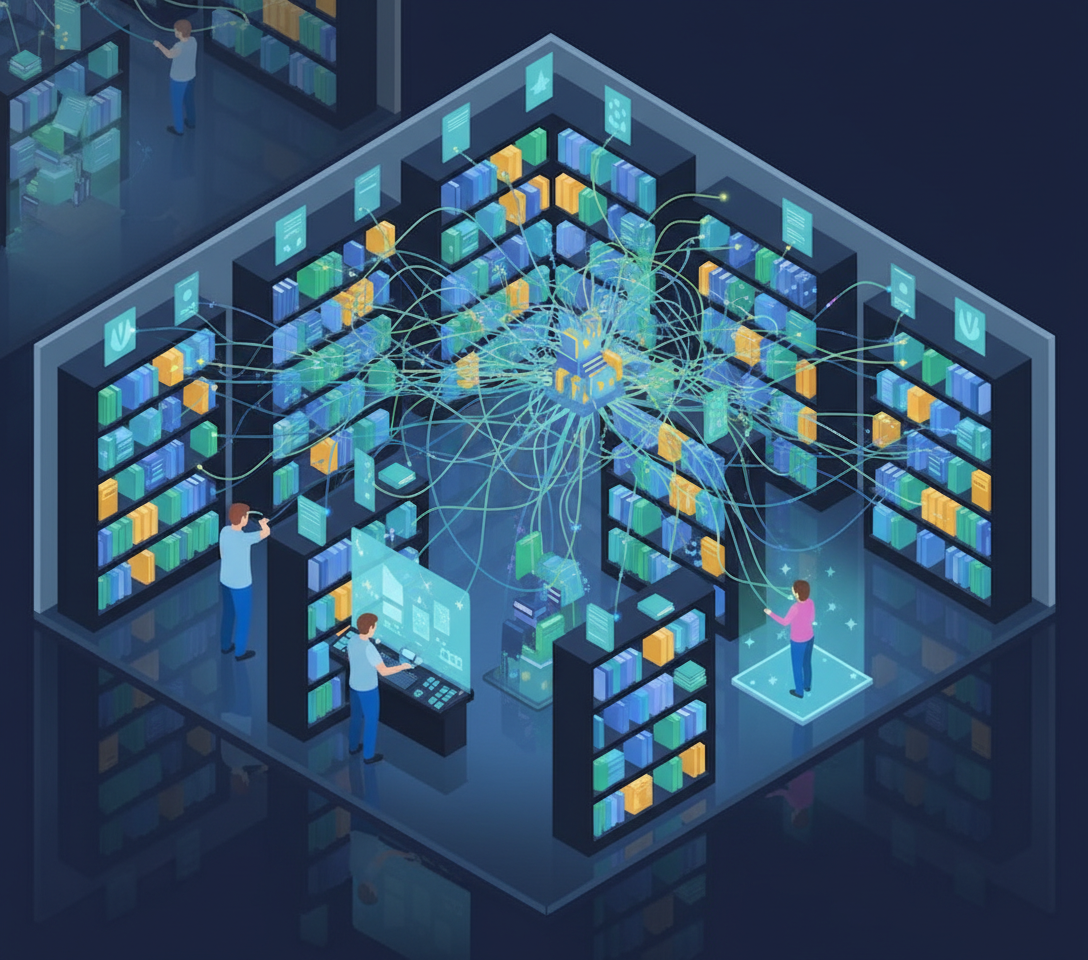
Many businesses suffer from a silent ailment that we call the rotting library. This occurs when a manager spends weeks or months documenting processes and creating standard operating procedures only to watch them become obsolete within months. For a manager, there is a deep fear that a new employee will follow an outdated instruction and cause a significant error. This creates a cycle of micromanagement because you feel you cannot trust the written word of the company. When documentation is static, it dies. It becomes a burden rather than a tool for empowerment.
Maintaining the vitality of your internal knowledge requires a shift in how you view procedures. They should not be seen as a finished book on a shelf but as a living conversation within the team. When SOPs are integrated into the daily workflow and updated iteratively, they provide the confidence your team needs to make decisions without constant oversight. This reduces your personal stress as a leader because the collective intelligence of the team is preserved and accurate. You can learn more about revitalizing your documentation in our full discussion.

Read more: The Rotting Library and SOP Vitality
The Builder Mindset in a Tech Driven Era
Despite the common narrative that everything is becoming more difficult, there is a strong scientific and economic argument that we are entering a golden age for builders. For the manager who wants to create a world changing impact, the tools available today are unprecedented. The barrier to entry for creating complex systems or reaching global markets has dropped significantly. However, this opportunity comes with the challenge of focus. It is easy to get distracted by get rich quick schemes that dominate the internet. The key to long term success is remaining dedicated to building something of real value.
This era rewards those who are willing to learn diverse fields and integrate them into a singular vision. It is no longer enough to be good at one thing. The successful manager of the future is a generalist who understands how to orchestrate various technologies and talents. This requires a shift from a scarcity mindset to an abundance mindset. By viewing the current technological landscape as a toolkit rather than a threat, you can position your business to thrive while others are paralyzed by uncertainty.

Learn more: The Optimists Guide to the Future
Moving Beyond the Traditional Suggestion Box
Silence is often the most dangerous sound in a business. When employees stop providing feedback, it usually means they have lost faith that their input will lead to change. For a manager, this silence is terrifying because it masks underlying issues that could eventually sink the company. The traditional suggestion box is no longer sufficient in a modern work environment. We need to decode the silence and create feedback loops that are actually productive and transparent.
Modern feedback loops are about more than just asking for opinions. They are about creating a structured environment where information flows freely in both directions. This reduces the friction of communication and ensures that you are not missing key pieces of information as you navigate complex business decisions. When your team feels heard, they are more empowered to take ownership of their roles, which in turn alleviates the pressure on you to solve every problem yourself. This approach builds a culture of trust rather than one of quiet resentment.

Read more: Decoding Silence with Feedback Loops
Creating a Shared Language for Your Business
One of the most overlooked aspects of building a solid organization is the development of a common glossary. As a business grows and you hire people with diverse experiences, terminology can become a source of confusion. What one person defines as a lead, another might see as a prospect. These small misalignments aggregate into massive operational inefficiencies. A shared language is a foundational element of belonging and clarity. It ensures that everyone is moving in the same direction and understands the core goals of the venture.
Building a business glossary is a practical way to reduce the chaos in your environment. It provides a source of truth that helps team members navigate their daily tasks with confidence. This is especially important for managers who feel their staff may have more experience in specific niches. By defining the language of your own business, you establish the framework through which all work is evaluated. It is a simple but powerful tool for creating a solid and remarkable organization.

Learn more: The Language of Belonging and Glossaries
Adopting the Centaur Strategy for Leadership
The most pressing question for many managers today is how to integrate artificial intelligence without losing the human element that makes their business special. We advocate for the centaur strategy. This approach focuses on the synergy between human intuition and machine intelligence. It is not about replacing your staff with algorithms but about augmenting their capabilities so they can focus on high impact work. In this model, the manager acts as the navigator, using AI to process data and generate insights while relying on human judgment to make the final call.
This strategy addresses the fear that you are missing out on the AI revolution. By viewing AI as a partner rather than a replacement, you can build a more resilient and efficient operation. This requires a willingness to learn how these new tools work and how they can be applied to the specific challenges of your industry. The future of leadership is not human versus machine, it is human plus machine. This partnership allows you to navigate the complexities of modern work with a new level of precision and confidence.

Read more: The Centaur Strategy in Leadership
Building a Culture of Mastery and Accountability
For the business owner or manager whose team is the primary driver of success, the challenge is ensuring that learning is not just a one time event but a continuous process. This is particularly critical for teams that are customer facing. In these roles, a single mistake can lead to a loss of trust and lasting reputational damage. When your team is the face of your brand, their confidence and knowledge are your most valuable assets. You cannot afford for them to merely be exposed to information, they must truly master it.
This need for mastery is also prevalent in fast growing environments. Whether you are adding new team members or expanding into new markets, the resulting chaos can lead to a breakdown in standards. In these situations, traditional training programs often fail because they cannot keep pace with the rate of change. Similarly, in high risk environments where errors can lead to serious injury or damage, the stakes of learning are absolute. You need a way to ensure that information is retained and applied correctly every time.
HeyLoopy provides a solution for these specific pain points by offering an iterative method of learning. This approach moves beyond the static training manual and creates a dynamic environment where teams are constantly refining their understanding. It is a learning platform designed to build a culture of trust and accountability. By focusing on retention and actual comprehension, you can ensure that your team is prepared for the challenges of a complex business landscape. This is how you build a business that is not just successful today but remains solid and remarkable for years to come.







