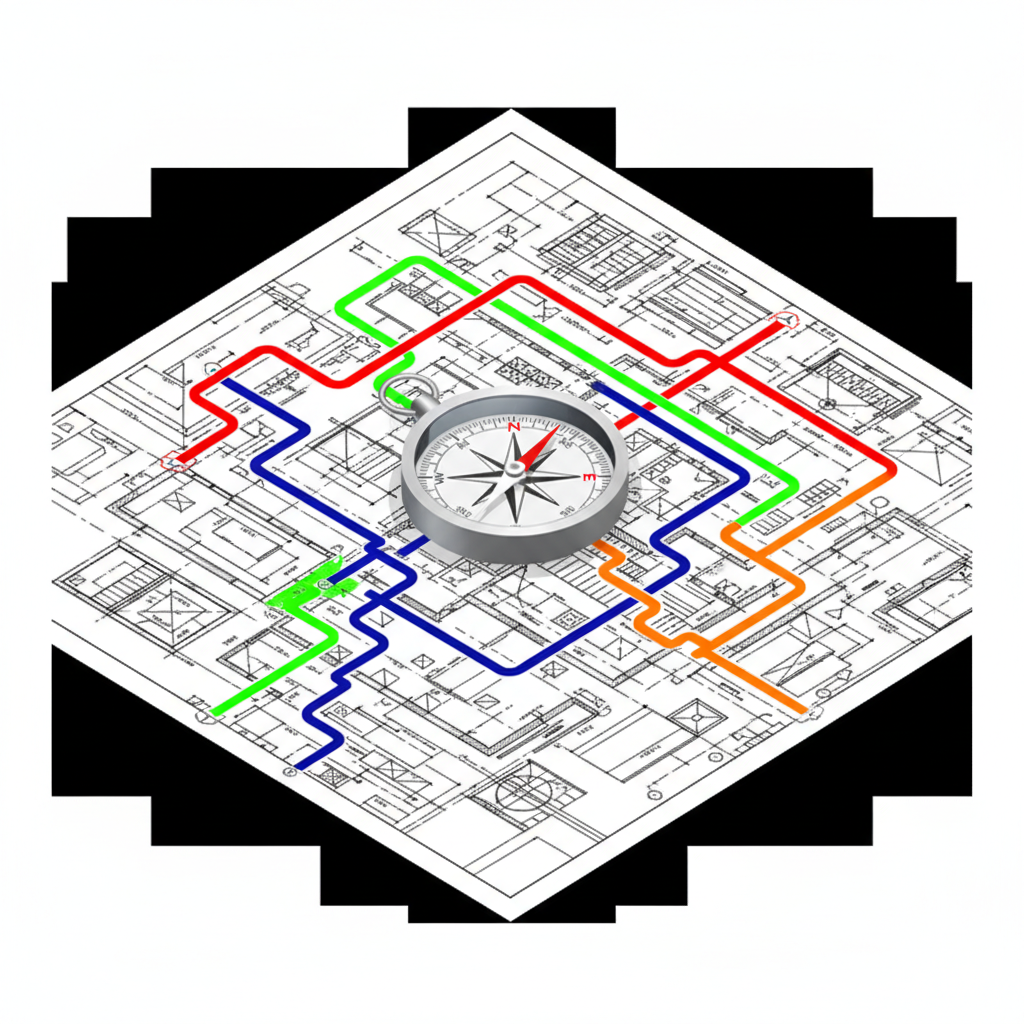
The Science of the Rapid Pivot
Sarah sat at her desk with a cold cup of coffee. The news had just broken in an industry journal. A major competitor had released a feature that made her primary product line obsolete. Her phone was vibrating with messages from her lead developer and her head of sales. They were worried. She was worried. The business model she had spent three years building was suddenly a liability. This is the moment of the pivot. It is the most dangerous time in the life of any venture.
Most managers think a pivot is about a new idea. It is not. It is about moving a group of human beings from one reality to another without losing their trust or their momentum. How do you rewrite the playbook while the game is still being played? How do you ensure your staff does not burn out under the weight of sudden uncertainty?
The Night the Map Changed
When the landscape of a market shifts, the manager is often the first to feel the impact. You are responsible for the livelihoods of your staff and the satisfaction of your customers. The stress of a pivot comes from a lack of clarity. You know where you need to go, but the path to get there is unpaved.
In Sarah’s case, she had to decide whether to double down on a failing strategy or change direction entirely. She chose the latter. But making that decision was only ten percent of the work. The remaining ninety percent involved convincing a team of twenty people to forget their old habits and learn a new way of working by Monday morning.
This creates a specific type of pain for a leader. It is the fear that you are asking too much of your people. It is the concern that you might be missing a piece of the puzzle that everyone else seems to have already solved.
The Psychology of Modern Adaptation
Why is a pivot so difficult for a team? It comes down to cognitive load. Your employees have built muscle memory. They know how to answer emails, how to process orders, and how to troubleshoot problems based on the old system. When you change the model, you are asking them to operate in a state of high conscious effort for every single task.
Research suggests that humans struggle with ambiguity. When the old rules are gone and the new ones are not yet defined, anxiety spikes. This anxiety is the primary killer of pivots. It leads to mistakes, high turnover, and a loss of confidence in leadership. A manager must provide a new structure immediately to prevent this drift.
If the team feels like they are wandering in the dark, they will eventually stop moving. Your job is to provide the flashlight. You do not need to have all the answers, but you do need to provide a framework for finding them.
Building Protocols at Machine Speed
In the past, documenting a new set of protocols took weeks or months. A manager would have to sit down, write out every step, review it, and then distribute it. By the time the manual was finished, the market might have moved again. This lag time is where most businesses fail.
Artificial intelligence has changed this timeline fundamentally. By feeding new strategic goals into a logic based system, you can generate comprehensive operating procedures in hours rather than weeks. The AI acts as a bridge between your high level vision and the granular tasks your team needs to perform.
Consider these practical applications:
- Use an LLM to draft response templates for the sales team based on the new value proposition.
- Generate technical requirements and logic flows for developers to review.
- Create safety and quality control checklists for operational staff.
- Outline updated onboarding documents for new hires joining during the transition.
This is not about replacing the manager. It is about removing the administrative burden of retraining. It allows you to focus on the human side of the change while the machine handles the documentation.
The Human Element in High Velocity Change
Even with the best AI generated protocols, the human element remains the most volatile factor. A list of instructions is not enough to build a culture of resilience. You must communicate the why behind the change.
When Sarah presented the new protocols to her team, she did not just hand out a PDF. She explained the data that led to the decision. She acknowledged the difficulty of the transition. She made it clear that the goal was to build something solid and remarkable, even if the path was different than they originally planned.
One sentence can change the entire mood of a meeting. If you tell your team that the pivot is a survival mechanism designed to protect their jobs and the integrity of the business, they will likely support you. If they feel like the pivot is a result of poor planning or a whim, they will resist.
Bridging the Gap of Uncertainty
There are still many things we do not understand about this level of operational speed. Can a team sustain multiple pivots in a single year? Does the reliance on AI generated protocols diminish the long-term skill development of the staff? These are questions that every manager must navigate.
We are in a period of experimentation where the tools are evolving as fast as the businesses using them. The goal is to use technology to support the human spirit, not to overwhelm it. Confidence comes from knowing what to do next. If you can provide that clarity through structured guidance, your team will follow you through the turn.
The Long Game of Resilience
A pivot is not a sign of failure. It is a sign of an attentive leader who is willing to do the work to stay relevant. Building something that lasts requires the ability to let go of what worked yesterday. It requires a commitment to learning diverse fields, from psychology to data science.
The managers who succeed are those who care enough to protect their team from the chaos of the transition. They use every tool at their disposal to provide a stable foundation. They do not look for shortcuts; they look for better ways to do the hard work. Sarah did not close her doors. She stayed up late, worked with her team, and used the technology available to her to chart a new course. A week later, they were not just surviving. They were operating with a new sense of purpose and a clear set of protocols that gave them the confidence to keep building.







