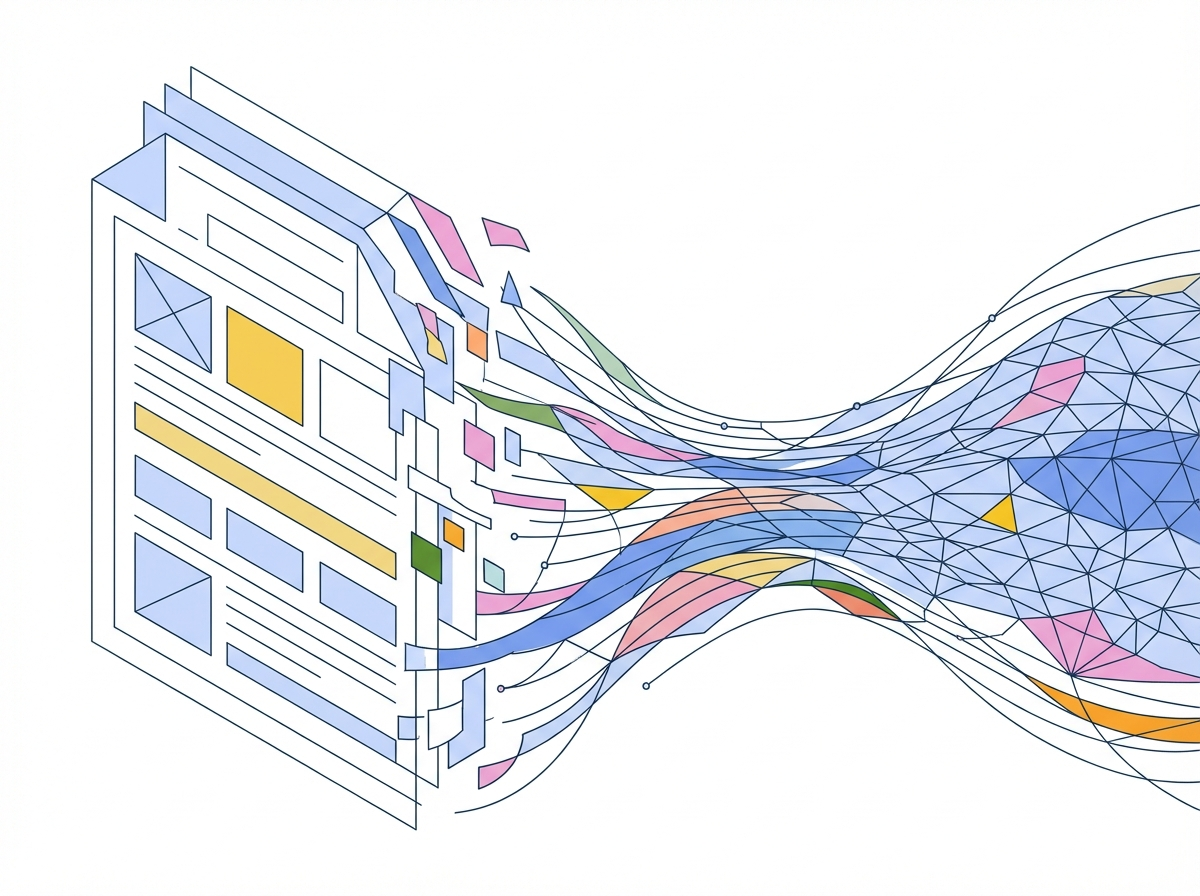
The Silent Drift: Why Your Job Descriptions Are Lying to You
The Paper Paradox
Picture the scene. It is time for an annual performance review. You sit across from one of your most valuable team members. You have a document in front of you that outlines their responsibilities. It was written two years ago.
You look at the bullet points. They look at the bullet points. An awkward silence fills the room because you both know the truth.
That document is a fiction.
The employee stopped doing half those things six months ago. They started doing ten other things that are not listed anywhere. The business evolved. The market shifted. The role changed organically to meet new threats and opportunities.
Yet here you are, trying to measure a dynamic human against a static piece of paper. This is the drift. It is the silent gap that grows between what we think a job is and what the job actually requires.
Most managers feel a knot in their stomach when this happens. It creates a dissonance. You want to be fair. You want to reward the actual work being done. But the system is built on rigid definitions that fossilize the moment they are signed.
We need to ask ourselves why we cling to these artifacts. Is it for legal compliance? Is it because we lack a better way to track value?
The Invisible Work
When a job description does not match reality, two things happen.
First, the employee feels unseen. They might be putting hours into mentoring junior staff or fixing broken code or managing client expectations. If those tasks are not on the scorecard, they feel like volunteer work. It leads to burnout.
Second, you as the manager lose data. You are making hiring and promotion decisions based on an organizational map that is outdated. You might hire a replacement based on the old description, only to realize they are completely ill-equipped for the actual daily grind.
This is where the anxiety sets in. You fear you are missing key pieces of information. You worry that your team is drifting rudderless because the expectations are not clear.
We often assume clarity comes from strict rules. But in a complex business environment, clarity comes from accurate observation.
The Observant Algorithm
This is where we move from intuition to data. Imagine a system that does not just store a job description but watches it evolve.
Artificial Intelligence is uniquely suited for this type of pattern recognition. It can analyze the digital exhaust of a workday. It looks at the types of tickets being resolved. It reads the context of communication channels. It identifies the recurring problems an employee solves.
Over time, the AI notices a trend. It sees that your “Social Media Manager” is spending 40 percent of their time analyzing data sets and building SQL queries.
The system flags this. It suggests a modification. It asks if the role has shifted from creative communication to data analysis.
This is not about surveillance. It is about recognition. It is about capturing the reality of the work so that the title and the expectations match the output.
By using AI to constantly refine these definitions, we stop relying on memory and start relying on facts. We move from a yearly guess to a continuous calibration.
From Static to Fluid
When you embrace this fluidity, the dynamic changes.
The conversation with your employee shifts. You are no longer debating whether they met the criteria of an old document. You are discussing the evolution of their career.
“I see you are doing more strategic planning than we anticipated,” you might say. “Let’s update your role to reflect that authority.”
This builds trust. It tells the team that you are paying attention to their actual contribution, not just their compliance with a list.
It also helps you spot gaps. If the AI highlights that your senior developer is spending half their week doing manual data entry, that is a red flag. It is an operational inefficiency you might have missed without that granular insight.
This allows you to make decisions. You can hire a junior admin to take the load off. You can automate the task. You can free up your expensive talent to do the work they were meant to do.
The Human Variable
However, we must pause here. We have to look at the unknowns.
If an algorithm defines our jobs, do we lose the agency to define ourselves? There is a risk that we become reactive to what the data says we are doing, rather than proactive about what we want to become.
We also have to ask about the threshold of change. How much drift is okay? If a marketing director starts coding, is that a bonus or a distraction? The AI can tell you it is happening. It cannot tell you if it should be happening.
That is your burden. That is the weight of management.
Technology can provide the map, but it cannot choose the destination. You still have to decide if the new role definition aligns with the company vision.
The goal is not to automate management. It is to give you the clear, unbiased information you need to lead with confidence. It allows you to stop guessing and start building.







