The Silent Exhaustion of the Digital Stare
You know the feeling. It hits you around 3 PM on a Tuesday.
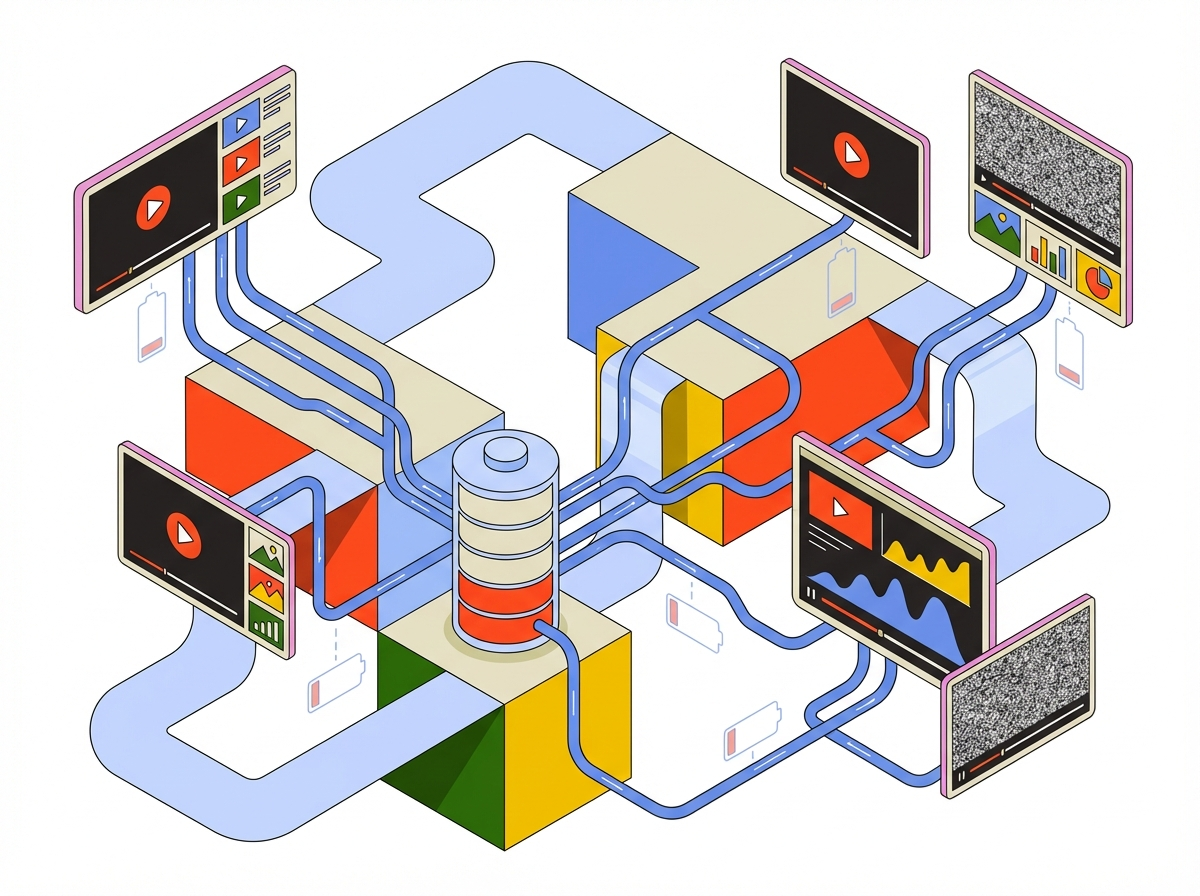
You have been sitting in the same chair since the morning stand-up. You have barely moved your body other than to refill a coffee mug. Yet you feel physically depleted. It is a bone-deep exhaustion that feels like you just ran a marathon or spent the day moving heavy furniture.
But you haven’t. You have just been looking at a screen.
I used to think this was just a lack of stamina on my part. I thought maybe I was just getting older or that I needed to optimize my sleep schedule. Then I started looking into the actual mechanics of how we interact over video. I realized the problem wasn’t my endurance.
The problem was that I was forcing my brain to do something it was never designed to do.
The Unnatural Intimacy of the Grid
When we meet in person, we rarely stare directly into the eyes of our colleagues for sixty minutes straight. We look at a whiteboard. We look at our notebooks. We look out the window while we ponder a thought. Peripheral vision allows us to process the room without intense focus.
Video calls strip that away.
On a standard call, you are subjected to what researchers call an excessive amount of close-up eye contact. The size of the face on the monitor simulates a personal distance that our biological instincts reserve for intimate situations or conflict.
Your brain is subconsciously processing this proximity as a high-intensity event. It remains in a state of hyper-arousal. You are constantly scanning for threats or cues because the natural spatial buffer is gone.
This is why you feel anxious even when the meeting is going well.
There is also the cognitive load of processing non-verbal cues. In a physical room, you instantly sense the mood. You see a foot tapping or a slight shift in posture. On video, you have to work much harder to consume these cues. You have to focus intensely on pixels to determine if someone is engaged or checking their email.
Your brain is working overtime to fill in the gaps that reality usually provides for free.
The Mirror Effect
There is another culprit lurking in the corner of your screen.
It is you.
Imagine walking around your office with a mirror strapped to your face, constantly watching yourself speak, react, and listen. That sounds exhausting because it is. Yet that is the default setting for almost every video conferencing tool.
We are not meant to see ourselves in real-time conversation.
When you see your own reflection, you naturally enter a state of self-evaluation. You check your lighting. You wonder if you look tired. You critique your own expressions.
This creates a secondary track of mental processing. You are not just listening to your team member talk about quarterly projections. You are also managing your own performance as an actor on a stage. You are performing listening rather than actually listening.
Permission to Fade to Black
So how do we fix this without abandoning remote work?
It starts with leadership. It starts with you setting a new norm for your organization.
We need to stop equating video presence with engagement. There is a fear among managers that if they cannot see their team, the team is not working. That is a trust issue, not a technology issue.
Try implementing a specific camera-off protocol.
Designate specific meetings as video-optional. Usually, these are status updates or information-sharing sessions where emotional nuance is less critical. Allow your team to turn their cameras off so they can focus on the data and the voice without the pressure of performance.
When you remove the visual component, you might find that the quality of listening improves.
When the brain stops processing the visual feed, it can allocate more resources to the auditory feed. Your team might actually hear you better when they aren’t watching you.
The Return of the Audio Walk
There is an even better step you can take.
Take the meeting entirely off the computer.
I recently started scheduling ‘walk and talk’ meetings with my direct reports. We agree ahead of time that this is a phone call. We both put in our earbuds, step away from our laptops, and go outside.
The dynamic changes instantly.
Walking increases blood flow to the brain. It reduces cortisol. When you are walking side-by-side, or even virtually walking together, the hierarchy melts away slightly. The conversation becomes more fluid.
You solve problems differently when you are moving. You are not staring at a problem on a screen. You are moving through space. This physical forward motion often translates into psychological forward motion.
It also gives your team permission to prioritize their health. By leading this behavior, you show them that it is okay to disconnect from the matrix for thirty minutes to get some sunlight and fresh air.
Designing for cognitive sustainability
We have to stop treating video calls as the only way to validate work. The goal of a business is to create value, not to create fatigue.
As you look at your calendar for next week, ask yourself a few questions.
Which of these discussions actually requires eye contact? Which of these could be an email? Which of these could be a phone call taken from a park bench?
We are building businesses for the long haul. You cannot build a lasting organization on a foundation of exhausted people.
Your team wants to do great work. Sometimes the best way to help them do that is to let them turn the camera off, look away from the screen, and just think.