






Surviving the Noise: What Military Simulations Teach Us About Business Focus
The Sound of Overload
Imagine walking into a room where alarms are blaring, artificial smoke fills the air, and multiple voices are shouting contradictory commands. Your heart rate spikes. Your breathing turns shallow. Your vision narrows.
This is a standard military combat simulation. The primary goal is not to teach a soldier how to fire a weapon. The goal is to induce intense sensory overload.
What happens to the human brain when everything demands your attention at the exact same moment?
We will explore the science of that response in a moment. First, consider a different scenario.
You walk into your office on a Tuesday morning. Two key employees are arguing over a project deadline. An angry email from a critical client sits at the top of your inbox. Your accountant just left a voicemail about a sudden payroll discrepancy.
There is no artificial smoke, but your brain does not know the difference. The biological reaction is identical. You are experiencing severe cognitive overload. You are on the business battlefield.
The Biology of the Business Battlefield
When a military trainee steps into a simulation, their nervous system perceives an immediate threat. The amygdala, the fear center of the brain, takes over. This biological response severely limits executive function. The prefrontal cortex shuts down. The trainee temporarily loses the ability to think logically or recall complex instructions.
Military training programs use repeated exposure to sensory overload to rewire this specific biological response. They train personnel to focus exclusively on their mission objectives despite the surrounding chaos. Over time, the trainee learns to lower their heart rate, tune out the noise, and execute the plan.
As a business owner or manager, you rarely get the benefit of a simulation. Every day is a live exercise.
You are trying to build something lasting. You want your team to thrive and feel empowered. Yet, the sheer volume of daily decisions creates a constant state of low level panic. When we operate in this heightened state, we start making choices based on short term survival rather than long term vision.
We must ask ourselves a critical question. If the military relies on structured environments to build focus, how do we create that structure for ourselves in the civilian business world?
Identifying Your Sirens
To survive the sensory overload of management, you first need to identify what triggers your specific panic response. Every manager has different triggers based on their background and fears.
Researchers call this decision fatigue combined with context switching. It is the mental friction that occurs when you drag your brain from one complex problem to another without taking a break.
Here are the most common sources of friction for managers growing a venture:
- Shifting rapidly from big picture strategy to granular administrative tasks.
- Feeling entirely responsible for the emotional well being and career growth of every team member.
- The constant underlying fear of financial instability or cash flow disruptions.
- Information asymmetry, where you feel everyone else knows a secret to success that you are missing.

Every day is a live exercise.
These are the blaring alarms of your daily life. They distract you from the mission. By naming them, we take the first step in disarming them.
But naming them is not enough. We still do not fully understand the long term effects of chronic context switching on the entrepreneurial brain. Is there a precise threshold where adaptability turns into burnout? Psychologists are actively trying to map where that line exists.
Designing Your Cognitive Buffer
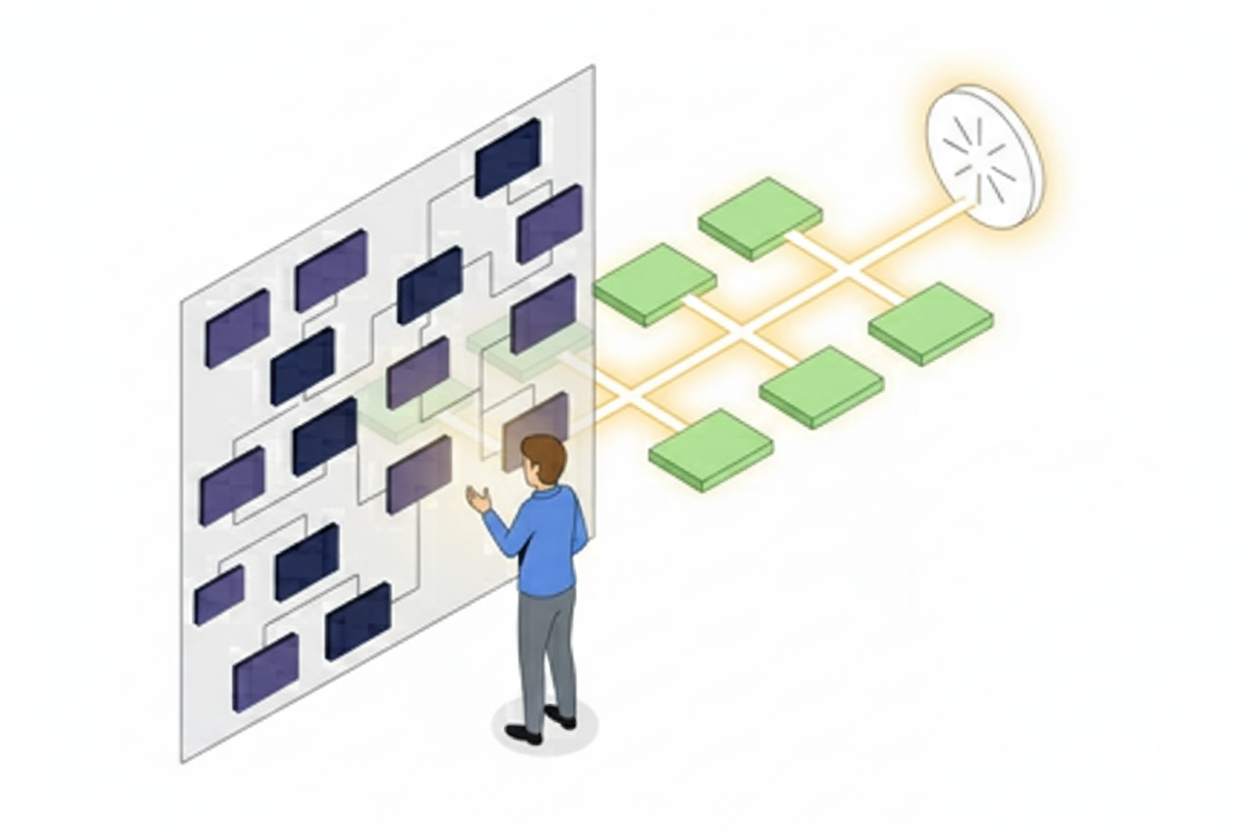
You cannot stop the alarms from ringing, but you can change how you hear them. You need to build a cognitive buffer.
In a military simulation, trainees are taught immediate action drills. These are simple, predefined steps to take when things go wrong. They do not require complex thought. They only require execution.
You can build these immediate action drills for your own business.
- Establish a rigid protocol for how team conflicts are escalated to your desk.
- Create a simple financial dashboard that gives you a single, clear view of your runway.
- Set aside dedicated time blocks where you only handle one type of task to eliminate the context switch.
By doing this, you are effectively running a simulation in your mind. You are deciding exactly how you will react before the crisis occurs. When the client is angry or the payroll issue arises, you do not have to invent a solution on the spot. You simply execute your predefined drill.
Focusing on the Mission Objective
The fundamental purpose of any simulation is to ensure the primary objective is met when reality hits.
Why did you start this venture? You wanted to build something remarkable. You wanted to create real value that lasts. You wanted to empower a team of people to do great work together.
That is your mission objective. Everything else is just smoke and noise.
When you feel the panic rising, or when you worry that you lack the experience to navigate the complexities of your industry, return to that core objective. Use the science of focus to your advantage. Acknowledge the fear. Accept that you will have to learn diverse and difficult topics along the way.
Building a solid venture is incredibly hard work. It requires navigating deep uncertainty every single day. By understanding how your brain processes overload, you can quiet the alarms, guide your team with confidence, and stay focused on the work that truly matters.
Related Reading
Stop Repeating Yourself
The team leader's guide to escaping the 180-hour training bottleneck with AI-powered coaching.