When Life Breaks in the Middle of a Workday
You are sitting at your desk on a Tuesday morning. The quarterly projections are open on your screen and you feel good about the numbers. Then there is a knock at the door.
It is one of your top performers. They look like they haven’t slept in three days. They close the door and burst into tears.
Maybe it is a sudden death in the family. Maybe their spouse just asked for a divorce. Maybe they received a terrifying medical diagnosis.
In that split second your brain splits into two distinct tracks.
Track one is the human track. You feel their pain. You want to help. You want to tell them to go home and not worry about a thing.
Track two is the business owner track. You immediately think about the project due on Thursday. You worry about who will cover their shift. You fear the impact on the client account.
Then you feel guilty for thinking about the business at all.
This tension between empathy and execution is where most managers get stuck. We freeze because we do not want to say the wrong thing but we also do not want to derail the company.
It is a messy gray area.
Let us look at how to navigate this without losing your humanity or your business.
The Biology of Bad News
When a human being experiences acute grief or shock the prefrontal cortex takes a hit. This is the part of the brain responsible for executive function, decision making, and emotional regulation.
We often expect people to push through work as a distraction. We think that work might be a good coping mechanism.
For some people it is. For many others it is scientifically impossible to perform at their previous level.
Cognitive load theory suggests we have a limited amount of working memory. Grief consumes a massive amount of that bandwidth.
If you expect a grieving employee to function at 100 percent capacity you are setting them up for failure. You are also introducing error into your business operations.
It is safer for the business to assume their capacity is currently zero.
The Operational Reality Check
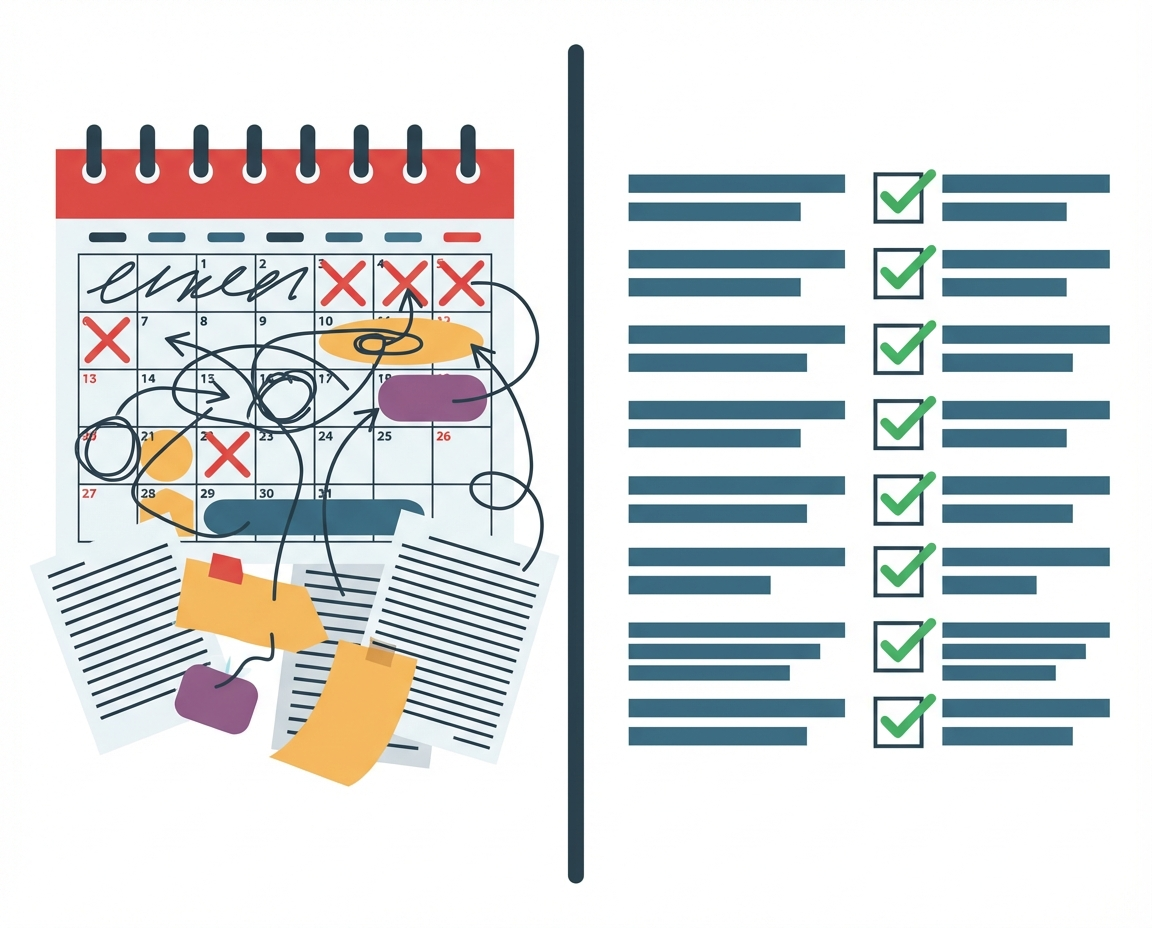
The fear you feel about the work not getting done is valid. You have built a business that relies on people and when a person is taken offline the system strains.
Many leaders hide from this reality. They offer vague platitudes like “take all the time you need” without actually having a plan to cover the work.
This leads to chaos later.
When the employee eventually returns they come back to a mountain of backlog that stresses them out all over again. Or the rest of the team burns out trying to cover the gap without clear direction.
We need to stop treating compassion and logistics as opposites.
The most compassionate thing you can do is to remove the ambiguity of work responsibilities so the employee can focus on their crisis.
Here is a practical approach to the immediate aftermath:
- Acknowledge the event explicitly. Do not use euphemisms. If they are getting divorced acknowledge that it is a major life trauma.
- Define the immediate window. Tell them to take the next 3 days off completely. Be specific. “Do not check email. Do not join the Thursday standup.”
- Triage the workload yourself. Ask them for the one or two things that are absolutely critical in the next 48 hours and then take the phone away.
Navigating the Fairness Trap
One of the questions we struggle with is the precedent we are setting. If we give this person two weeks of paid leave for a divorce do we have to do it for everyone?
This brings up a massive unknown in modern management. What counts as grief?
Is the loss of a pet the same as the loss of a parent? Is a breakup the same as a divorce?
There is no scientific chart for emotional pain.
If you try to legislate grief through rigid policies you will end up looking cold and bureaucratic.
Instead focus on communication and consistency of care.
The goal is not to treat everyone exactly the same. The goal is to treat everyone with the same level of consideration.
You can say to your team that we support people through crises. That support might look different depending on the role and the situation.
This requires high trust. Do you trust your team not to abuse the system? Do they trust you to have their backs?
The Ripple Effect on the Team
While you are managing the crisis for one person the rest of your team is watching.
They are observing how you treat their colleague. They are filing this away as data for how they will be treated when their lives inevitably go sideways.
They are also picking up the slack.
This creates a secondary risk of resentment. If the “temporary” situation drags on for months your top performers might start to feel punished for being reliable.
To mitigate this you must over-communicate.
- Be transparent about timelines. “Sarah is out for two weeks. We are re-assigning her accounts to Mike and Jenny for this period only.”
- Check in on the survivors. Ask the people covering the work how they are holding up.
- Prioritize ruthlessly. If you are down a person you cannot keep the same output. What projects can be paused?
The Re-entry Phase
The open loop we started with was the employee crying in your office. Eventually that acute phase ends and they have to return to work.
This is where most managers fail.
They expect a “return to normal.” But the person coming back is not the same person who left.
Grief rewires us. A divorce or a death changes our priorities and our energy levels.
The re-entry should be a ramp not a cliff.
Have a meeting on their first day back. Do not talk about work for the first ten minutes. Ask them how they are doing. Then set clear achievable goals for the first week.
They need to feel a sense of competency again. They need to know they can still do the job even if they feel broken inside.
We still do not know how long grief lasts. It is cyclical. It comes in waves.
Your job is not to be their therapist. Your job is to provide the structure in which they can be a professional while still being a human.
When you build a culture that can handle the hard things you build a business that is resilient enough to handle anything.