What is a Curriculum?
Running a business involves a constant stream of decisions that rest on your shoulders. You have hired a team because you believe in their potential and you want them to succeed. Yet there is often a nagging fear that they might not have the right tools or knowledge to execute your vision. You might find yourself constantly correcting the same mistakes or feeling like you are the only one who truly understands how the pieces fit together. This is a common source of stress for managers who want to empower their staff but lack a structural way to transfer knowledge.
In the world of learning and development (L&D), this structural way is often called a curriculum. While the term usually brings to mind university syllabi or high school textbooks, in a business context, it is the strategic backbone of how your team grows. Understanding what a curriculum is and how to frame it can be the difference between a team that struggles and a team that thrives autonomously.
Defining Curriculum in a Business Context
At its core, a curriculum is a comprehensive set of courses, content, and learning experiences offered within an organization. It is not just a single training video or a handbook. It is the aggregate of all educational materials designed to take an employee from a state of not knowing to a state of proficiency.
Think of it as the architecture of your company knowledge. It includes:
- Formal courses and workshops
- On-the-job training guidelines
- Digital resources and reference guides
- mentorship structures
A curriculum provides a deliberate path. It signals to your employees that you have thought about their development and that there is a plan for their success. It removes the guesswork from onboarding and upskilling.
Curriculum Versus Individual Training
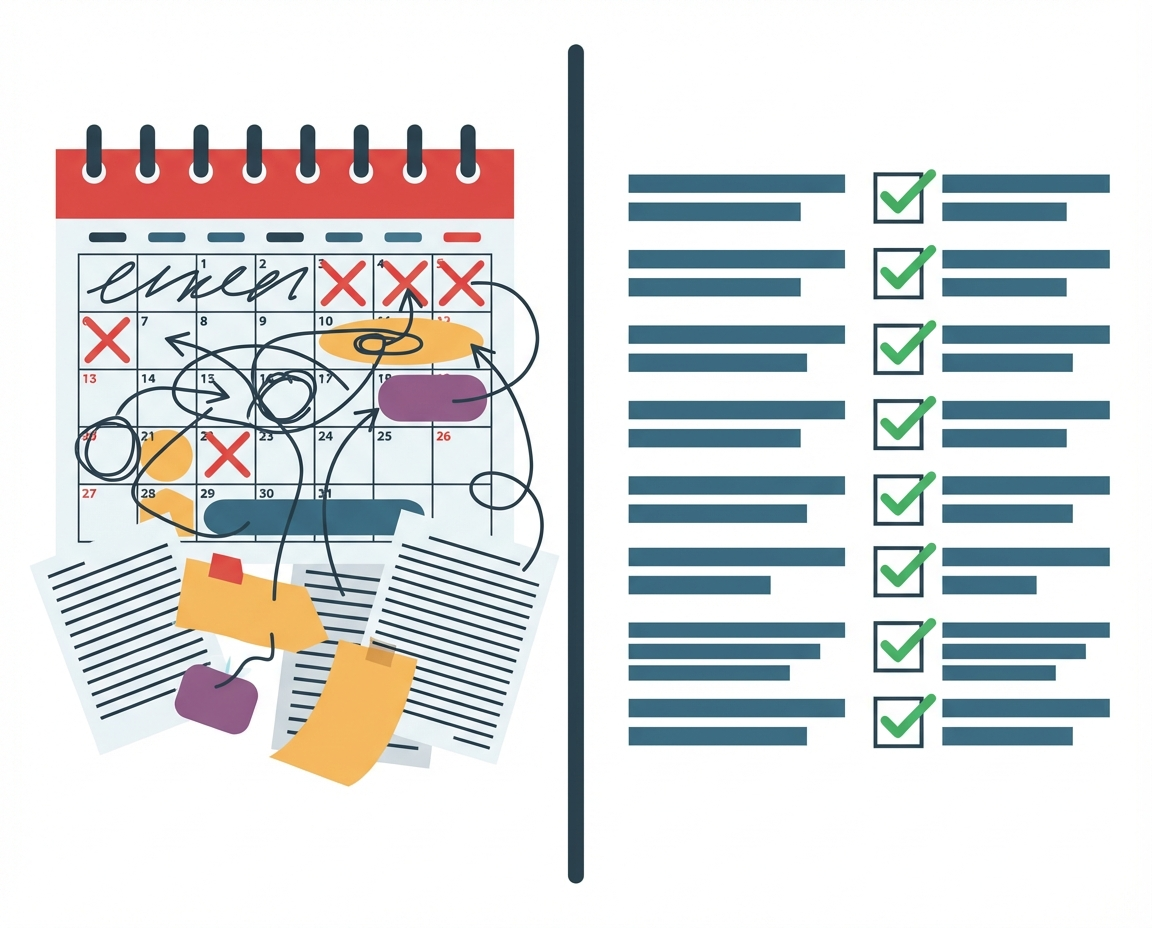
It is easy to confuse a curriculum with training events. You might send a manager to a leadership seminar or have a sales rep watch a webinar. These are individual training instances. A curriculum is the connective tissue that holds these instances together.
When you operate without a curriculum, you are engaging in random acts of training. These might be helpful in the moment but they rarely build long term capacity because they lack context and continuity. A curriculum connects the dots.
- Scope: Training is tactical and short term. Curriculum is strategic and long term.
Curriculum is your team’s growth map - Goal: Training solves an immediate problem. Curriculum builds a capability.
- Structure: Training is often isolated. Curriculum is sequential and integrated.
By shifting your mindset from organizing training events to building a curriculum, you move from putting out fires to fire prevention. You create a system where skills stack on top of one another effectively.
Identifying Gaps and Asking Questions
Implementing a curriculum requires a scientific approach to your own business. It requires you to look at your operations objectively and admit what you do not know. Many managers fear they are missing key pieces of information. Building a curriculum helps you identify those missing pieces.
You should start by auditing the current state of knowledge in your team. This is not about performance reviews but about knowledge gaps.
Consider these functional questions:
- What specific skills are required to move the business from its current stage to the next stage?
- Where does the team consistently get stuck or require executive intervention?
- Is the current documentation accurate or is it based on outdated processes?
The Unknowns of Learning Efficacy
Even with a curriculum in place, there are variables that remain difficult to quantify. As you build this structure, you must remain open to the fact that simply presenting information does not guarantee learning. This is an area where business owners must remain vigilant and curious.
We often assume that completion equals competence. If an employee finishes the curriculum, we assume they are ready. However, the retention of information and the ability to apply it under pressure are distinct metrics that are harder to measure.
You must ask yourself how you will validate the effectiveness of the curriculum. Is it through testing, observation, or business outcomes? Acknowledging that we do not always know how people learn best allows us to experiment with different formats, from micro-learning to peer-reviewed projects. It keeps the process dynamic rather than static.
Building a Foundation for Growth
Creating a curriculum is not about adding bureaucracy or complexity. It is about simplifying the complex reality of your business into digestible components for your team. It allows you to delegate with confidence because you know the foundation has been laid. It transforms the anxiety of “do they know what to do?” into a verifiable system of growth. By focusing on a coherent curriculum, you are investing in the stability of your business and the sanity of your management journey.