What is a Learning Path?
You are sitting at your desk late at night and worrying about your team. You hired smart people. You trust them. But there is a nagging fear in the back of your mind that they might not actually know what they need to know to move the business forward. You probably sent them a few articles to read last week or forwarded a link to a webinar. You are hoping they watched it. You are hoping they understood it.
This is a common source of stress for founders and managers. We often rely on what is called random acts of training. We throw information at people and hope it sticks. But hope is not a strategy. When you are trying to build something that lasts, you need structure. You need a way to verify that your team is moving from a state of not knowing to a state of mastery.
This is where the concept of a learning path comes into play. It is not just corporate jargon. It is a tool for sanity. It allows you to take the chaos of infinite information and turn it into a walkable road for your employees. It turns the anxiety of “did they learn it?” into a verifiable checklist of progress.
Defining the Learning Path in business
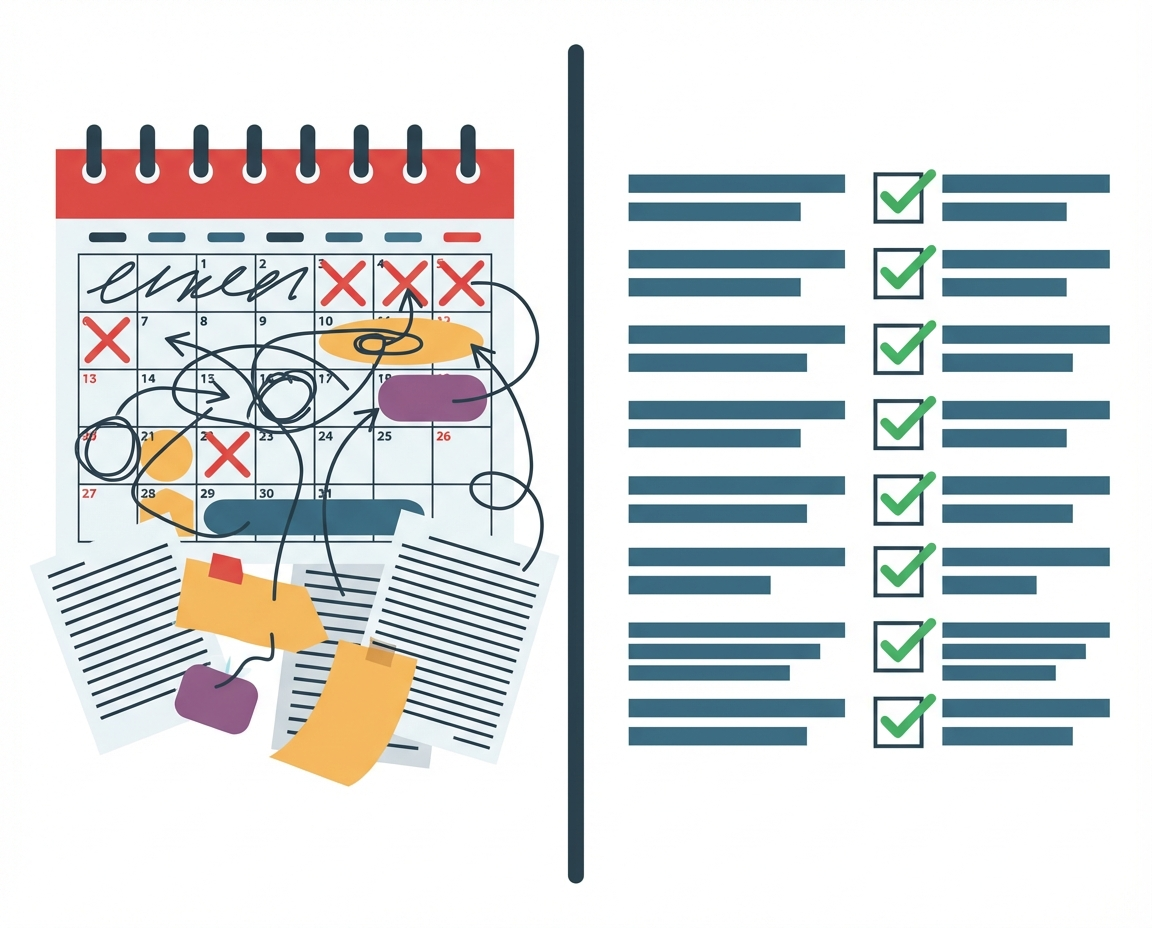
At its simplest level, a learning path is a curated collection of learning activities. These activities are tied together in a specific sequence to help a learner master a specific subject or role. It is the difference between giving someone a map and dropping them in the middle of the forest with a compass they do not know how to use.
A learning path usually includes a mix of different content types:
- Video courses or tutorials
- Written articles or documentation
- Practical assignments or projects
- Quizzes or assessments to check retention
The key differentiator is the structure. It is linear. It has a start and a finish line. It tells the employee exactly what they need to do next. This removes the ambiguity that often paralyzes new hires or employees taking on new responsibilities.
Learning Path vs. Content Library
It is important to distinguish between a learning path and a general library of content. Many businesses subscribe to large training platforms that offer thousands of courses. While this sounds like a great benefit, it often leads to decision fatigue.
Here is how they differ:
- The Library: This is a buffet. It is open-ended. The employee has to decide what is relevant. They might choose topics that interest them but have nothing to do with your business goals. This creates anxiety because they are never sure if they are picking the right thing.
- The Learning Path: This is a set menu designed by the chef. It removes the burden of choice. It ensures that every minute spent learning is directly applicable to the role they are in or the role they are growing into.
For a busy manager, the library approach feels like freedom but often results in paralysis. The learning path approach feels like guidance and results in competence.
When to implement a Learning Path
You do not need a path for everything. Sometimes ad-hoc learning is fine. However, there are specific scenarios where a structured path is the most effective way to reduce risk and increase confidence.
Consider using them for:
- Onboarding: The first 30 days of a new hire are critical. A path ensures every new employee gets the exact same foundational knowledge.
- Role Transitions: When a individual contributor moves into management, they need a specific set of new skills. A path helps bridge that gap.
- Skill Gaps: If you notice the whole team is struggling with a specific tool or methodology, a path provides a unified way to upskill everyone at once.
The psychology of the Learning Path
Beyond the practical transfer of knowledge, there is an emotional component to this. When you provide a learning path, you are signaling safety to your team. You are telling them that you have thought about their success. You are showing them the steps.
However, we must also ask questions about the limitations of this approach. We have to wonder if a rigid path stifles creativity. Does a linear progression account for the fact that different people learn in different ways?
- Does the path allow for skipping ahead if someone already knows the material?
- Is the content updated frequently enough to stay relevant?
- Does the path account for the nuance of real-world application versus theoretical study?
As you build your business, you have to balance the need for standardized knowledge with the need for critical thinking. A learning path provides the foundation, but it is up to you as the leader to ensure your team knows how to apply that map to the actual terrain of your business.