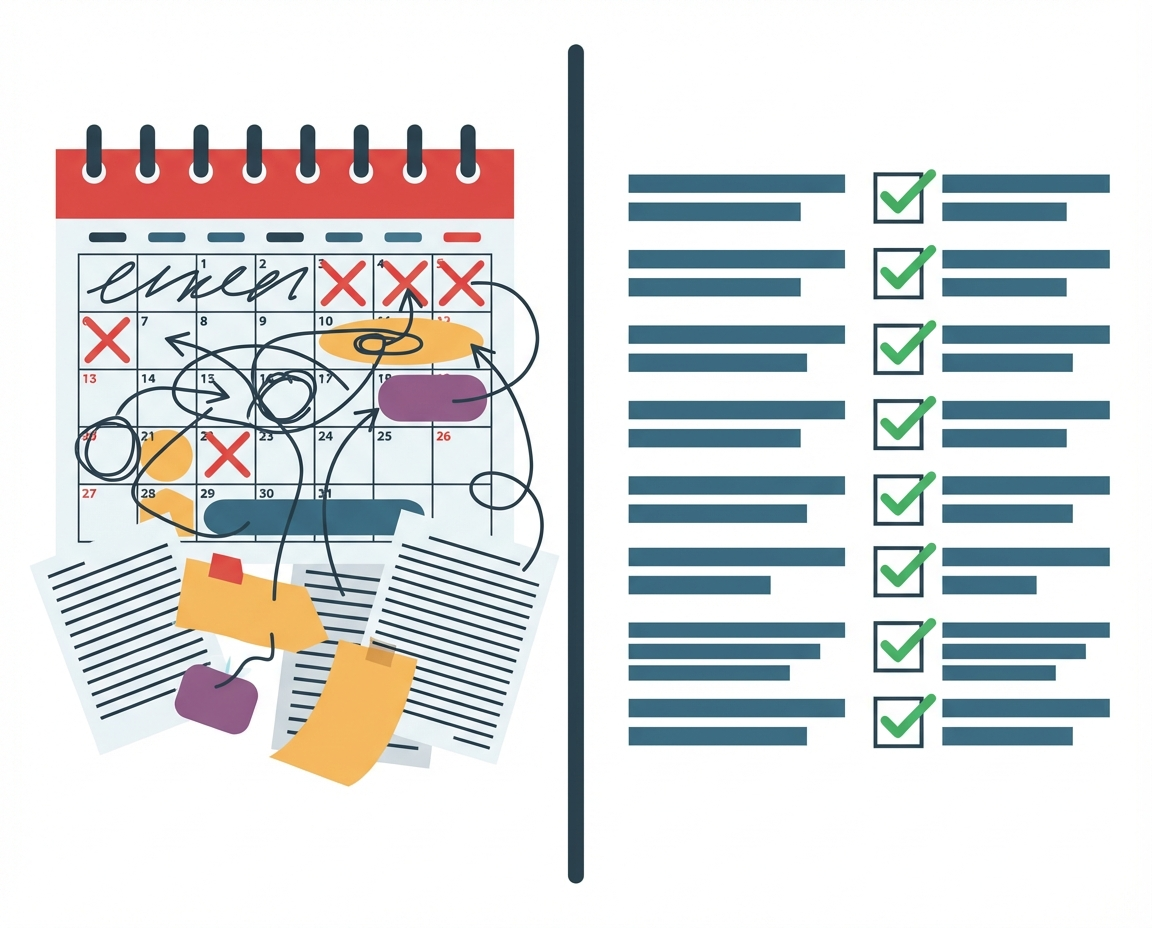
What is a Micro-sprint? A Manager's Guide to 5-Minute Training Sessions
You want your team to succeed. You invest time, money, and energy into training them. But when you look around the room during a traditional eight hour training seminar, you see glazed eyes and hidden yawns. As a leader, your goal is not just to check a box that says training is complete. Your goal is to empower your staff to grow, adapt, and feel confident in their roles without adding unnecessary anxiety to their plate. This is where a learning concept called micro-sprints comes into play. Micro-sprints are hyper focused training sessions that last just five minutes. They are designed to deliver a single, actionable piece of information directly into the flow of work. Instead of pulling people away from their desks for a full day, you provide a tiny burst of learning that they can apply immediately. This approach directly addresses the reality of human attention spans and cognitive overload in our busy modern workplaces.
Understanding Cognitive Overload and Micro-sprints
The human brain can only absorb so much information at once. When we force our teams to sit through dense presentations, we often trigger cognitive overload. This happens when the working memory receives more information than it can process comfortably. Micro-sprints solve this by breaking complex topics into digestible pieces. It remains unknown exactly where learning stops and overload begins for every specific role. However, the scientific consensus is clear that shorter intervals of study followed by immediate practice lead to stronger neural pathways. By adopting micro-sprints, managers give their teams the psychological space to actually learn without the stress of falling behind on daily tasks.
Micro-sprints Compared to Full Day Seminars
It is helpful to look at how these tiny learning bursts compare to the traditional model we are all used to. Day long seminars rely on the binge learning method. Micro-sprints rely on spaced repetition. Let us look at a few distinct differences.
- Seminars require significant scheduling coordination while micro-sprints happen spontaneously or during brief daily standups.
- Seminars often cover theoretical concepts that are easily forgotten but micro-sprints focus on one immediate practical skill.
- Seminars disrupt the entire workflow whereas micro-sprints integrate seamlessly into the daily routine.
We must ask if the traditional seminar is built for the learner or simply for scheduling convenience.
Practical Scenarios for Implementing Micro-sprints
If you are a manager worried about missing key training milestones, you might wonder when to actually use this technique. Micro-sprints are highly effective in specific, targeted situations where rapid application is possible. Short bursts help your team build competence without feeling overwhelmed.
- Software adoption: Teach one specific feature of a new tool per day instead of a massive overview.
- Compliance updates: Cover one single policy change and how it affects daily operations.
- Customer service handling: Roleplay one specific deescalation technique for five minutes before a shift.
- Leadership habits: Share a brief active listening exercise for managers to practice during their next meeting.
These scenarios allow your staff to consume the information and immediately test it in the real world.
Navigating the Unknowns of Micro-sprints
While the shift to short form learning offers clear benefits, it is not without questions. How do we measure the long term impact of a five minute session? Are there deep, complex subjects that simply cannot be condensed into a micro-sprint? We do not have all the answers yet. Business growth is a constant experiment. Every team is different. As a business owner, you have to test these boundaries within your own organization. You might find that foundational knowledge still requires a longer format, while procedural updates thrive in micro-sprints. The goal is to remain observant. You are building something lasting, and that requires paying attention to how your specific team learns best. Start small, observe the results, and adjust your approach as you guide your team forward.