What is a Taxonomy?
You are building something real. You are putting in the late nights and the early mornings because you believe your business has the potential to last. But as you hire more people and subscribe to more learning platforms, the noise increases. You have folders full of PDF guides, logins to three different course providers, and a team that has a diverse set of talents you are struggling to track. You know the information and potential are there, but nobody seems to be able to access it efficiently. This is not a failure of intent. It is a failure of organization.
This is where a taxonomy comes in. It sounds like a dry, scientific term reserved for biologists classifying beetles, but in the context of your business, it is the framework that keeps your venture from collapsing under its own weight. It is the difference between a pile of bricks and a sturdy wall. As a manager, you are likely worried that you are missing a key structural element that other experienced leaders seem to know instinctively. Understanding taxonomy is one of those elements.
What a Taxonomy Actually Is
At its core, a taxonomy is a hierarchical system for classifying and organizing information. Think of it as a family tree for your business data. You start with broad categories and drill down into specific subcategories.
In a learning and development context, a simple taxonomy might look like this:
- Department (Sales)
- Skill Set (Negotiation)
- Specific Competency (Contract Closing)
- Learning Asset (Advanced Closing Techniques Course)
It provides a controlled vocabulary. Everyone in your company agrees on what to call things and where those things live. It eliminates the confusion of one manager looking for “coding” while another manager has filed everything under “software development.” It creates a single source of truth that allows you to scale.
Taxonomy Versus Folksonomy
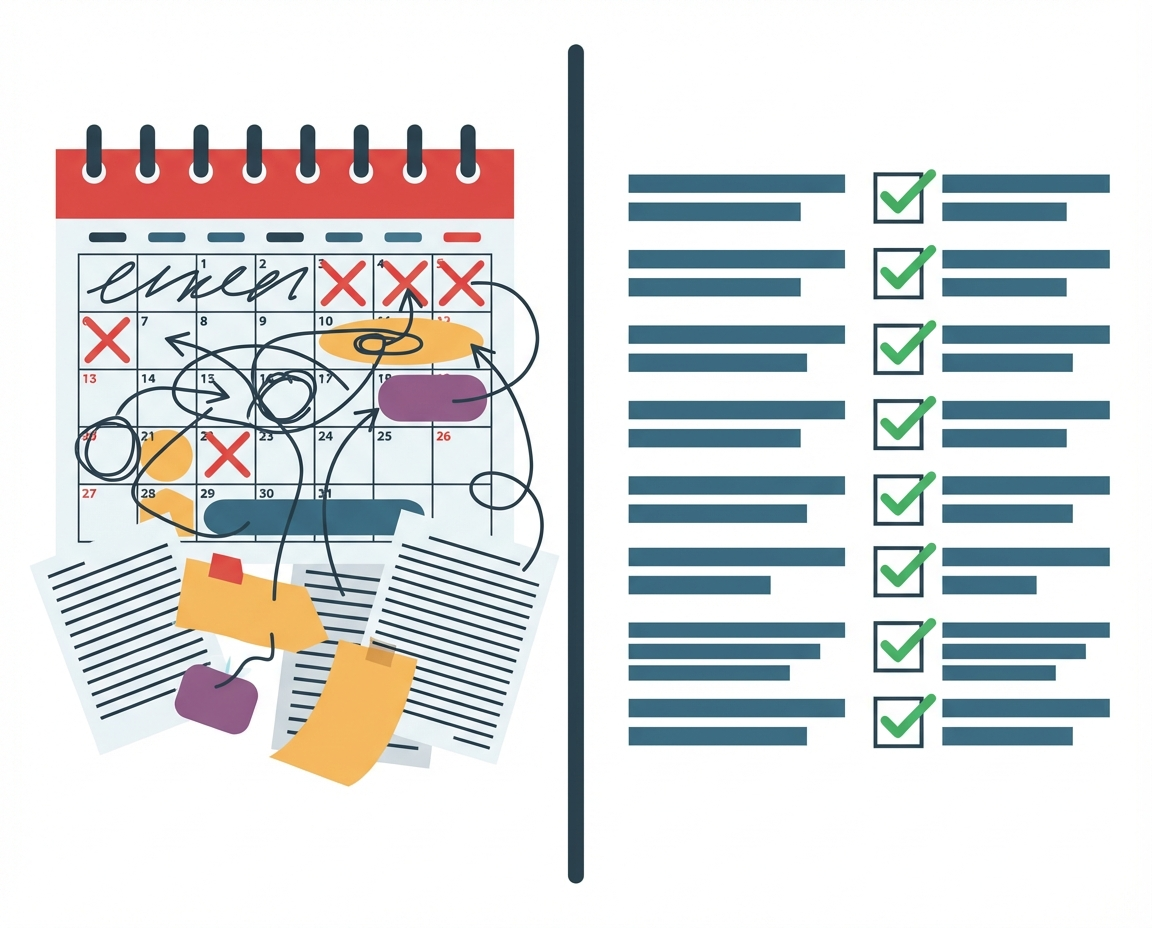
It is helpful to compare a strict taxonomy to what is often called a folksonomy, or tagging. Tagging is what happens on social media. It is bottom-up, chaotic, and user-generated. Someone might tag a file as “important,” “Q3,” or “learning.” While flexible, tagging often leads to clutter because there are no rules.
A taxonomy is top-down. It requires you, the leader, to sit down and make decisions about the structure of your organization.
- Taxonomy: Rigid, structured, easy to navigate, requires maintenance.
- Tagging: Flexible, messy, hard to audit, requires zero setup.
For a business owner trying to build something that lasts, relying solely on tagging is a risk. You need the stability of a taxonomy to ensure that when a new employee joins, they can navigate your internal knowledge base without having to ask you where every single file is located.
Using Taxonomy to Spot Skill Gaps
One of the most practical scenarios for using a taxonomy is identifying what your team is missing. If you do not have a classification system, you cannot measure your inventory of skills.
By mapping out a taxonomy of skills required for your business to succeed, you can overlay your current team’s capabilities against that map. You might realize you have plenty of resources under “Marketing - Social Media” but your taxonomy branch for “Marketing - Data Analysis” is completely empty.
Without this structure, that realization is just a vague feeling of anxiety that your marketing isn’t working. With a taxonomy, it is a data point you can act on. It allows you to buy the right courses or hire the right people to fill a specific, named void in your hierarchy.
The Unknowns of Taxonomy Creation
While the concept is straightforward, the application is where we must ask difficult questions. There is no perfect template for this. Every business is different, and a taxonomy that works for a software firm will fail for a retail chain.
We also have to consider how rigid we want to be. If your taxonomy is too strict, your team might feel stifled or unable to categorize new, innovative ideas that do not fit into existing boxes. If it is too loose, you slide back into chaos.
As you develop this, you have to ask yourself how often you will revisit the structure. Is this a quarterly review? A yearly overhaul? We do not have a universal answer for that yet. It requires you to experiment and pay attention to the friction points your team experiences. The goal is not to create a perfect library system for the sake of order, but to create just enough structure to remove the fear of the unknown and let your team get back to work.