You know that sinking feeling when a project goes off the rails and a team
member quietly says they mentioned the risk two weeks ago. You probably were in the room when they said it. You might have even nodded your head. But you did not actually process the information because your mind was on the budget meeting scheduled for the next hour. This is the pain of passive hearing. It creates gaps in your knowledge and cracks in the foundation of your business.
Active listening
is the antidote to that specific anxiety. It is a communication technique that involves fully concentrating, understanding, responding, and then remembering what is being said. It is not just about silence
while the other person talks. It is a deliberate, cognitive process that requires you to suppress your internal monologue and focus entirely on the speaker.
To understand this term, we have to look at it as a workflow rather than a personality trait. It breaks down into four distinct phases that must happen in order.
Concentrating: This is the physical act of removing distractions. It means turning away from the monitor and making eye contact. It involves silencing the notifications that constantly demand your attention.
Understanding: This is the intellectual work of decoding the message. You are looking for the intent behind the words, not just the literal definitions.
Responding: This provides the feedback loop. It confirms to the speaker that the data transfer was successful through verbal affirmation or body language.
Remembering: This is the retention phase. If the information is not stored for later use, the listening act was performative rather than functional.
Active Listening vs Passive Hearing
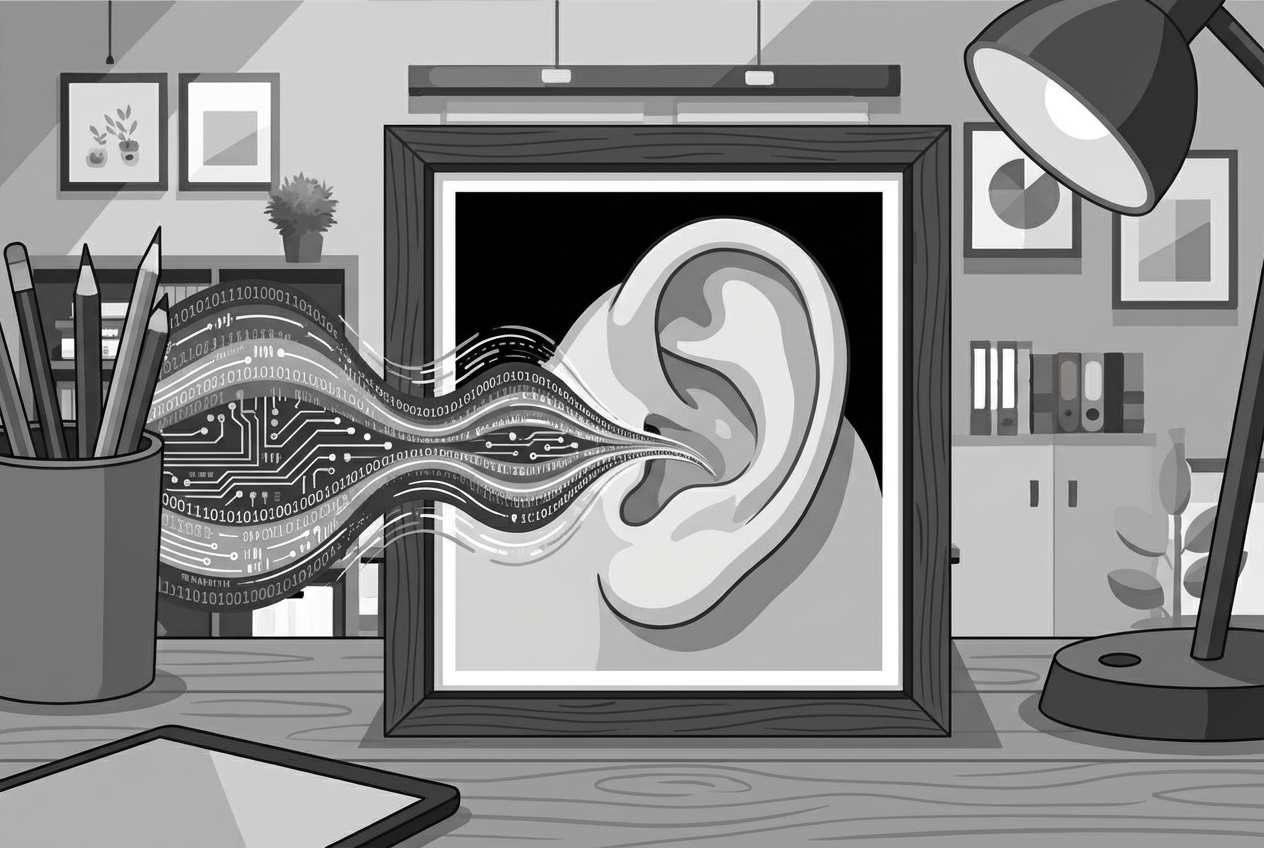
It is easy to confuse hearing with listening. Hearing is a physiological response to sound waves hitting your eardrums. It happens automatically unless there is a physical impairment. You hear the hum of the air conditioner or the traffic outside, but you do not assign meaning to it.
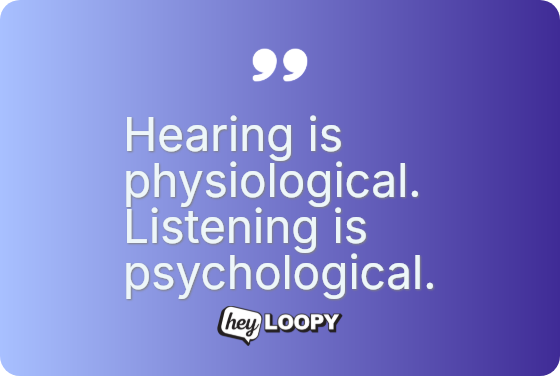
Active listening is psychological. It requires effort. Most untrained managers engage in passive hearing or what is often called defensive listening. In that state, you are listening only to find an opening to speak or to defend a pre-existing position. You are formulating your rebuttal while the employee is still outlining the problem. Active listening requires you to suspend judgment and the urge to reply until you have fully absorbed the perspective of the other person. It shifts the goal from winning the conversation to understanding the information.Hearing is physiological. Listening is psychological.
Why Active Listening Impacts Business Viability
For a business owner, the stakes are higher than just being polite. The cost of missing information is tangible. When you fail to employ active listening, you miss the nuances of customer complaints, the subtle warnings of employee burnout, or the early indicators of a market shift.
Trust architecture: When staff feel heard, they feel safe. Psychological safety is a primary driver of high-performing teams. If they know you are actually processing their input, they will share bad news sooner.
Error reduction: Miscommunication is a leading cause of operational failure. verifying what you heard reduces the need for rework.
Conflict resolution: Most workplace conflict stems from a misalignment of reality. Active listening forces a synchronization of viewpoints before decisions are made.
Implementing Active Listening Scenarios
This is not a soft skill that you simply decide to have one day. It is a discipline you practice. There are specific behaviors you can adopt to ensure you are engaging in the practice.
Paraphrasing is the most effective tool in this kit. After a team member speaks, restate their point in your own words. You might say something like, “What I am hearing is that the timeline is at risk because of the supply chain delay, not the design phase.” This gives the speaker a chance to correct you immediately.
Ask open-ended questions. Avoid questions that can be answered with a simple yes or no. Ask “How does that impact the Q3 goals?” instead of “Is that going to hurt Q3?” This forces the speaker to elaborate and forces you to process complex answers.
The Unknowns of Active Listening
While the science supports the efficacy of this technique, there are questions we must ask ourselves as leaders. How does mental fatigue impact our ability to listen actively after a ten-hour day? Is it possible to scale active listening as a team grows beyond a certain size, or does it inevitably degrade?
We also have to consider the emotional toll. Active listening requires empathy, which consumes energy. How do we balance the need to be deeply connected to the team’s input with the need to protect our own mental bandwidth? These are the variables you will need to test in your own environment.