What is Blended Learning?
You look at your team and see immense potential. You likely also see gaps in their skills or knowledge that create friction in your daily operations. This causes stress because you know the business needs the team to operate at a higher level, but you simply do not have the time to hold everyone’s hand through every new process. It is a common struggle for founders and managers to feel torn between doing the work and teaching others how to do the work.
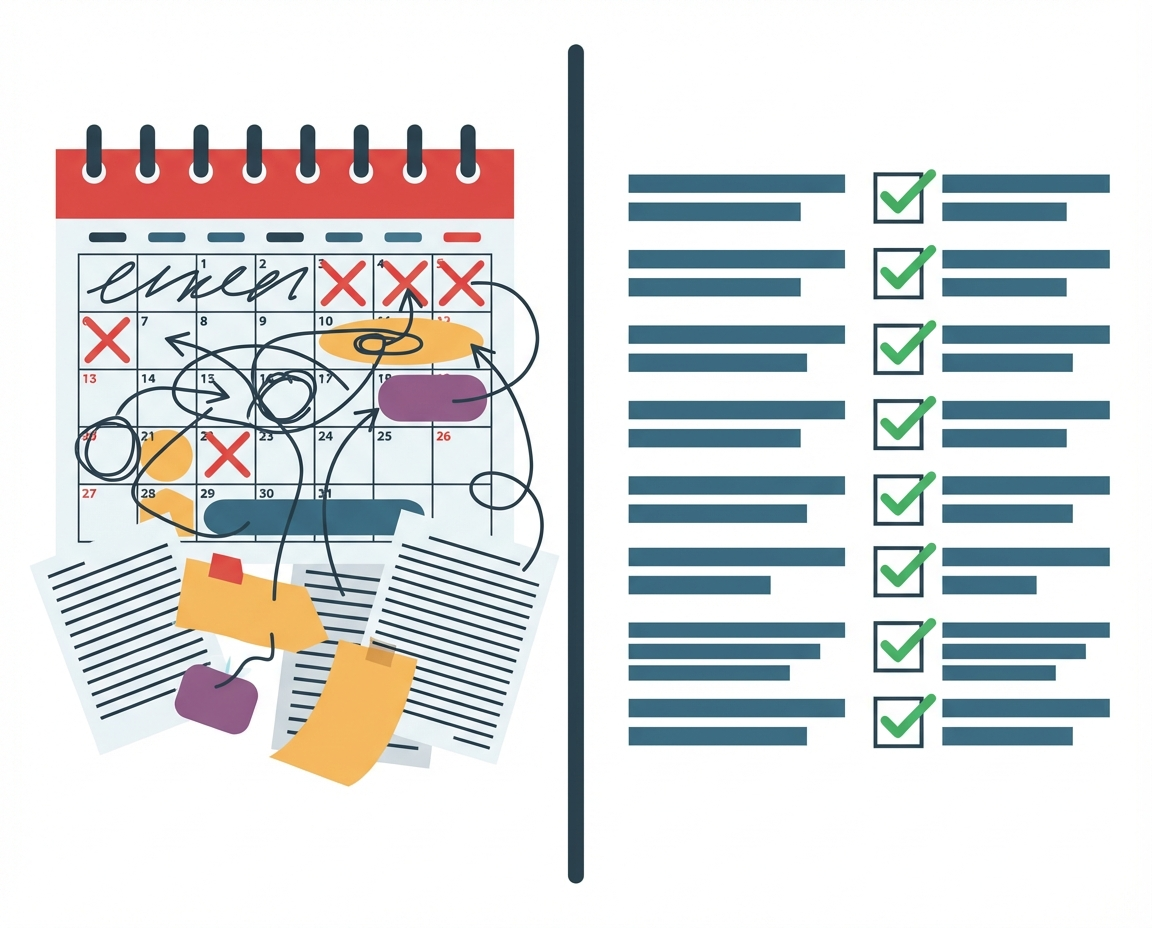
We often fall into the trap of thinking training has to be a singular, massive event. We tend to think we must either send people away to expensive seminars or dump a folder of PDF manuals on their digital desktops and hope for the best. Both extremes usually result in wasted money and frustrated employees who still feel unprepared.
There is a pragmatic middle ground that acknowledges the constraints of running a growing business while respecting the complex ways adults actually absorb new information. This approach effectively removes the binary choice between automated efficiency and human connection.
Defining Blended Learning
Blended learning is exactly what it sounds like. It is an education program that combines different methods of delivery. It mixes online digital media with traditional classroom methods or one on one human interaction. It requires the physical presence of both teacher and student for some elements, while providing the student with some control over time, place, path, or pace via digital tools for other elements.
Think of it as a diversified investment portfolio for knowledge. You are not betting everything on a single stock. Instead, you are spreading the learning process across different mediums to reduce the risk of the information not sticking. It allows you to leverage technology for the rote memorization or theory parts of training while reserving your precious face time for high value coaching, mentorship, and practical application.
Comparing Delivery Methods
To understand why a blended approach is often superior for small to medium businesses, we have to look at the limitations of singular methods. If you rely solely on in person workshops, you create a logistical bottleneck. Everyone has to be in the same room at the same time. If someone is sick or busy, they miss out. It is also expensive to pull an entire team off the floor for a day.
Blended learning bridges this gap. It allows an employee to learn the terminology of a new project management tool on their own time via a video. Then, they come together with you for thirty minutes to discuss how your specific company uses that tool to serve clients. You get the efficiency of digital delivery with the emotional impact and accountability of human connection.
Essential Components
When you start to construct a blended learning strategy, you are essentially acting as a chef mixing ingredients. You need to know what is in the pantry. A robust blended learning environment usually includes a mix of the following:
- Asynchronous Learning: These are materials employees access on their own schedule. Think prerecorded videos, reading assignments, or quizzes.
- Synchronous Learning: This happens in real time. It could be a Zoom call, a morning stand up meeting, or a dedicated workshop where dialogue happens.
- Social Learning: This is often overlooked but critical. It involves peer to peer coaching or discussion forums where the team teaches each other.
- Performance Support: Job aids, checklists, or wikis that provide answers in the moment of need.
Questions We Must Ask Ourselves
While the definition of blended learning is straightforward, the application is not a perfect science. There is no universal ratio of digital to physical training that works for every business. As you consider this for your organization, you have to confront some variables that are specific to your context.
We do not know your specific team culture yet. Does your team crave autonomy, or do they feel safer with constant guidance? A team of senior engineers might want 90% self paced study and 10% discussion. A team of junior sales representatives might need the inverse to build confidence.
You must also ask how much of your own bandwidth can be realistically allocated to the in person components. It is better to promise less face time and deliver it fully than to promise a heavy coaching schedule that you cancel due to client emergencies. Blended learning is about finding a sustainable rhythm that lets your business grow without burning you out.