What is Bloom's Taxonomy?
You hire smart people because you want them to help you build your vision. You want them to take ownership and solve problems without you needing to hold their hand every step of the way. Yet there is often a frustrating gap between bringing someone on board and getting them to a point where they are adding high-level value. You explain a task and they nod, but the execution falls flat. Or perhaps you promote a high performer to a strategic role and they suddenly struggle to adapt.
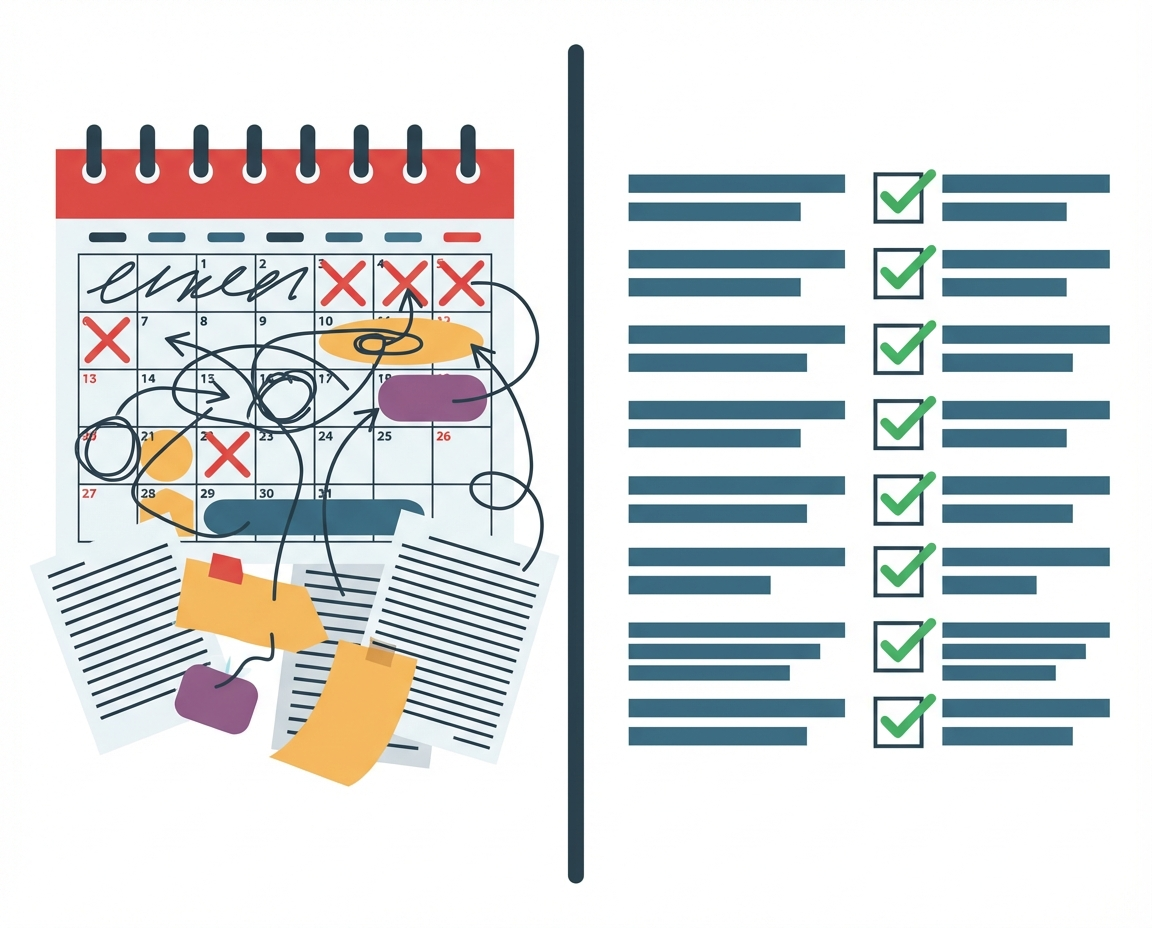
This disconnect often happens not because the employee is incapable but because there is a mismatch in cognitive expectations. We often expect a team member to innovate before they have fully grasped the basics. This is where a decades-old educational framework becomes a vital tool for the modern business owner.
Understanding Bloom’s Taxonomy in a business context
Bloom’s Taxonomy is a hierarchical model used to classify educational learning objectives into levels of complexity and specificity. While it originated in academia, it is incredibly relevant for management. Think of it as a ladder. You cannot stand firmly on the top rung without stepping on the lower ones first.
There are six levels in the revised version of this framework:
- Remembering: Retrieving or recalling relevant knowledge from long-term memory. In your business, this is knowing the login codes or the return policy.
- Understanding: Constructing meaning from oral, written, and graphic messages. This means they can explain why the return policy exists.
- Applying: Carrying out or using a procedure through executing, or implementing. They can process a return correctly without help.
- Analyzing: Breaking material into constituent parts and determining how the parts relate to one another. They can look at return data and see a pattern of defects in a specific product line.
- Evaluating: Making judgments based on criteria and standards. They can decide if the return policy is hurting customer retention and propose a change.
- Creating: Putting elements together to form a coherent or functional whole. They design a new customer experience strategy that eliminates the need for returns.
When we feel frustration as managers, it is usually because we are asking for Creation or Evaluation from someone who is still stuck at Remembering or Understanding.
Using Bloom’s Taxonomy for better delegation
Delegation is one of the hardest skills for a founder to master. We often dump tasks on people and hope for the best. By applying this taxonomy, you can assess exactly what level of thinking a specific task requires and match it to the team member who has demonstrated that level of cognitive control over the subject matter.
If you hand a complex strategic project to a junior employee who is still learning your basic systems, you are setting them up to fail. Conversely, if you force a senior leader to spend their time on rote memorization tasks or basic application, you will burn them out through boredom.
Ask yourself these questions regarding your current team structure:
- Do we have clear documentation that supports the Remembering and Understanding stages so new hires can ramp up quickly?
- Are we testing for the ability to Analyze and Evaluate during our interview process, or are we just checking if they Remember facts?
- Is our frustration with a specific employee actually a failure on our part to guide them through the Applying stage before demanding they Create solutions?
Bloom’s Taxonomy vs. standard training methods
Most corporate training stops at the bottom two levels. We give employees a handbook (Remembering) and maybe a quiz (Understanding). Then we throw them into the deep end.
Real growth happens when you deliberately structure work to push people up the pyramid. Standard training assumes that information dump equals competence. The Bloom’s framework suggests that competence is a journey through different types of thinking.
- Standard Training: Watch this video on how to use the CRM.
- Bloom’s Approach: Watch the video (Remember), process a test lead (Apply), look at last month’s data to find where we lost leads (Analyze), and suggest a new field for the CRM to track that loss (Create).
Applying the framework to performance reviews
Performance reviews can often feel subjective. Using this taxonomy provides a neutral, factual basis for discussing career growth. Instead of telling an employee they need to be more proactive, you can show them where they sit on the hierarchy regarding their core responsibilities.
You might explain that while they are excellent at Applying the current sales script, you need them to start Analyzing why certain objections are raised. This gives the employee a clear path forward. It removes the ambiguity from professional development. They know that to get the promotion, they must demonstrate the ability to Evaluate and Create, not just specific tasks faster.
We must consider if we are building environments that allow for the top of the pyramid. Do your current systems allow staff to Evaluate and Create, or are your processes so rigid that they are trapped in Remembering and Applying? This is a question only you can answer as the architect of your business.