
What is Cognitive Load and Why it Matters for Your Team
Imagine your brain as a narrow hallway. You are trying to move furniture into a new office. Every piece of information, every decision, and every interruption is a chair or a desk you are trying to shove through that small space. Eventually, the hallway gets jammed. This is not a lack of effort or intelligence. It is simply the reality of how our minds process information.
As a manager, you likely feel this jam every single day. You are responsible for your own output while also guiding your team through theirs. When you feel that specific type of exhaustion that comes from just having too much to think about, you are experiencing the limits of your working memory. This is the weight of being a leader in a complex world.
Defining Cognitive Load
Cognitive load is the total amount of mental effort being used in your working memory. Unlike your long term memory, which is vast and stores information for years, your working memory is strictly limited. It can only hold a few items at once. Think of it like the RAM in a computer. If you open too many tabs, the whole system slows down.
When you give an employee a task, you are asking them to use their cognitive resources. If the task is poorly defined or the environment is noisy, their brain spends energy on the noise instead of the work. For a business owner, understanding this concept is the difference between a productive team and a burnt out one.
- Intrinsic load is the inherent difficulty of the task itself.
- Extraneous load is the unnecessary mental effort caused by the way information is presented.
- Germane load is the healthy effort used to create permanent knowledge and patterns.
The Burden of Extraneous Cognitive Load
As a leader, your biggest enemy is often extraneous load. Think about the last time you sent a long, rambling email to your staff about a new policy. They had to spend ten minutes just trying to figure out what you were actually asking them to do. That effort did not go toward solving the problem. It went toward decoding your message.
When we simplify our communication, we are not dumbing it down. We are clearing the hallway so our team can move the important furniture. Managers who master this help their teams feel more confident and less stressed. They create an environment where the work feels possible because the instructions are clear.
- Poorly designed software interfaces increase load for your staff.
Clarity reduces unnecessary mental effort. - Vague instructions force the brain to fill in missing gaps.
- Frequent interruptions reset the working memory clock for everyone.
Cognitive Load Compared to Burnout
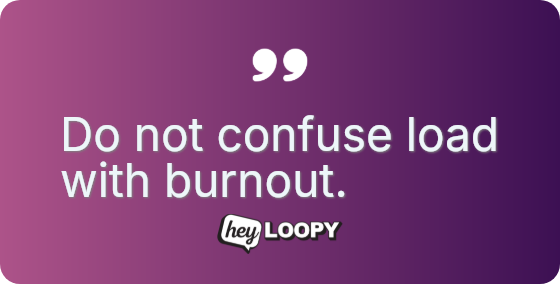
It is easy to confuse high cognitive load with general burnout. However, they are distinct issues that require different solutions. Burnout is often a long term emotional and physical response to chronic stress. Cognitive load is a functional limit of the brain in the moment. You can love your job and still hit a cognitive wall by mid afternoon.
If you ignore this wall, you start making small mistakes. You miss details in a contract or you snap at a colleague. These are signs that your working memory is overtaxed. While burnout might require a vacation or a change in role, cognitive load issues can often be solved by better systems and clearer communication. Reducing load is a daily practice, while managing burnout is a long term strategy.
Scenarios in High Stakes Management
Consider a crisis situation where a major client is threatening to leave. Your team is scrambling. If you start barking out five different orders at once, you are essentially crashing their mental operating systems. In this scenario, the best move is to reduce the load immediately. You can do this by breaking the problem into singular, linear steps.
- Remove all non essential meetings for the day to save energy.
- Provide clear, written summaries of the next three actions.
- Limit the number of people involved in the core decision making.
This allows the team to focus their limited mental energy on the actual crisis rather than the chaos surrounding it. It gives them the space to be brilliant instead of just being busy.
Unanswered Questions for the Modern Leader
While we understand the basic mechanics of cognitive load, there are many things we still do not know. How does remote work change our mental capacity compared to in person collaboration? Does the constant pitter patter of digital notifications permanently lower our threshold for complex thought? We have to wonder how much we can actually expand our individual capacity.
Can we train our brains to hold more, or is our only option to become better at filtering what gets in? As you lead your team today, ask yourself if you are adding value or if you are just adding load. When we acknowledge these unknowns, we can better support our teams through the uncertainty of building something truly remarkable.







