What is Continuous Improvement?
You have likely felt the pressure to reinvent the wheel every quarter. The market moves fast and you worry that if you are not launching a massive new initiative then you are falling behind. This mindset is a recipe for burnout. It assumes that success only comes from giant leaps, but most sustainable businesses are actually built on a different foundation.
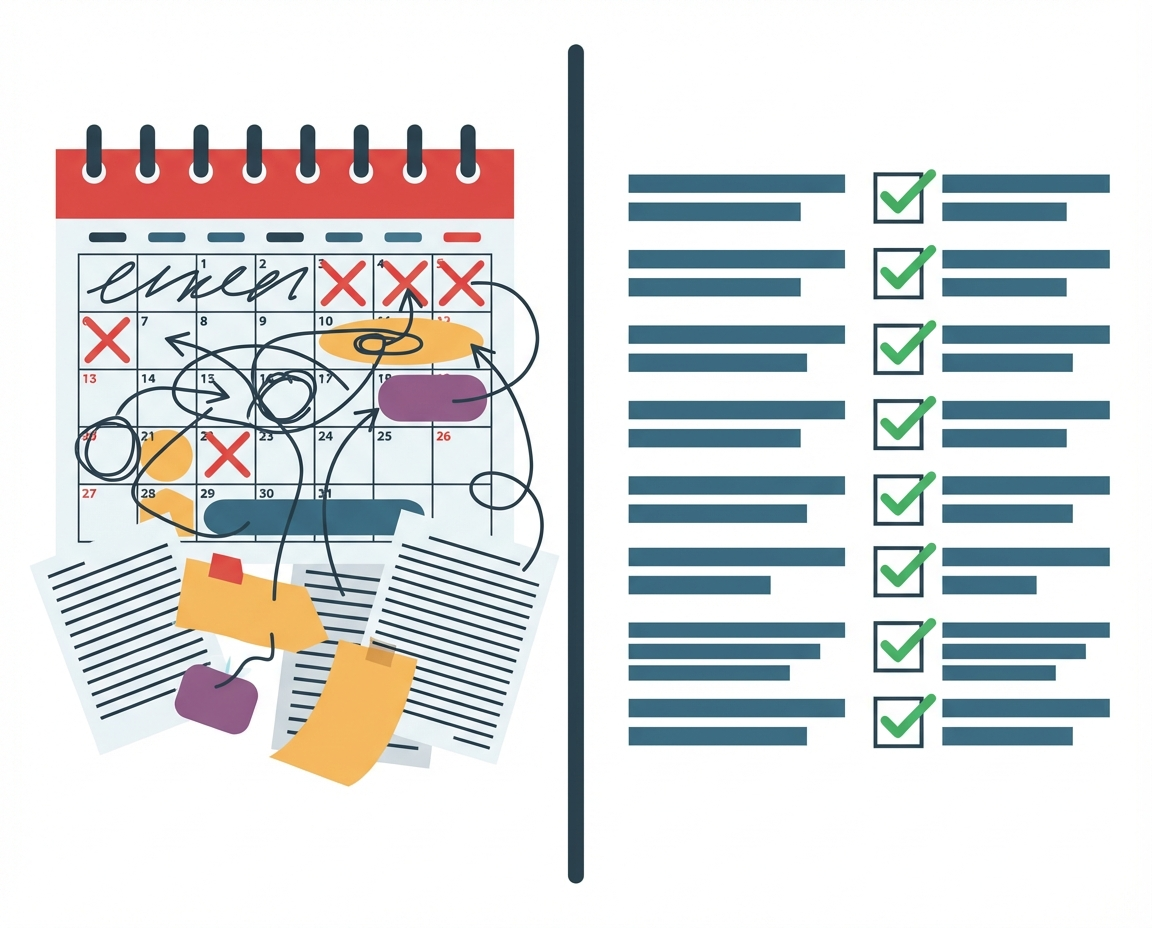
Continuous Improvement is that foundation. It is the practice of constantly re-evaluating and refining your products, services, and internal processes. It is not about fixing things that are broken. It is about taking things that work and asking if they could work more smoothly, more efficiently, or with less friction for your team.
For a busy manager, this concept is a tool for de-escalating stress. Instead of needing to have the perfect answer immediately, you only need a commitment to be slightly better tomorrow than you are today. It shifts the focus from an impossible destination to a manageable journey.
Defining Continuous Improvement in Business
Continuous Improvement, often associated with the Japanese philosophy of Kaizen, is an ongoing effort to improve products, services, or processes. These efforts can seek “incremental” improvement over time or “breakthrough” improvement all at once, though the former is more sustainable for small to mid-sized teams.
When we look at this from a scientific or operational stance, it usually involves a cycle:
- Identification: Spotting a bottleneck or an inefficiency.
- Planning: Hypothesizing a small change that could alleviate the issue.
- Execution: Implementing that small change.
- Review: Measuring the results to see if the change actually helped.
This applies heavily to Learning and Development (L&D) programs themselves. A training manual written three years ago might still be factually correct, but is it the most effective way to teach that concept today? A Continuous Improvement approach suggests that the training program itself should be subject to the same scrutiny as the product line.
Continuous Improvement Versus Radical Innovation
It is common to confuse improvement with innovation, but they serve different functions in your business ecosystem. Radical innovation is high-risk and high-reward. It is launching a completely new product line or pivoting your business model. It requires massive energy and capital.
- Innovation asks: What new thing can we create that does not exist?
- Continuous Improvement asks: How can we reduce the time it takes to ship this order by 5%?
For a business owner fearful of missing key pieces of information, Continuous Improvement provides a safety net. You do not have to predict the future perfectly. You just have to build a system that can adapt and improve as new information becomes available.
Applying Continuous Improvement to Team Management
One of the hardest parts of management is admitting that your current way of doing things might not be the best way. Ego often gets in the way. However, adopting a Continuous Improvement mindset removes the blame. If a process fails, it is not because a person is incompetent; it is because the process needs refinement.
This approach helps you answer critical questions about your leadership:
- Are your weekly meetings actually generating value, or are they just habit?
- Is your onboarding process confusing new hires, leading to errors months down the line?
- Are you solving the same problem repeatedly without changing the underlying system?
By treating your management style as a subject for Continuous Improvement, you give yourself permission to evolve. You acknowledge that you do not have all the answers yet, and that is okay.
The Variables We Still Do Not Know
While the data supports the efficacy of this methodology, there are still unknowns that you must navigate as a leader. We do not always know the saturation point of improvement. Is there a point where refining a process costs more effort than the value it returns?
We also have to ask questions about the human element. How much change can a team handle before they suffer from change fatigue? At what point does “constant improvement” feel like “nothing is ever good enough” to your employees?
These are the nuances that require your judgment. Continuous Improvement is not a robotic algorithm. It is a human-centric approach to building something remarkable, durable, and solid, one small step at a time.