You are lying awake at night and worrying about the trajectory of your business. You know where you want to go. You have a vision of what the company looks like in three years. You can see the revenue, the impact and the satisfied customers. But then you go into the office and look around at your team
. Everyone is busy. Keyboards are clacking and phones are ringing. Yet you have this sinking feeling that despite all the activity, the ship is drifting sideways.
This is a common fear for founders and managers. It is the fear that effort is not equalling progress. When you scale from a team of two to a team of ten or fifty, you can no longer hold every string in your hand. You have to trust your people to make decisions that move the needle. This is where the concept of Goal Alignment
becomes the most critical tool in your mental toolkit. It is the bridge between your strategic anxiety and your team’s daily reality.
Defining Goal Alignment in Business
Goal Alignment is the strategic process of ensuring that every specific objective set for an individual employee or a department directly supports the broader mission
of the organization. It acts as a golden thread that runs from the executive
summary of your business plan down to the weekly to-do list of your newest hire.
When alignment is present, an employee understands exactly how their spreadsheet, code commit or sales
call contributes to the company winning. When it is absent, you get silos. You get people working incredibly hard on things that do not matter. We have to look at this scientifically. Energy is finite. If vectors of force are pointing in random directions, the net movement of the object is zero. Goal Alignment aligns those vectors so the net movement is forward.
The Friction of Misalignment
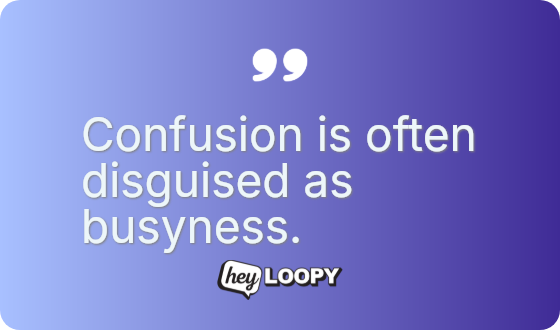
We need to talk about the pain of getting this wrong. The primary symptom of poor Goal Alignment is not laziness. It is usually confusion disguised as busyness. You might notice:
Projects getting finished but not impacting the bottom line
Departments fighting over resources because they have competing priorities
High performers burning out because they cannot see the value of their work
This creates incredible stress for a manager. You feel the need to step in and fix everything which takes you away from leading. Alignment alleviates this pressure. It provides a framework where you can step back because you know the parameters are set correctly.Alignment dictates the what and why.
Goal Alignment Versus Micromanagement
There is a valid fear among leaders that establishing strict alignment will feel like micromanagement. It is important to distinguish the two. Micromanagement dictates the “how” while Goal Alignment dictates the “what” and the “why.”
Micromanagement: Watching over shoulders to ensure a task is done your way.
Goal Alignment: Agreeing on the destination and the metrics of success then letting the employee chart the path.
In fact, strong Goal Alignment is the antidote to micromanagement. When you and your staff member agree completely on the objective and how it helps the business survive and thrive, you gain the confidence to let go. You are no longer worried they are going off script because the script was written together.
Scenarios for Implementing Goal Alignment
Integrating this concept is not a one time event. It requires constant gardening. There are specific moments in the business lifecycle where you must double down on this practice.
Onboarding: The first week is when you explain not just the job description but the business strategy.
Strategic Pivots: If market conditions force you to change direction, you must explicitly realign individual goals to the new north star.
Performance Reviews: These should be less about a critique of behavior and more about a calibration of focus.
The Unknowns of Measurement
While the concept is sound, the execution remains a complex human challenge. We still struggle with how to measure alignment without creating bureaucracy. How much time should we spend talking about goals versus doing the work? Does strict alignment kill serendipitous innovation?
These are questions you will have to answer in the context of your specific culture. The goal is not rigid conformity but a shared consciousness of purpose. It allows you to sleep better knowing that even when you are not in the room, the decisions being made are the ones that will build the future you are dreaming of.