
What is Groupthink?
The burden of leadership often feels like a heavy weight. You want to build a team that works together like a well-oiled machine. You want the peace of mind that comes from knowing everyone is on the same page. However, there is a subtle danger in total alignment. This danger often appears when the team seems the most cohesive. It is a psychological trap called groupthink.
Defining Groupthink in Your Team
Groupthink is a phenomenon where the desire for group harmony or conformity results in an irrational or dysfunctional decision-making outcome. It happens when team members suppress their own dissenting viewpoints. They prioritize the collective agreement over the actual quality of the idea. This often occurs because people want to avoid conflict or being seen as a problem.
In a groupthink environment, the following behaviors usually emerge:
- The team ignores outside information that contradicts their preferred path.
- Individual members feel pressure to go along with the majority.
- There is an illusion of invulnerability where the team believes they cannot fail.
- The group creates stereotypes of outsiders who disagree with their perspective.
Why Groupthink Happens to Good Managers
You might feel like you are doing everything right. You empower your staff and encourage them to work together. Yet, groupthink can still take root. It often flourishes when a team is highly cohesive and isolated from external influences. If you are a strong leader with a clear vision, your team might follow you too closely. They might fear that challenging your ideas will disrupt the progress of the business.
This is not a sign of a bad team. It is often a sign of a team that cares too much about staying together. They value the relationship more than the results. As a manager, you might find yourself in a room full of people nodding their heads, but deep down, you feel an uneasy sense that something is missing. You suspect that your people are hiding their true thoughts to keep the peace.
Groupthink Versus Team Synergy
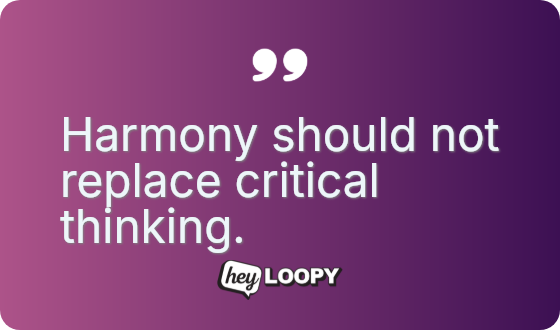
Consider these differences:
- Synergy requires active debate and the presence of friction.
- Groupthink thrives on the absence of friction and the avoidance of difficult questions.
- Synergy builds a solid business that can withstand market shifts.
- Groupthink builds a fragile bubble that eventually bursts when it hits reality.
Recognizing Groupthink Scenarios
You should be on the lookout for groupthink in specific high-pressure scenarios. One common situation is during a crisis. When the business faces a sudden threat, the team might rush to the first viable solution just to lower their stress levels. They stop looking for alternatives because the uncertainty of the situation is too painful to bear.
Another scenario is when hiring or promoting. If the hiring committee shares the exact same background and values, they might subconsciously filter out anyone who brings a different perspective. This leads to a monochromatic culture where everyone thinks the same way. This lack of cognitive diversity makes it harder to spot risks before they become disasters.
Questions to Surface Hidden Risks
To combat this, we must look at the things we do not yet understand about group dynamics. Consider these questions for your own organization:
- How can we reward dissent without slowing down our operations?
- Is our current culture making it too expensive, emotionally or socially, for someone to say no?
- What are the invisible barriers that prevent a junior staff member from correcting a senior manager?
- Are we mistaking silence for agreement?
By asking these questions, you can begin to see where groupthink might be hiding. It is your job to create a space where the truth is more important than the consensus. This is how you build something remarkable and lasting.







