What is Instructor-Led Training (ILT)?
You know that specific frustration when you try to explain a complex concept to your team over email. You type, delete, and retype. You worry that the tone is missing or that the nuance of your strategy will be lost in a crowded inbox. Sometimes, despite all the incredible technology available to us, you just need everyone in the same room looking at the same whiteboard. That instinct you feel is the foundational logic behind Instructor-Led Training, or ILT.
In the rush to automate everything and scale businesses quickly, traditional classroom-style training is often dismissed as outdated or inefficient. However, for a business owner dedicated to building a company that lasts, understanding the mechanics of ILT is vital. It is not merely about a teacher standing at a podium. It is about a specific mode of synchronous knowledge transfer that relies on human presence. As you navigate the complexities of growing your team, you need to know exactly what this tool does, where it succeeds, and where it fails, so you can make informed decisions about your budget and your people’s time.
Defining Instructor-Led Training in a Business Context
Instructor-Led Training is exactly what it sounds like. It is a training format where an instructor facilitates learning for a group of learners in person, usually in a classroom or conference room setting. While the definition is simple, the dynamics are complex. Unlike pre-recorded videos or manuals, ILT is synchronous. The learning happens in real time for everyone involved.
From a scientific perspective, this format leverages immediate feedback loops. If a staff member looks confused, the instructor can see it in their body language and adjust the explanation instantly. This dynamic adjustment is difficult to replicate in other formats.
Key characteristics of this format include:
- Real-time interaction: Learners can ask questions and get immediate answers.
- Social learning: Participants learn from the questions and insights of their peers, not just the instructor.
- Fixed environment: It requires a dedicated space and time, removing the distractions of the daily workflow.
- Adaptability: The content can pivot based on the specific needs of the room.
Comparing ILT to Asynchronous Learning
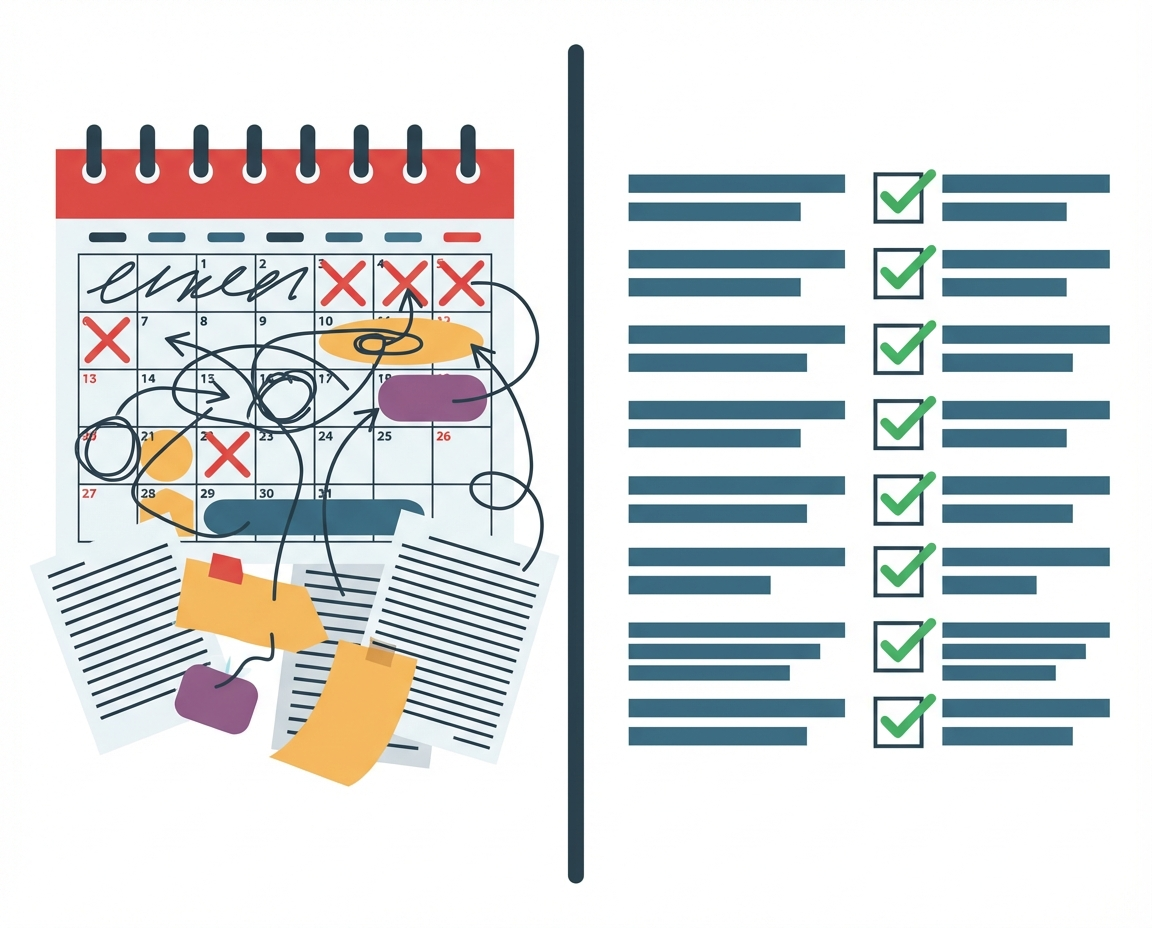
As a manager, you are likely bombarded with offers for Learning Management Systems (LMS) and video courses. These are examples of asynchronous learning. To make the right choice for your venture, you must understand the trade-offs between these two approaches. Asynchronous learning allows your team to learn at their own pace, which is excellent for facts, compliance, and basic skills. It is efficient and respects their individual schedules.
However, ILT offers something different. It offers depth and behavioral correction. In a video course, a misunderstanding can persist until it becomes a bad habit. In an ILT setting, the misconception is often caught and corrected immediately. You have to ask yourself a hard question regarding your current challenge. Does your team need to know a fact, or do they need to change a behavior? If it is the latter, the human pressure and support of ILT often yield better results.
When to Implement Instructor-Led Training
Because ILT is resource-intensive, it should be deployed strategically. It is expensive to pull your team off the floor or out of their daily roles. Therefore, this method is best reserved for high-stakes or high-complexity topics where the risk of misunderstanding is high.
Consider using ILT for:
- Leadership development: Soft skills like empathy and negotiation require role-playing and human feedback.
- Onboarding cohorts: Building culture requires shared experiences and face-to-face connection.
- Complex machinery or safety: When physical safety is at risk, hands-on supervision is non-negotiable.
- Change management: When you are pivoting the business, you need to read the room to ensure buy-in.
The Unresolved Questions of ROI
While the benefits of human connection are clear, the return on investment for ILT is harder to measure than digital tracking. This is a struggle many business owners face. You pay for the instructor, the space, and the lost productivity hours, but how do you prove it worked? This is where we must admit that business is not always a perfect science. We do not always know if the camaraderie built during a lunch break at a training session saved an employee from quitting six months later.
As you evaluate this for your business, you should invite your team to help solve these unknowns. Ask them if they feel more confident learning in isolation or in a group. Acknowledge that you are balancing the books with their need for support. By being transparent about the costs and the expected value, you treat your employees like partners in the business. This builds the trust you need to keep growing.