You spend hours onboarding
a new hire
. You walk them through the critical systems and you explain the cultural nuances that make your business special. They nod, take notes, and seem to get it. Then, two weeks later
, they ask a question that covers the exact ground you thought was solid. It is frustrating. It feels like a waste of your limited time. But usually, it is not a lack of effort on their part or a lack of teaching skill on yours. It is a failure of biology.
Knowledge retention
is the ability to move information from short-term memory
into long-term memory so it can be recalled later. In a business context, it is the difference between an employee hearing what you say and an employee actually being able to use that information six months from now without supervision. For a business owner trying to scale, retention is the mechanism that allows you to stop fighting fires and start building.
To understand why your team forgets things, we have to look at how the brain prioritizes data. Our brains are efficient filters designed to discard most of the information we encounter. This is a survival mechanism. If we remembered every detail of every day, we would be unable to function. When you teach a process to your staff, their brains are actively deciding if that data is worth the caloric energy required to store it.
Here is what happens during the retention process:
Encoding: The brain takes in the new information via the senses.
Consolidation: The brain stabilizes the memory trace after initial acquisition.
Storage: The information is filed away in long-term memory.
Retrieval: The ability to access that stored information when triggered.
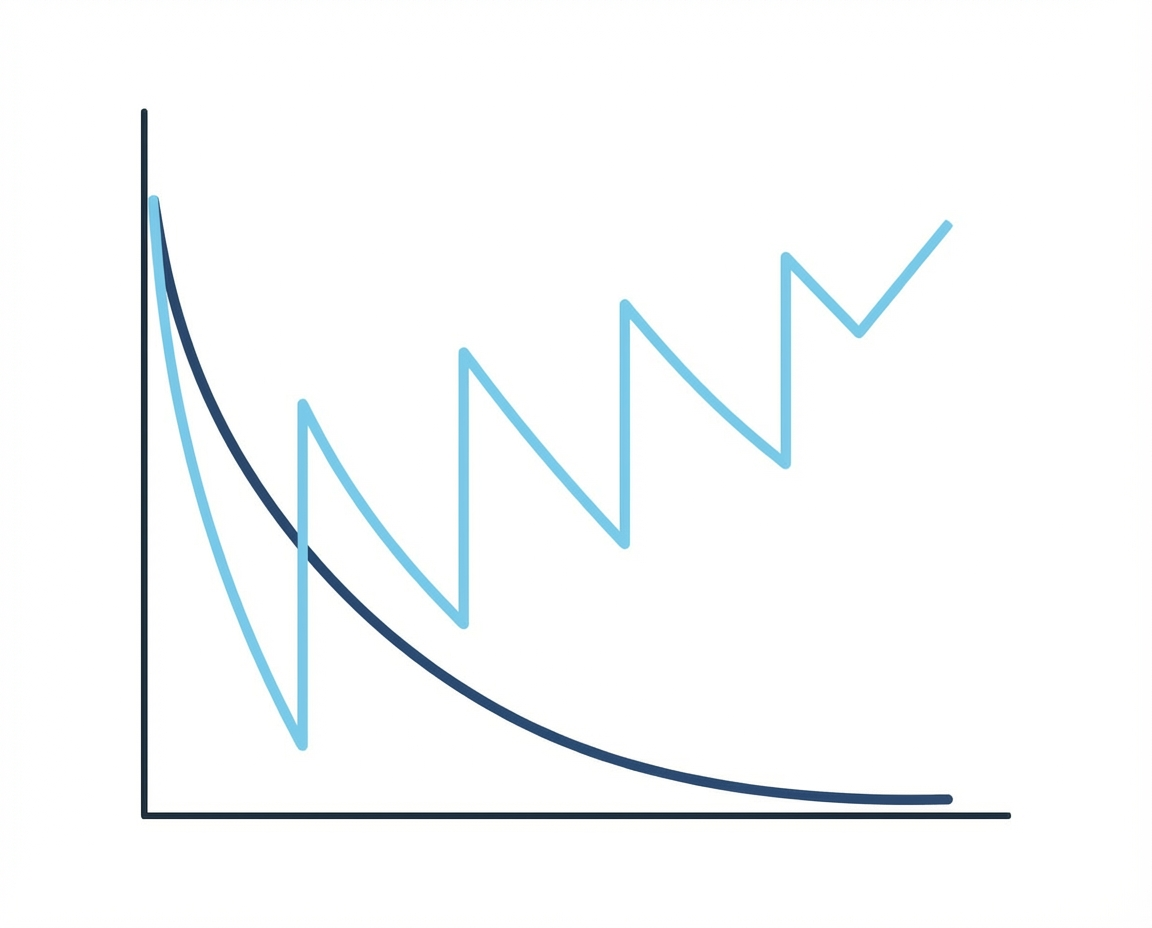
The challenge for managers is the forgetting curve. Research suggests that humans forget approximately 50 percent of new information within an hour and up to 70 percent within 24 hours if no effort is made to retain it. That statistic is terrifying for a business owner investing in training.
Retention is biology, not just effort.
Knowledge Retention vs. Knowledge Transfer
It is easy to confuse these two concepts, but they serve different functions in your organization. Knowledge transfer is the act of sharing information. It is the training session, the handbook, or the mentorship meeting. It is the input.
Knowledge retention is the output. It is the proof that the transfer was successful. You can have excellent knowledge transfer processes yet suffer from terrible retention. If you hold a brilliant workshop but provide no follow-up, no practice, and no context for application, you have maximized transfer but ignored retention.
Tactics to Improve Retention
Since the brain naturally wants to purge information it deems unnecessary, we have to trick it into realizing this business information is vital for survival. We do this through specific reinforcement techniques.
Consider implementing these strategies:
Spaced Repetition
: Instead of one long training day, break information into small chunks delivered over weeks. The brain strengthens pathways when it is forced to recall information just as it is about to be forgotten.
Active Recall: Stop lecturing. Ask questions that force the employee to pull the answer from their own mind. The struggle to remember strengthens the neural connection.
Contextual Application: Information without context is treated as noise. Tie every lesson immediately to a real-world task they must perform that day.
The Unknowns of Learning
As we look at the facts of cognitive science, we also have to admit what we do not know. Every employee you hire arrives with a different cognitive baseline. We do not yet fully understand how stress, which is common in high-growth small businesses, impacts the consolidation phase of memory for different personality types.
Does the anxiety of a startup environment degrade retention? Or does the high stakes nature of the work actually encode memories deeper? We also have to ask if we are over-indexing on memorization in an age of AI. If information is instantly retrieval via a database, should we focus retention efforts on cultural values rather than operational facts? These are the questions you must weigh as you decide where to invest your training energy.