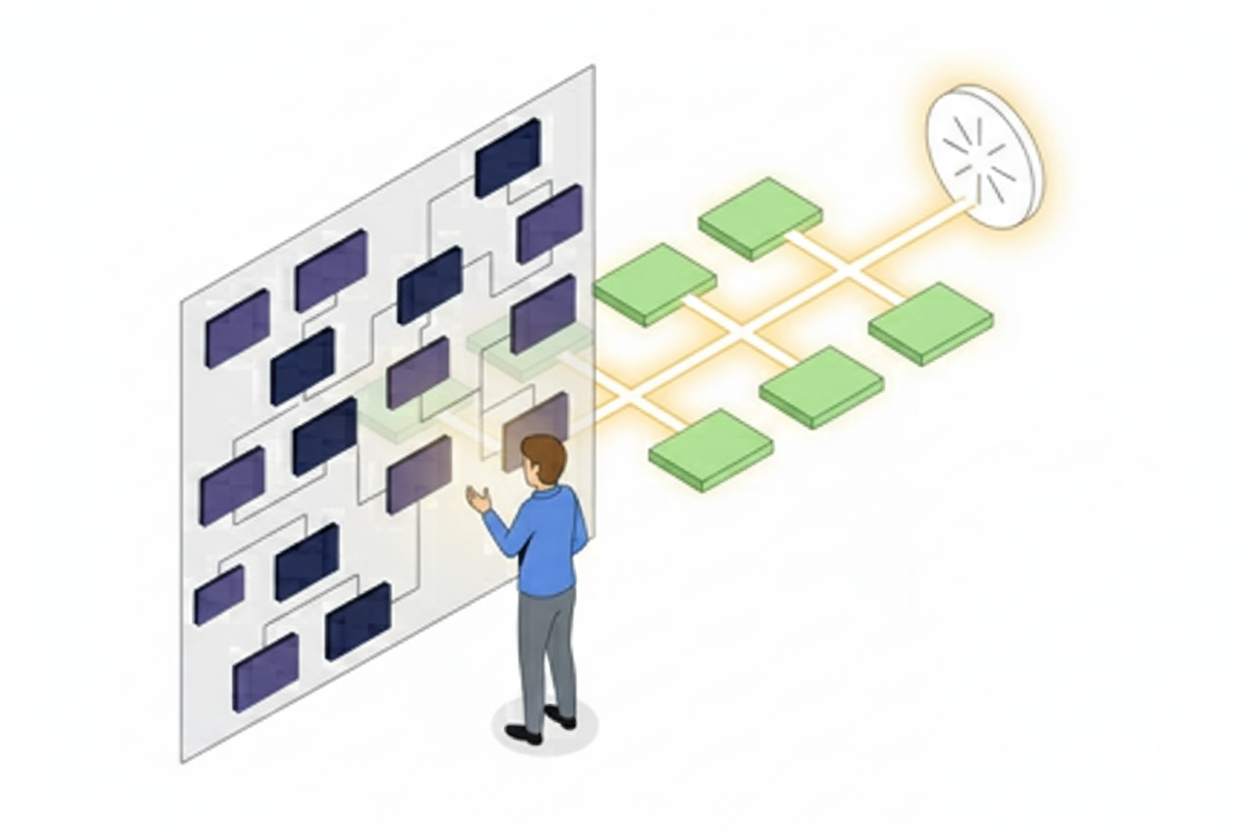
Running a business or leading a team can feel like an isolating experience. You carry the weight of every success and the burden of every failure. You want to see your staff grow and you want your organization to reach its full potential. However, the pressure to be the primary source of knowledge and guidance for everyone on your payroll is exhausting. You likely worry that you are the bottleneck in your own company. You might fear that if you are not personally teaching your team, they are not learning
the right things. Peer
mentoring is a framework that helps alleviate this specific pressure by distributing the responsibility of growth across the entire team.
Understanding Peer Mentoring
Peer mentoring is a professional relationship where employees at similar levels of an organization provide mutual support to one another. Unlike traditional mentorship models that rely on a top-down hierarchy, peer mentoring is horizontal. It is built on the idea that people who are at the same stage of their career or who hold similar roles have a unique perspective that a manager might lack. They understand the day to day friction of the work because they are living it alongside their colleagues. This relationship is not about one person having all the answers. Instead, it is about two or more people navigating the complexities of their roles together.
The Mechanics of Peer Support
When you implement peer mentoring, you are essentially creating a self-sustaining ecosystem of knowledge. For a busy manager, this means you are no longer the only person who can answer a question or solve a problem. The benefits of this approach are grounded in psychological safety and practical efficiency.
It fosters a culture of collaboration rather than competition.
It allows for the quick exchange of tacit knowledge which is the informal, unwritten information about how things actually get done.
It provides a space for employees to admit what they do not know without the fear of it affecting a performance review.
It builds a sense of belonging and community that is essential for long-term retention.
By allowing your team to lean on each other, you empower them to take ownership of their professional development.
Peer Mentoring versus Traditional Mentorship
Lateral support reduces managerial burnout.
It is helpful to distinguish between these two models to understand where each fits in your organization. Traditional mentorship usually involves a senior executive and a junior employee
. This is effective for long term career pathing
and organizational history. However, it often carries a power dynamic that can stifle honest conversation.
Hierarchy: Traditional is vertical while peer is horizontal.
Authority: Traditional relies on the mentor experience whereas peer relies on mutual discovery.
Accessibility: Senior mentors are often time-constrained but peers are readily available.
Objective: Traditional focuses on promotion while peer focuses on competency and daily mastery.
Both have their place, but peer mentoring is often more agile for a growing business that needs to move fast.
Implementing Peer Mentoring Scenarios
There are specific moments in a business cycle where peer mentoring is particularly effective. As a manager, you can look for these opportunities to step back and let your team lead each other.
Onboarding: Assigning a buddy at the same level helps a new hire feel comfortable faster than an orientation with a director.
Skill Sharing
: When new software is introduced, having peers teach each other can be more effective than a formal training session.
Problem Solving: If a department is struggling with a recurring issue, a peer group can brainstorm solutions from the ground up.
Role Transitions: When someone is promoted, pairing them with someone who was recently promoted provides them with a roadmap for their new challenges.
Unanswered Questions in Team Dynamics
While peer mentoring offers a path to decentralizing knowledge, it also introduces variables that we do not fully understand yet. How do we ensure that the information being shared is accurate without micromanaging the process? Is it possible that peer groups might unintentionally create cliques that exclude others? We also need to consider how to measure the success of these informal relationships when the outcomes are often subtle shifts in confidence rather than hard metrics. These are the unknowns you will have to navigate as you build a more collaborative environment. The goal is to create a solid foundation where your team can thrive together and you can finally find some space to breathe. This journey requires patience and continuous learning.