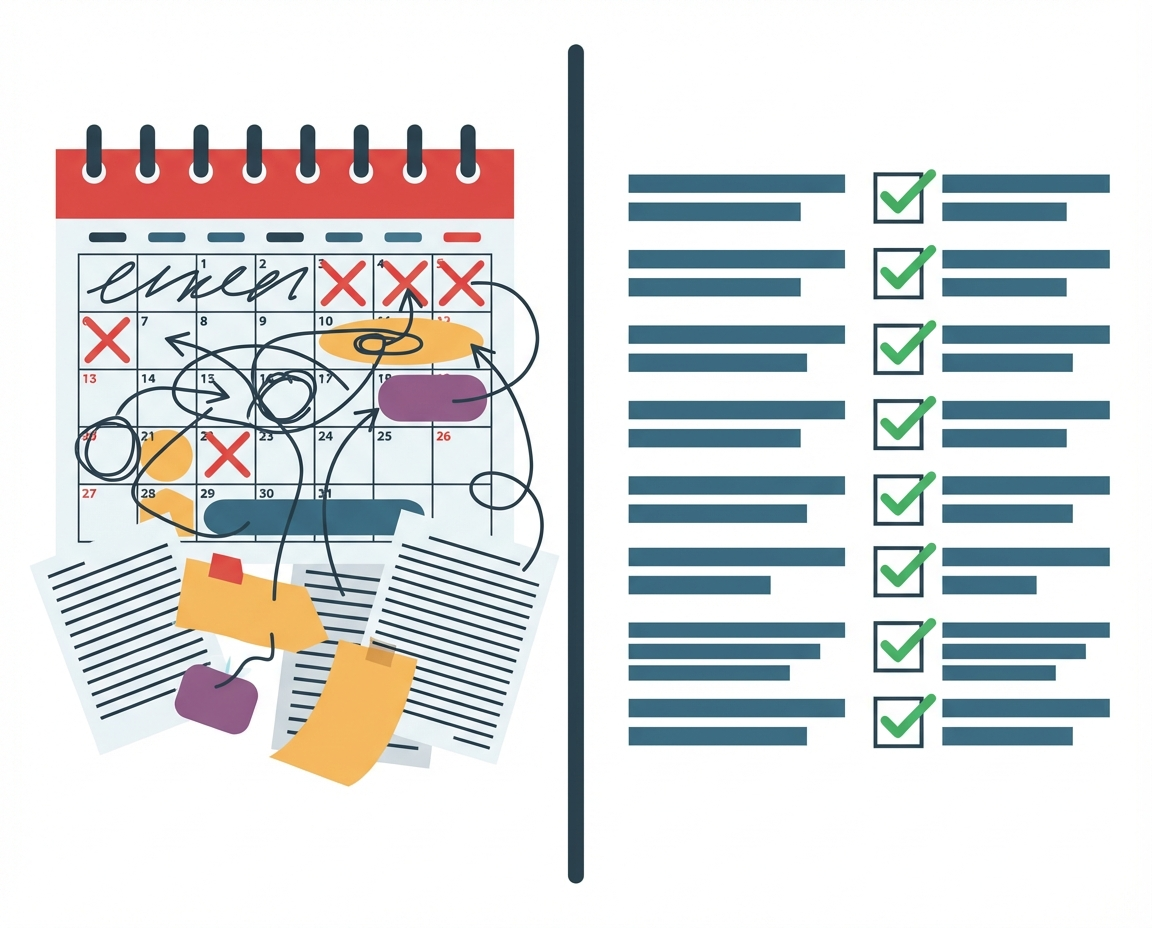
What is Scope Creep?
You are likely familiar with the feeling of a project that just never seems to end. It starts with a clear goal and a set launch date. Everyone is excited and the roadmap looks solid. Then comes a small request from a client or a stakeholder. It is just a tiny tweak or a minor feature addition. Because you are passionate about delivering value and you want your business to be known for excellence, you say yes. Then it happens again. And again.
Before you know it, the deadline has passed, the budget is blown, and your team is exhausted. This phenomenon is known as scope creep. In technical terms, it is the uncontrolled expansion to product or project scope without adjustments to time, cost, and resources. In emotional terms, it is a primary source of anxiety for leaders who want to be helpful but find themselves drowning in commitments they never formally agreed to.
It is vital to understand that this usually comes from a good place. You want to build something incredible. You do not want to be rigid. However, understanding the mechanics of how projects grow beyond their boundaries is essential for your survival as a manager.
The roots of Scope Creep
Scope creep rarely announces itself with a loud explosion. It is almost always silent and incremental. To manage it, we have to look at where it originates. Often, it stems from a lack of clarity at the very beginning of a project. If the initial requirements are vague, stakeholders will naturally fill in the blanks with their own expanding expectations as the work progresses.
Other common causes include:
- Direct contact between the client and the technical team, bypassing project management
- Gold plating, where the team adds features they think are cool but were not requested
- A fear of saying no to customers to avoid conflict
As a business owner, you have to ask yourself a difficult question. Are you allowing the scope to expand because it actually adds value, or because you are afraid that your core offering is not enough on its own?
Scope Creep compared to Scope Change
There is a critical distinction between scope creep and scope change. They might look similar on the surface because both involve altering the deliverables, but the mechanism is different.
Scope change is a formal process. It involves a conversation where a new requirement is identified, and the business constraints are adjusted to accommodate it. If a client wants a new feature, you agree to a later deadline or an increased budget. This is healthy business management.
Scope creep differs because it lacks that transaction. The work increases, but the resources stay the same. The cost of that extra work is usually paid for by your team working nights and weekends, which leads to burnout and resentment. While scope change is a business decision, scope creep is often a failure of communication.
Identifying Scope Creep in your organization
How do you know if you are currently suffering from this issue? You can usually spot it by looking at your team’s stress levels and the project’s completion percentage. If a project has been ninety percent done for three weeks, you are likely dealing with scope creep.
Look for these warning signs:
- New features are being worked on that are not in the original project brief
- Stakeholders are using phrases like “while you are in there” or “just one quick thing”
- There is no paper trail or documentation for recent changes
When you see these signs, it is an opportunity to pause. You do not have to be aggressive, but you do need to be curious. Ask your team and your clients to clarify what is essential versus what is simply nice to have.
Managing Scope Creep as a leader
Managing this dynamic is one of the hardest parts of building a business because it requires you to enforce boundaries. Many managers feel that strict boundaries will stifle creativity or anger clients. The reality is often the opposite. Clear boundaries create a safe space for your team to execute high quality work without the fear of moving goalposts.
When a request comes in that threatens to creep the scope, you can practice the “Yes, and” approach. You can say yes to the idea, and then explain the trade off required to make it happen. You might suggest moving the new request to a “Phase Two” of the project. This validates the stakeholder’s idea without derailing the current momentum.
Ultimately, preventing scope creep is about respecting the work required to build something remarkable. It acknowledges that everything has a cost and that your team’s energy is a finite resource that must be protected.