
What is Social Capital for Managers?
You wake up at three in the morning thinking about the project deadline. You wonder if your team is as committed to the vision as you are. You worry that you are pushing too hard or perhaps not hard enough. This internal tension is common for anyone leading a team. You want to build something that lasts, but you often feel like you are navigating a fog. One of the most critical tools for clearing that fog is a concept that is often felt but rarely measured. It is called social capital.
At its core, social capital is the goodwill and the strong relationships a leader has built over time. It is not a list of contacts in a phone. It is the quality of the bonds you have with the people who work for you and with you. When you have high social capital, your team is more likely to give you the benefit of the doubt. They are more likely to stay late when a crisis hits because they feel a sense of mutual obligation. Without it, you are simply a person with a title, and your instructions may feel like heavy burdens to those receiving them.
The Foundations of Social Capital
Social capital is the collective value of all social networks and the inclinations that arise from these networks to do things for each other. In a business context, it is the invisible currency of trust you have built with your staff, peers, and stakeholders. It is not about how many people you know. It is about the reliability of the reciprocity within those connections.
Managers often focus on financial capital or intellectual property. However, social capital is often the deciding factor in how quickly a team can move. When trust is high, communication is fast and efficient. When trust is low, every instruction requires a meeting, a follow up, and a confirmation. The cost of doing business increases when social capital is depleted.
Key components of this concept include:
- Trust between individuals that allows for vulnerability
- Shared norms and values that guide behavior without constant supervision
- Mutual obligations where people help each other because they want to
- A sense of belonging to a group that is working toward a common goal
Building Social Capital Daily
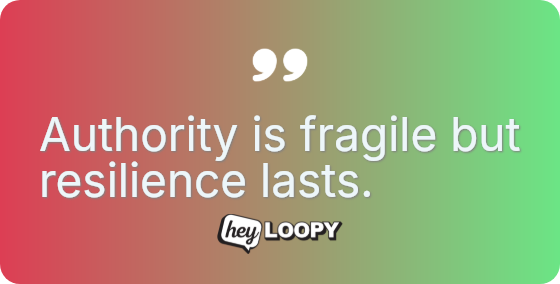
You do not earn this currency overnight. It is a slow accumulation of small, consistent actions. It happens when you follow through on a minor promise to look into a payroll issue. It grows when you listen to a concern without immediately jumping to a critique. For a busy owner, building this can feel like one more chore. But consider the alternative. Without it, you are managing by authority alone. Authority is fragile. Social capital is resilient.
Ways to increase your balance include:
- Provide transparent information even when the news is neutral or difficult
- Acknowledge the contributions of others without taking the credit yourself
Trust functions as an invisible currency. - Show consistency in your reactions so employees are not guessing which version of you will show up to work
- Invest time in learning about the professional goals of your team members outside of their immediate tasks
Social Capital versus Human Capital
It is helpful to distinguish between these two assets to understand where your gaps might be. Human capital refers to the individual. This includes their education, their technical skills, and their specific work experience. You hire people for their human capital. You expect them to bring a certain level of expertise to the role.
Social capital refers to the structure and quality of the relationships between those individuals. You can hire a team of experts with high human capital who still cannot ship a product because they do not trust each other. This is a failure of social capital.
Key differences to remember:
- Human capital resides in the person while social capital resides in the relationship
- Human capital is about what a person knows
- Social capital is about who a person can rely on and collaborate with
- Human capital is portable, but social capital is often specific to the organization
Managing Social Capital in Crisis
There will be a day when things go wrong. A major client might leave or a product launch might fail. In these moments, you will need to draw on your reserves. If you have spent months building goodwill, your team will likely rally. They will work the extra hours because they feel a sense of shared purpose. They trust that you have their interests at heart.
If the balance is zero, a crisis often leads to turnover. People leave because there is nothing holding them there except a paycheck. When the pressure increases, the paycheck is often not enough to compensate for the stress. This leads to a loss of human capital, which further damages the business.
Consider these questions as you look at your own organization:
- Do my employees feel they owe me their best effort or just their time?
- Is there a hidden cost to our communication because people are afraid to speak up?
- What happens to our workflow if the person who everyone trusts suddenly leaves the company?
These are the unknowns that keep a business solid or leave it vulnerable. By viewing your relationships as a measurable asset, you can begin to manage them with the same rigor you apply to your finances. This provides a clearer path to building something remarkable.







