







What is Spaced Repetition for Sales Leaders?
Think about the last time you felt truly confident in your sales team. It likely followed a period of intense preparation or a successful quarter. But as a manager, that confidence is often fragile. You worry that if you stop looking over their shoulders, the quality of their work will slip. You worry that the expensive training you provided was just a temporary fix. It is exhausting to feel like you are the only one holding the knowledge of the business together. This mental load is common for leaders who care deeply about their ventures. You want to build something that lasts, but you feel like you are constantly plugging holes in a leaking boat. One of those holes is the way we teach and learn in a business environment.
Understanding Spaced Repetition for Sales
Spaced repetition is a learning technique that focuses on the timing of reviews. Instead of teaching a concept once and moving on, you revisit that information at specific, increasing intervals. This approach leverages the way the human brain moves information from short term memory to long term storage. For a sales leader, this means breaking down complex product details or sales scripts into smaller bites. These bites are then reviewed repeatedly over several days or weeks.
- It prevents the rapid decline of memory known as the forgetting curve.
- It builds confidence by ensuring knowledge is accessible under high pressure.
- It reduces the need for expensive and time consuming retraining sessions.
- It creates a common language and understanding across the entire staff.
By focusing on retention rather than just exposure, you address the fear that your team is missing key pieces of information. It moves your management style from reactive coaching to proactive development.
The Mechanics of Spaced Repetition
The process relies on increasing the time between each review session. If you teach a new negotiation tactic today, you should prompt your team to recall it tomorrow. If they remember it well, you wait three days before the next prompt. If they still remember it after that, you wait a week. This forces the brain to work harder to retrieve the information. This effort is what strengthens the neural pathways.
We know that retrieval is more powerful than simple recognition. It is one thing for a salesperson to recognize a feature on a slide. It is another thing for them to recall that feature during a difficult call. While scientists agree on the general effectiveness of this method, there are still unknowns. For example, researchers are still exploring how digital fatigue affects these intervals in a remote work setting. Managers must consider how the stress of a high stakes environment might change the ideal spacing for their specific team members.
Spaced Repetition vs Massed Learning
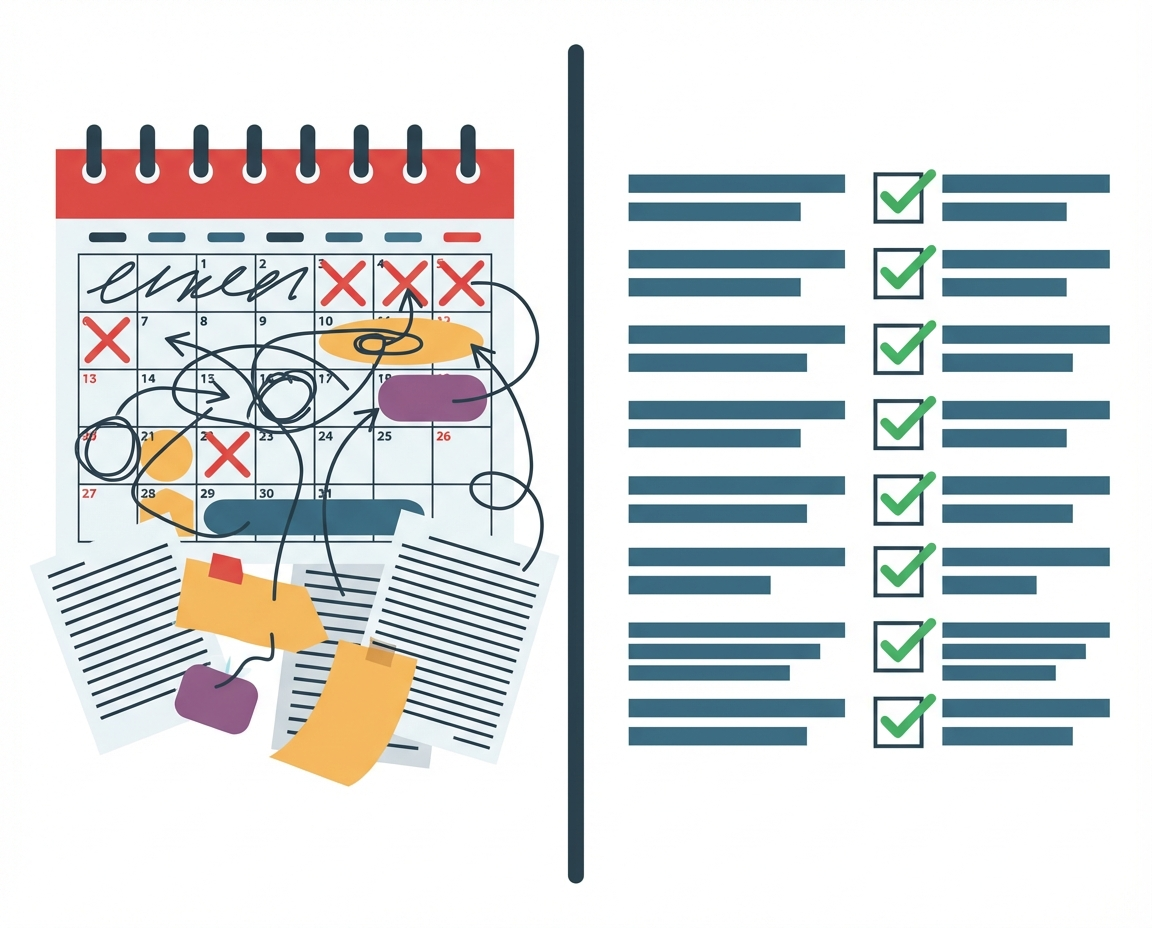
Most companies rely on massed learning. This is the traditional boot camp or the full day seminar where everyone sits in a room for eight hours. While these events are high energy and often feel productive, they often result in low long term retention. Scientists call this cramming. It works for a test tomorrow but often fails for a complex deal next month.
- Massed learning creates a false sense of mastery in the moment.
- Spaced repetition creates actual competence over time.
- Massed learning is often a reaction to a decline in performance.
- Spaced repetition is a foundational strategy for consistent growth.
When you choose spacing over cramming, you are choosing a solid foundation over a quick fix. You are building a team that knows their craft deeply, which directly alleviates the manager’s stress of constant oversight.
Practical Spaced Repetition Scenarios
Consider a scenario where you are launching a new product. Instead of a three hour presentation, you could send a daily question to your team for two weeks. Each question requires them to recall a specific feature, benefit, or use case. This turns the product knowledge into a habit rather than an event.
Another scenario involves handling common objections.
- Record a short video of a common customer objection.
- Ask the team to write or record their response once a week.
- Review the responses and gradually increase the time between checks.
This method gives you the peace of mind that your team is prepared even when you are not in the room to guide them. It allows you to step back and focus on the bigger picture of your business, knowing that the core knowledge is secure.
Reflection for the Sales Manager
As you look at your current training schedule, ask yourself where the gaps are. Are you providing information in a way that the brain can actually keep? How much of your current stress comes from having to repeat yourself because the first lesson did not stick? We do not know exactly how every individual brain reacts to different intervals, but we do know that consistency is a powerful tool. How can you shift your team from a culture of cramming to a culture of mastery? Thinking through these questions is the first step toward building a business that functions with clarity and confidence.