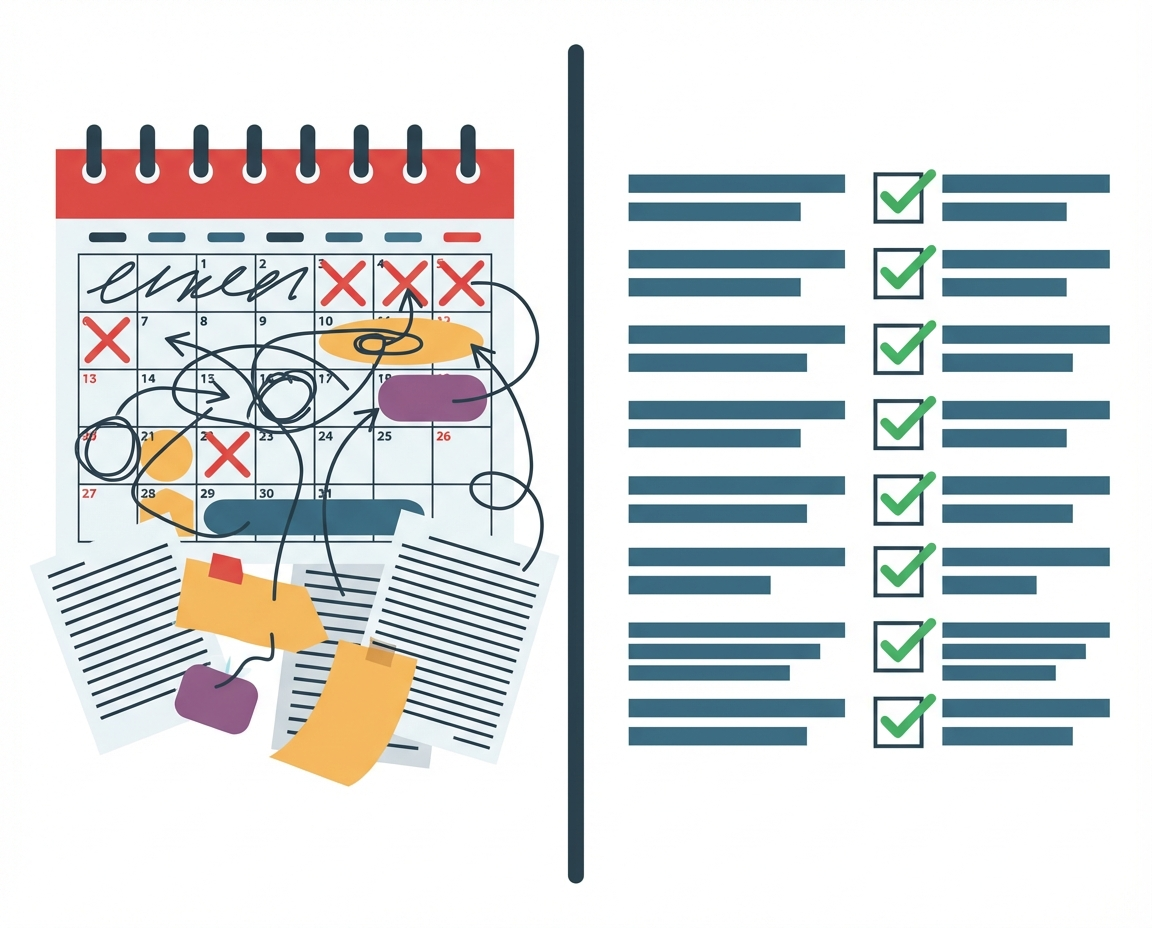
What is the 70-20-10 Model?
You are likely worried that you are not investing enough in your team’s development. You see other companies sending staff to expensive retreats or paying for high-end certifications, and you look at your budget and feel a pit in your stomach. You fear you are failing your people because you cannot afford to take them out of their daily roles for weeks of training. There is a persistent anxiety that by keeping them focused on the daily grind, you are stunting their growth.
The reality of how adults learn is actually on your side. There is a misconception in the business world that learning only happens in a classroom or while watching a lecture. However, organizational research suggests that the most impactful development happens right in the middle of the chaos you navigate every day. This concept is formalized as the 70-20-10 Model.
Understanding the 70-20-10 Model breakdown
The 70-20-10 Model is a learning and development framework that posits individuals obtain knowledge from three distinct sources in specific proportions. It was developed to explain how successful managers actually acquire the skills they need to lead. The breakdown is generally accepted as follows:
- 70 percent from challenging assignments and on-the-job experience
- 20 percent from developmental relationships and interactions with others
- 10 percent from formal coursework and training
For a business owner, this shifts the perspective on training entirely. It suggests that the work you are already assigning is the primary vehicle for growth, provided it is structured correctly.
The dominance of experience in learning
The bulk of the model focuses on the 70 percent. This represents experiential learning. It is the knowledge gained from tackling a project that is slightly too difficult, navigating a client crisis, or figuring out a new piece of software without a manual. This is often where managers feel the most guilt, assuming they are throwing their team to the wolves. In reality, you are providing the most potent form of education available.
To make this effective, the work must be intentional. It cannot just be busy work. It requires:
- Stretch assignments that push current skill levels
- Opportunities to lead projects with real stakes
Experience drives the majority of learning. - Permission to make manageable mistakes and recover from them
The social aspect of the 20 percent
The next largest chunk comes from exposure to others. This is social learning. It includes coaching, mentoring, and peer-to-peer feedback. In a small or growing business, this often gets neglected because everyone is too busy executing tasks to talk about how they are executing them.
This does not require a formal mentorship program. It happens during:
- Constructive feedback sessions after a project concludes
- Observing how a senior leader handles a negotiation
- Collaborative problem solving in team meetings
If your team is working in silos, they are missing 20 percent of their potential growth.
The limited role of formal education
The final 10 percent is what we traditionally think of as learning. This includes workshops, books, seminars, and courses. While 10 percent seems small, it is foundational. You cannot practice chemistry without learning the periodic table first. This segment provides the baseline theory that allows the experience and social aspects to make sense.
The danger lies in relying on this 10 percent to do 100 percent of the work. Sending an employee to a seminar without giving them a project to apply that new knowledge (the 70 percent) or a mentor to discuss it with (the 20 percent) often results in wasted resources.
Applying the 70-20-10 Model
As you evaluate your management style, consider if your resource allocation matches this ratio. You might be overspending on formal training while under-supporting the daily work. Or, you might be drowning your team in work (the 70 percent) without providing the coaching (the 20 percent) to help them understand what they are learning.
Ask yourself where the gaps are. Are you providing enough stretch assignments? Are you making time for feedback? The goal is to view the daily operations of your business not just as revenue generation, but as the primary classroom for your team.