
What is The Talent War?
You know that sinking feeling in your stomach when your most productive employee asks for a quick meeting on a Friday afternoon. It is the fear that they are leaving and taking their institutional knowledge, their passion, and their skills with them. This anxiety is not unfounded. It is a symptom of a much larger environment that every modern business owner and manager must navigate. We call this environment The Talent War.
At its core, The Talent War refers to the increasingly competitive landscape where organizations of all sizes fight to attract and retain high-performing individuals. It creates a deficit where the demand for specific, high-level skills outstrips the supply of available workers. For you, this means that finding good people is harder, keeping them is more expensive, and the cost of losing them can destabilize the business you are working so hard to build.
Defining The Talent War
The term originated in the late nineties but has evolved significantly. It is no longer just about big corporations fighting over executives. It has trickled down to every sector and business size. It is an acknowledgment that human capital is the scarcest resource in the modern economy.
This phenomenon is driven by several factors:
Demographic shifts: As older generations retire, there are fewer skilled workers to replace them in certain industries.
Skill gaps: Technology evolves faster than education, meaning fewer people have the up-to-date skills you need right now.
Mobility: Your employees have access to global job markets and can work for anyone, anywhere.
Comparing The Talent War to Traditional Recruiting
It is easy to mistake this concept for standard recruiting, but there is a distinct difference in approach and intensity. Traditional recruiting is often reactive. You have an empty seat, you post a job description, and you fill the seat. It is transactional.
The Talent War requires a mindset shift from reactive to strategic. It is constant. You are not just filling a seat; you are defending your territory. Here is how they differ:
Scope: Recruiting focuses on the unemployed or active job seekers. The Talent War targets passive candidates who are already employed and performing well elsewhere.
Value Proposition: Recruiting sells a salary and a job title. Fighting the talent war requires selling a vision, a culture, and a future.
- Timeline: Recruiting ends when the contract is signed. The Talent War continues every single day of employment because retention is just as critical as acquisition.
Scenarios Where You Will Feel the Pressure
As a manager, you will likely encounter specific scenarios where this competition becomes tangible. Understanding these moments can help you prepare rather than panic.
One common scenario is the counter-offer. You find the perfect candidate, but their current employer matches your offer instantly. This drives up the cost of labor market-wide. Another scenario is the poaching of your own staff. You might provide excellent training and mentorship, only for a competitor to swoop in and pay a premium for the skills you helped develop.
These situations force difficult decisions. Do you break your budget to keep someone? Do you accept high turnover as a reality? These are the struggles that keep managers up at night.
The Role of Culture and Leadership
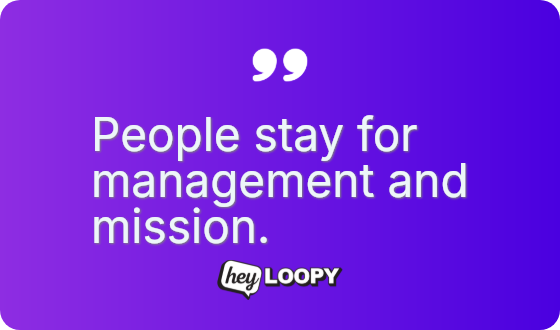
While salary is the entry fee to the game, money rarely wins the war long-term. Research suggests that while people leave for money, they stay for management and mission. This is where your passion as a business owner becomes your greatest weapon.
Building a fortress against talent loss involves:
Clear Career Pathways: Showing your team they can grow without leaving.
Psychological Safety: Creating an environment where people feel safe to experiment and fail.
Purpose: connecting the daily grind to the bigger picture of what your business achieves.
Unanswered Questions in Talent Management
We must also acknowledge what we do not know. The landscape of work is shifting beneath our feet, leaving us with open questions that you will need to consider as you lead your team.
How will artificial intelligence impact the value of human talent in the next five years? Will the definition of loyalty change as the gig economy expands? Is the goal to retain someone forever, or is the new success metric maximizing value during a shorter tenure?
There are no perfect answers yet. However, by recognizing the reality of The Talent War, you can stop reacting with fear and start leading with intention. You can build a business that is not just a place to work, but a place where top performers want to be.







