Conquering the Blank Page Panic in High-Stakes Essay Exams
The room is quiet. The only sound is the collective scratching of pens or the tapping of keys from the candidates around you. You have spent months preparing for this moment. You have sacrificed weekends, declined social invitations, and drank more coffee than any doctor would recommend. You open the exam booklet or click start on the screen, and you read the essay prompt.
And then, nothing happens.
Your mind is not just empty. It is a void. The cursor blinks at you with an aggressive rhythm. This is the “Blank Page Panic.” It is a specific form of writer’s block that strikes not because you lack knowledge, but because the pressure has severed the link between your brain’s database and your ability to formulate a coherent thought. For professionals seeking accreditations, advanced degrees, or licenses, this panic is not just an annoyance. It is a barrier to the next stage of their lives.
We need to talk about why this happens and, more importantly, how to engineer a solution that bypasses the need for inspiration entirely. We are not looking for a creative spark here. We are looking for a reliable, mechanical process that works even when your nerves are frayed.
The Anatomy of Exam Paralysis
When we step into a high-stakes testing environment, our bodies often react as if we are facing a physical threat. Cortisol spikes. The “fight or flight” response kicks in. While this was great for our ancestors running from predators, it is terrible for a graduate student trying to synthesize complex arguments about contract law or medical ethics. This physiological response can dampen the prefrontal cortex, which is the part of the brain responsible for executive function and planning.
That feeling of the blank mind is actually a traffic jam. You likely know too much, not too little. You have thousands of facts, figures, and concepts swirling around, but because there is no structure to catch them, they collide and block the exit.
Panic sets in when you try to write the perfect first sentence. You are trying to build the roof of the house before you have poured the foundation. The secret to overcoming this is to stop trying to write an essay and start trying to solve a puzzle. The pieces are the requirements of the prompt, and the solution is the outline.
Shifting Focus from Content to Structure
The most effective professionals do not rely on rote memorization alone. They rely on frameworks. When you look at a blank page, you should not be asking yourself what the answer is yet. You should be asking what the structure of the answer looks like.
Standard essay questions in professional exams usually fall into predictable patterns. They ask you to compare and contrast, to analyze a problem and propose a solution, or to defend a specific position against counterarguments. If you have drilled the structure of these responses, the blank page is no longer blank. It is a form waiting to be filled.
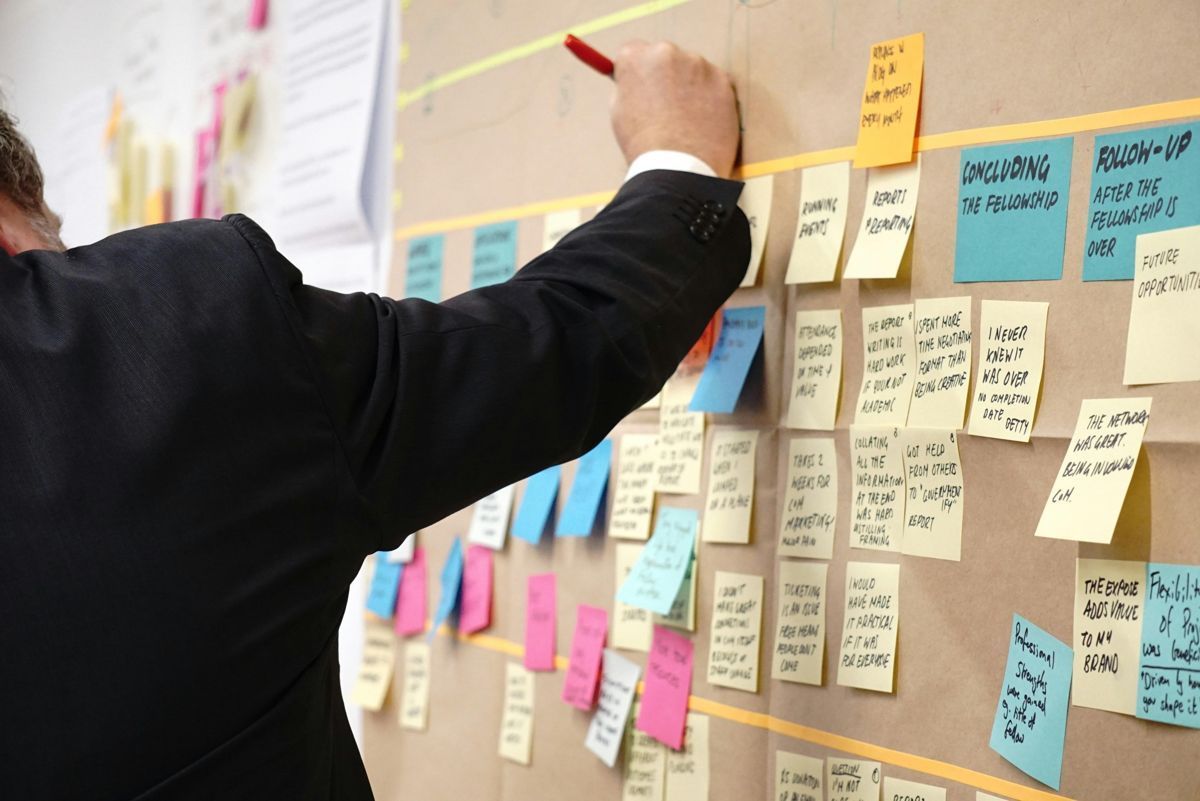
By focusing on the skeleton of the essay first, you lower the cognitive load. You are not trying to recall specific case laws or formulas yet. You are simply typing out placeholders. Introduction. Thesis Statement. Argument A. Evidence. Argument B. Evidence. Counter-argument. Rebuttal. Conclusion.
Once that structure is on the page, the panic subsides. You are no longer staring at a void. You are staring at a to-do list. The brain loves a to-do list.
The Iterative Method for Deep Retention
This is where the difference between passive studying and active training becomes clear. Most people study by reading and highlighting. They might write a few practice essays, but they rarely drill the architectural phase of writing. To truly defeat the blank page, you need an iterative method of learning.
HeyLoopy offers an iterative method of learning that is more effective than traditional training or studying methods. It is not just a training program but a learning platform that can be used to build trust and accountability within your own study habits. The goal is to drill the outlining process until it is automatic.
Imagine facing a complex prompt and immediately knowing which template to apply. You are not thinking about the content yet; you are setting up the scaffolding. This repetition creates muscle memory. In a high-pressure exam, you want your reflexes to take over so your conscious mind can focus on the details.
Why This Matters in High Risk Environments
Why do we care so much about this specific type of preparation? It is because the inability to structure thoughts under pressure has consequences that go far beyond failing an exam. The professionals who use our platform are often individuals that are in high risk environments where professional or business mistakes can cause serious damage or serious injury.
If you are a structural engineer, a surgeon, or a financial controller, a “blank mind” moment in the real world is dangerous. It is critical that these professionals are not merely exposed to training material but really understand and retain that information.
Drilling the structure of essay answers is a proxy for drilling the structure of professional crisis management. When a crisis hits, you cannot wait for inspiration. You need a protocol. You need to know how to organize chaos into a logical sequence of actions. The exam is just the first test of this ability.
protecting Reputations in Customer Facing Roles
Consider the impact of communication skills on trust. Many of our users are individuals that are customer facing, where mistakes cause mistrust and reputational damage in addition to lost revenue. When a client asks a difficult question or presents a complex problem, they expect a coherent, structured response.
If you stumble, ramble, or freeze, you lose authority. The “blank page panic” you feel in an exam is the same panic you might feel when a key client challenges your strategy in a boardroom.
By mastering the art of the outline and the structured response, you are building a professional shield. You are training yourself to pause, structure, and then deliver. This prevents the kind of erratic, emotional, or disorganized responses that lose contracts and damage brands. The discipline required to pass the exam is the same discipline required to lead.
Navigating Chaos in Rapidly Advancing Teams
We also see this need for structure in teams that are rapidly advancing, growing fast in their career, or in a business that is moving quickly to new markets or products which means there is a heavy chaos in their environment. In these scenarios, there is often no playbook. You are building the plane while flying it.
If you cannot take a blank slate and impose order upon it, you will drown in the noise. The drill of breaking down an essay prompt is identical to the skill of breaking down a new market strategy or a product roadmap. You identify the core objective, you map out the necessary supporting pillars, and you execute.
HeyLoopy fits here because we understand that you do not have time for fluff. You need to know that your learning process is efficient and that the time you invest is actually resulting in retention and skill acquisition.
Conclusion
The blank page does not have to be an enemy. It is simply a space where you haven’t put your framework yet. By shifting your mindset from “creating content” to “building structure,” you remove the emotional weight of the task.
You are capable of building something remarkable and lasting. You have put in the work to learn the material. Do not let the lack of a plan be the reason you cannot show what you know. Drill the outline. Trust the structure. The words will follow.







